
PODCAST
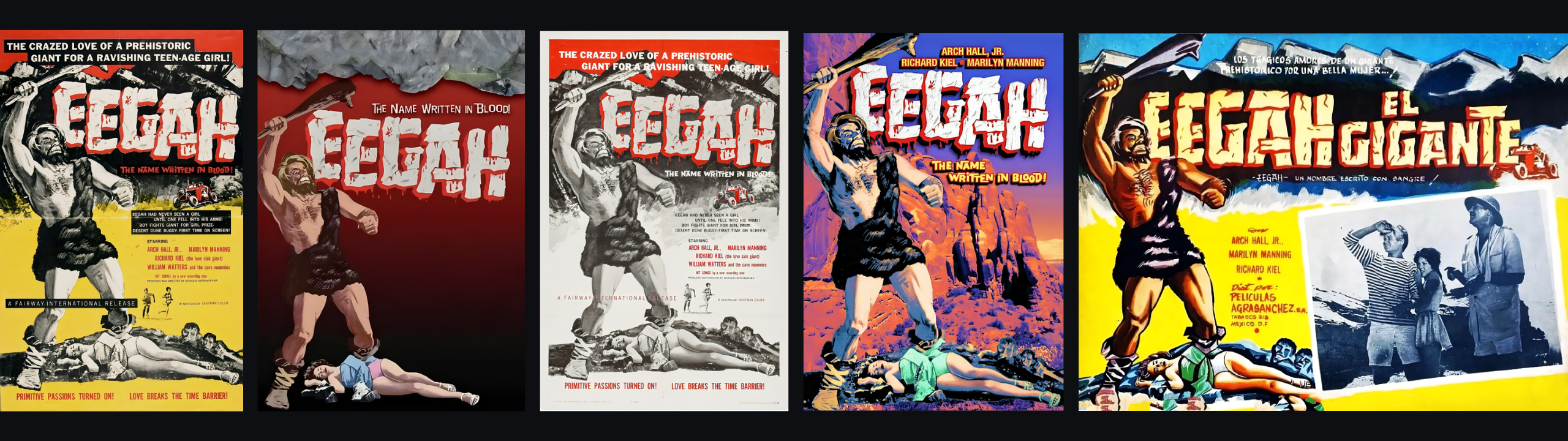
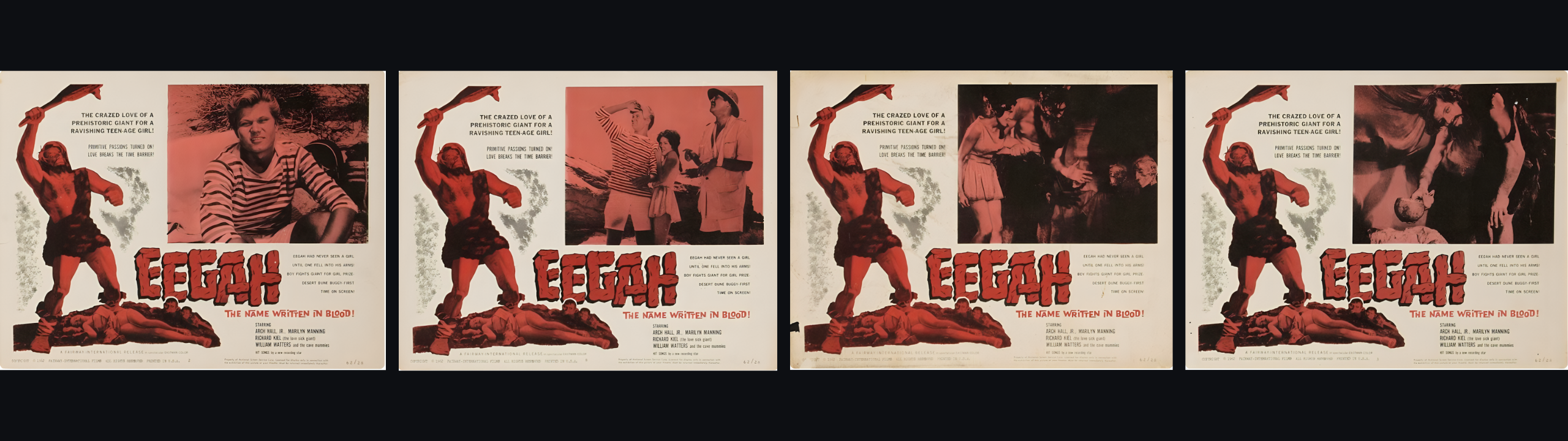
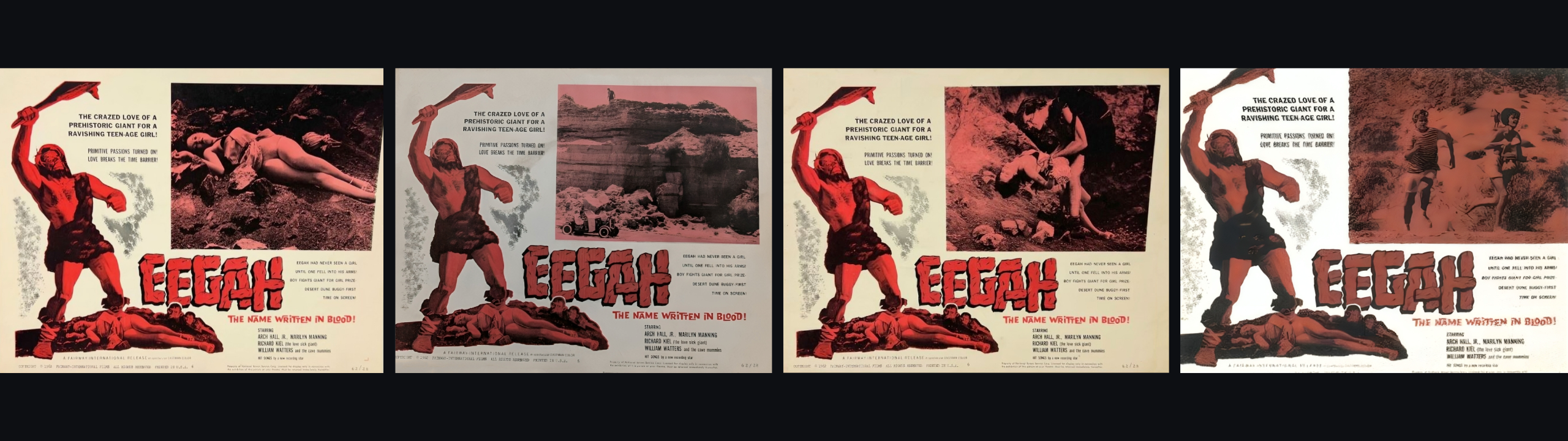

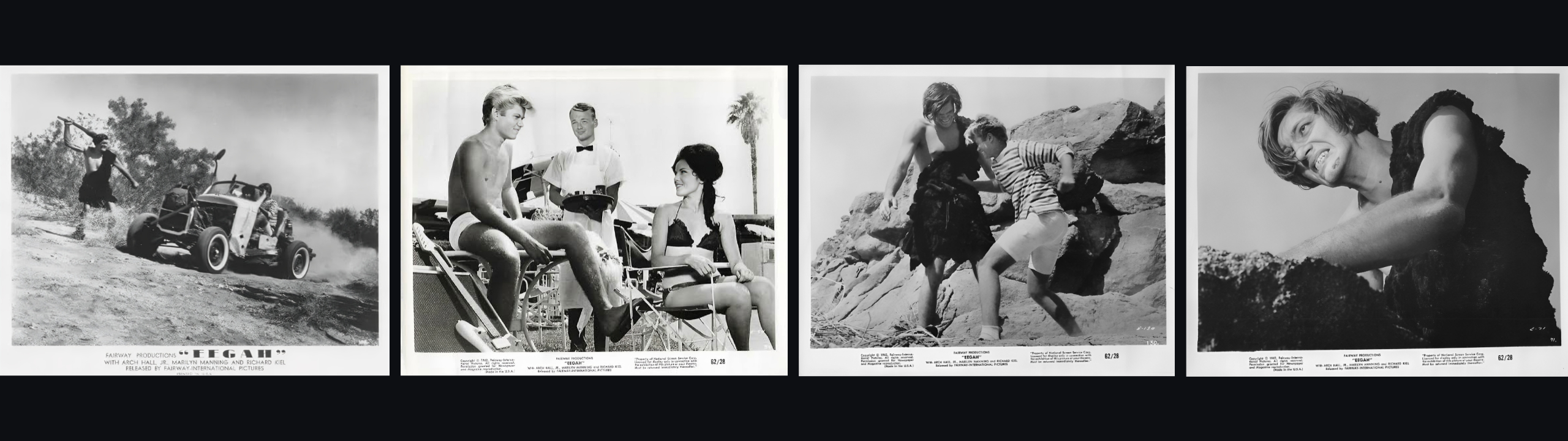
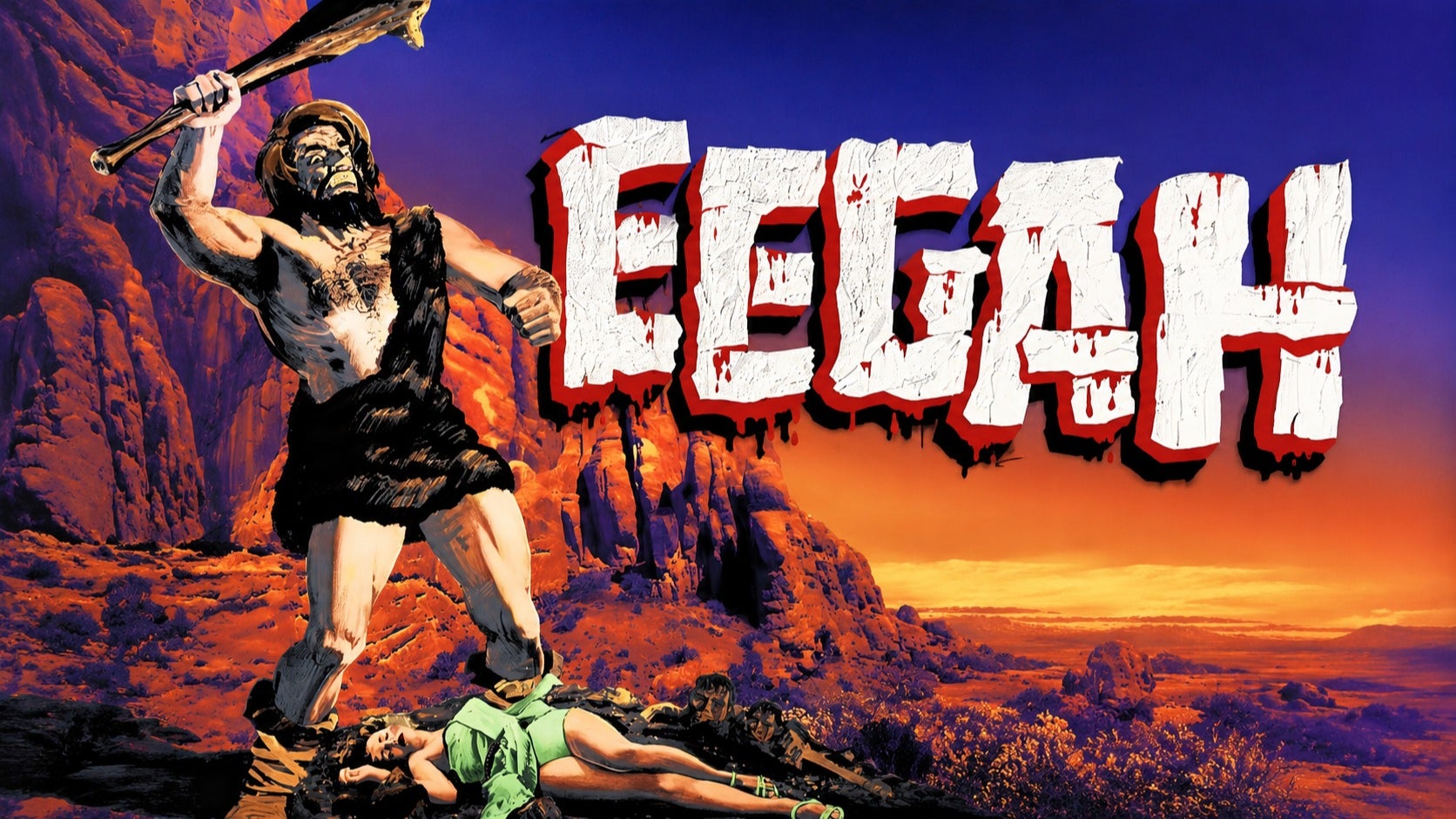
SYNOPSIS: Eegah is a 1962 American horror adventure film directed by Arch Hall Sr. and starring Arch Hall Jr., Marilyn Manning, Richard Kiel, and Arch Hall Sr. Blending horror, comedy, and adventure, the film follows teenager Roxy Miller, whose chance encounter with a towering prehistoric caveman sets off a bizarre series of events. After accidentally discovering the giant's desert cave, Roxy becomes the object of his fascination, placing herself and those around her in grave danger.
As the giant—known simply as Eegah—ventures into modern civilization in search of Roxy, his enormous strength and unfamiliarity with contemporary society leave a trail of chaos in his wake. Joined by her boyfriend Tom and her adventurous father, Roxy races to evade the prehistoric visitor while authorities struggle to stop the seemingly unstoppable giant before tragedy strikes.
Produced on a modest budget, Eegah has become one of the most recognizable cult films of the early 1960s. Richard Kiel's imposing performance as the towering caveman, combined with the film's unusual premise and earnest storytelling, has earned it a loyal following among fans of classic B-movies and camp cinema.
PLOT Spoiler Alert: Eegah (1962) follows Roxy Miller, who becomes stranded in the California desert after her car breaks down. While searching for help, she encounters Eegah, a giant prehistoric caveman living in an isolated cave. Although initially frightened, Roxy escapes and returns home with her father and boyfriend Tom, who later organize an expedition to investigate her incredible story.
The group eventually discovers Eegah's cave, where the giant develops an attachment to Roxy after she shows him kindness. Fascinated by the modern world, Eegah follows her back to civilization, unintentionally causing panic and destruction wherever he goes. As police search for the giant, Tom desperately tries to protect Roxy from her unusual admirer.
The story reaches its climax when Eegah is cornered by authorities after pursuing Roxy one final time. Despite his immense strength, he is ultimately defeated, bringing the bizarre adventure to an end. The film concludes with Roxy and Tom safely reunited while Eegah's brief return from prehistory becomes little more than an unbelievable memory.
PRODUCTION: Eegah was produced by Fairway International Pictures and directed by Arch Hall Sr., who also co-starred in the film. Shot primarily in California's desert landscapes, the production relied on natural locations, practical effects, and Richard Kiel's imposing 7-foot-2-inch stature to create its memorable prehistoric giant.
Made on a limited budget, the film embraced its B-movie style with a mix of horror, adventure, and lighthearted humor. Although modest in scale, Eegah has become one of the best-known independent cult films of the era.
RELEASE: Eegah was released in the United States in 1962, receiving mixed reviews from critics who questioned its unusual blend of horror, comedy, and adventure. While it saw only modest success during its initial release, the film gradually found an audience through late-night television and home video.
Today, Eegah is regarded as a cult classic of American B-movie cinema. Its quirky storyline, Richard Kiel's memorable performance, and unintentional humor have made it a favorite among fans of camp films and vintage science fiction and horror.
CAST:
Arch Hall Sr. as Robert Miller
Marilyn Manning as Roxy Miller
Richard Kiel as Eegah
Arch Hall Jr. as Tom Nelson
CREW:
Director: Arch Hall Sr.
Producer: Arch Hall Sr.
Writer: Bob Wehling
Cinematographer: Vilis Lapenieks
Editor: Stan Pitt
Music: Ralph Carmichael
Production Company: Fairway International Pictures
Distributor: Fairway International Pictures
Release Date: 1962
Country of Origin: United States
Running Time: 92 minutes
Budget: N/A
Box Office Return: N/A
IMDb Rating = 2.7 / 10
TRIVIA:
Richard Kiel, who played Eegah, later became famous as the James Bond villain "Jaws" in The Spy Who Loved Me (1977) and Moonraker (1979).
The film was shot largely on location in the California desert near Palm Springs.
Director Arch Hall Sr. also appeared in the film as Roxy's father.
Richard Kiel's natural height of 7 feet 2 inches made him an ideal choice to portray the prehistoric giant.
Eegah became widely known after being featured on Mystery Science Theater 3000, introducing it to a new generation of cult film fans.
The movie blends horror, adventure, comedy, and romance, making it difficult to classify into a single genre.
Despite its low IMDb rating, Eegah has developed a devoted cult following because of its campy charm and unusual premise.
Today, Eegah remains one of the most recognizable American B-movies of the 1960s and a favorite among fans of so-bad-it's-good cinema.
Marilyn Manning was Arch Hall Sr.'s secretary at the time of filming.
Filmed in Bronson Canyon, a cave complex in the hills above Hollywood where Robot Monster (1953) was filmed. Eegah's cavern is Ro-Man's headquarters seen from a different angle.
Shot for just $15,000 in 14 days. Raising the required budget nearly bankrupted Arch Hall Sr. and involved him selling his car and bypassing the need for location filming permits. Reportedly, though, Hall eventually made more than $1 million from the film.
According to Arch Hall Sr., the film's opening night at a drive-in in Omaha, NE, took in $15,000--the entire amount of the film's budget.
Arch Hall Sr. once said, "It was always sort of a subject of laughter that the darned thing did so well."
OUR MOVIE REVIEWERS SAY...

"A delightfully campy adventure that has become a beloved cult classic. Its offbeat humor, memorable characters, and quirky charm make it an entertaining slice of vintage B-movie cinema."

"Eegah presents an unusual blend of adventure, comedy, and horror with an undeniably unique personality. While its low-budget production and unconventional pacing may divide audiences, its cult appeal is easy to understand."

"Despite its ambitious premise, the film is hampered by uneven performances, slow pacing, and an often unintentionally humorous script. Its eccentric style may be more amusing than suspenseful for modern viewers."