
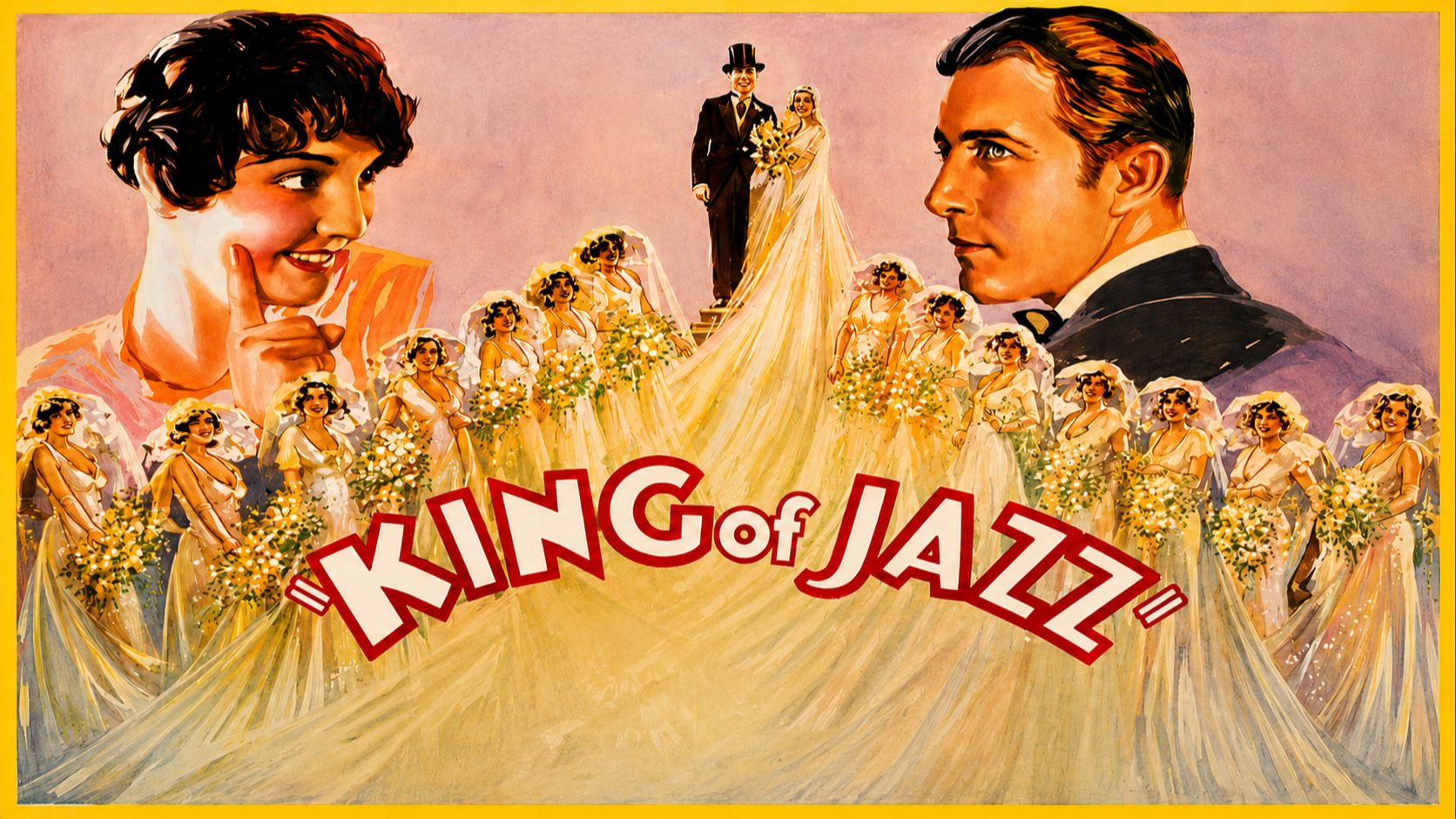
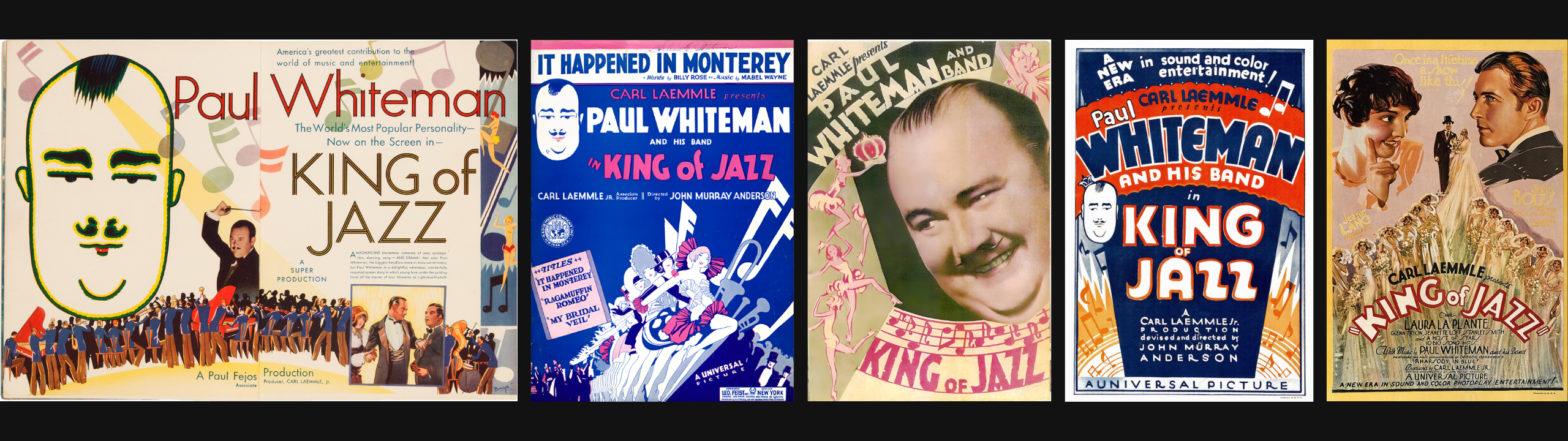
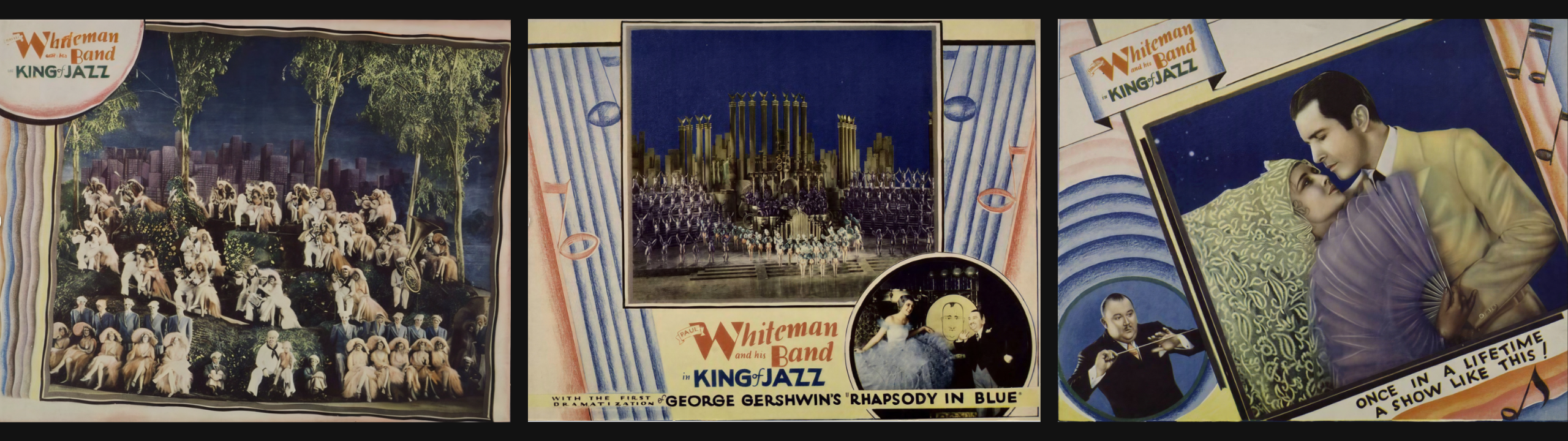
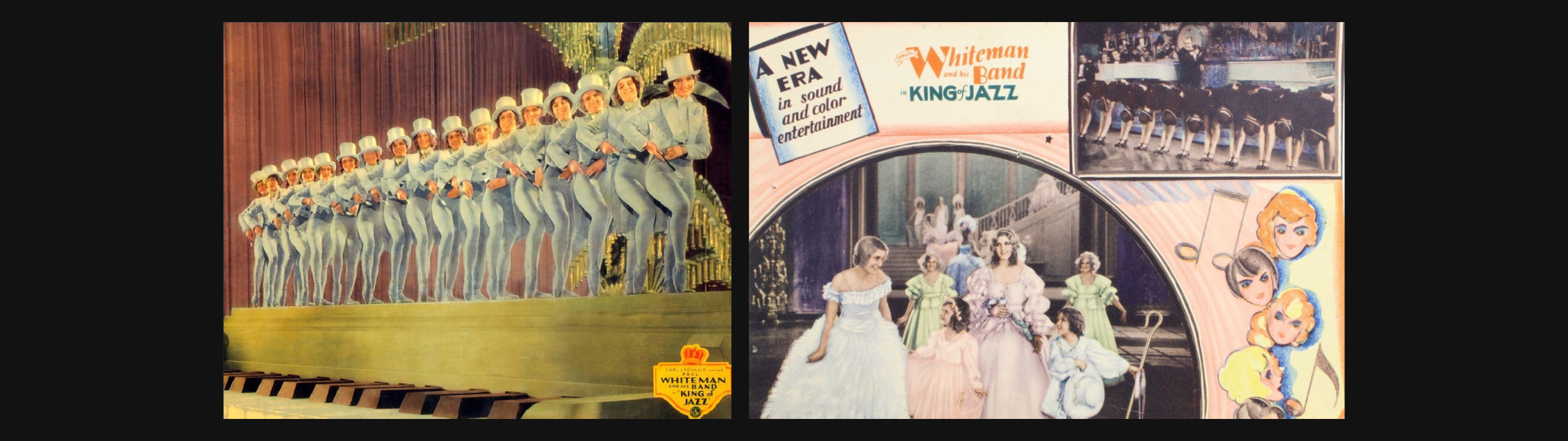
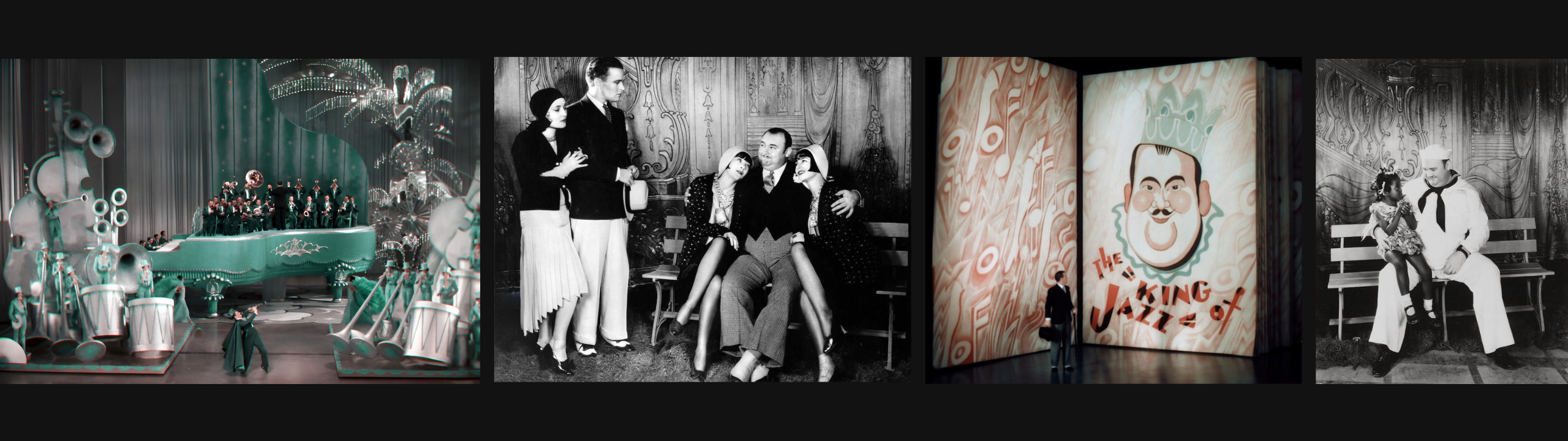
SYNOPSIS: In King of Jazz (1930), a lavish musical revue directed by John Murray Anderson, audiences are treated to an extravagant celebration of jazz-age entertainment starring legendary bandleader Paul Whiteman and his world-famous orchestra.
Unlike a conventional narrative film, King of Jazz unfolds as a series of elaborate musical performances, comedy sketches, fantasy sequences, and colorful stage spectacles designed to showcase the talent and popularity of Whiteman, who was widely promoted during the era as the “King of Jazz.”
The film opens with Whiteman introducing audiences to his orchestra and a dazzling array of performers. Presented in early two-color Technicolor, the production immediately establishes itself as one of the most visually ambitious films of the early sound era.
Giant art deco sets, synchronized dancers, and imaginative costumes dominate the screen as the orchestra launches into energetic performances blending jazz, classical influences, and Broadway-style arrangements.
Among the film’s most memorable segments is the celebrated “Melting Pot of Music” finale, which presents a stylized depiction of America’s immigrant cultures contributing to the development of jazz music.
In this ambitious sequence, performers representing various nations enter a massive symbolic melting pot while Whiteman conducts the evolving soundscape.
The sequence culminates in an enormous patriotic musical celebration that remains one of the defining moments of early musical cinema.
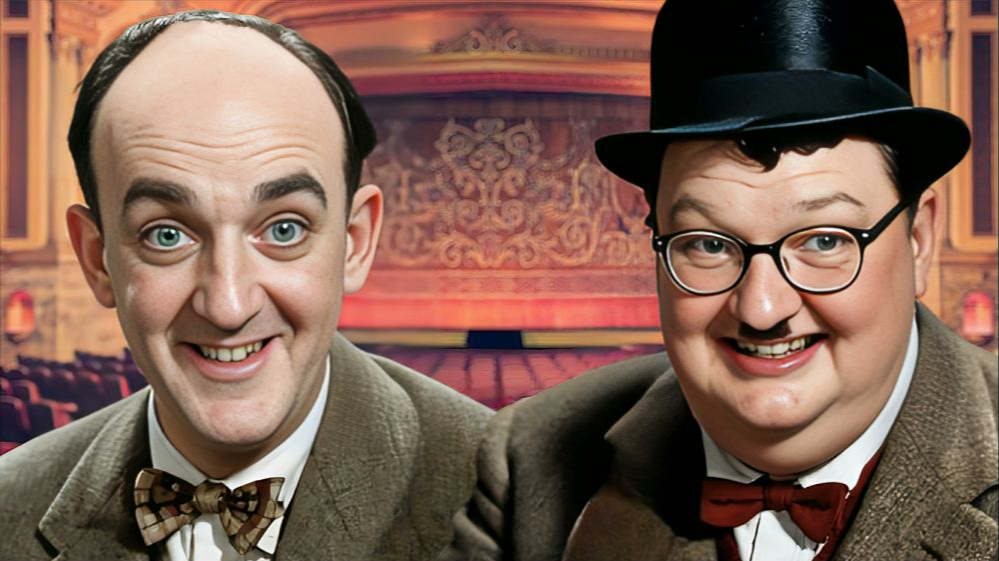
The revue also features numerous comedic interludes, including performances by the popular comedy team of Charles Irwin and George Chiles. Animated cartoons by pioneering animator Walter Lantz are integrated into several sequences, adding surreal humor and whimsical transitions between musical numbers.
These animated segments helped distinguish the film from other early musicals of the era.
A major highlight of the production is the appearance of young vocalist Bing Crosby, then performing as part of the vocal trio The Rhythm Boys.
Crosby’s relaxed singing style and charisma stood out prominently, foreshadowing his future rise as one of the biggest stars in entertainment history. Songs such as “Mississippi Mud” became especially popular with audiences and remain associated with the film.
Throughout the picture, elaborate choreography and imaginative staging demonstrate the enormous resources Universal Pictures invested into the production. Giant staircases, oversized musical instruments, fantasy landscapes, and synchronized dance ensembles fill nearly every sequence. The revue structure allows the film to move rapidly from romantic ballads and comedy sketches to energetic jazz performances and experimental visual effects.
Although the film lacks a traditional storyline, King of Jazz succeeds as a time capsule of early sound-era entertainment and Jazz Age culture. It captures the excitement surrounding synchronized sound technology while showcasing the spectacle and optimism of late-1920s American popular entertainment.
Today, King of Jazz is celebrated as one of the most important surviving early Technicolor musicals. Its ambitious production design, historical significance, and preservation of performances by Paul Whiteman and Bing Crosby have made it a landmark of early Hollywood filmmaking and musical history.
PLOT Spoiler Alert: King of Jazz does not follow a traditional narrative plot, but instead unfolds as a grand musical revue centered around the performances of Paul Whiteman and His Orchestra.
The film begins with Whiteman introducing audiences to a colorful world of music, comedy, and fantasy, presented through elaborate stage productions and interconnected musical numbers.
One of the earliest highlights features the Rhythm Boys, including a young Bing Crosby, performing lively jazz songs with comedic flair. Their relaxed style contrasts with the more formal presentation typical of early sound films and adds youthful energy to the production.
The film transitions through a series of extravagant musical sequences, each designed around unique visual themes. Massive art deco sets, synchronized chorus lines, and fantasy imagery dominate the revue. Comedic sketches featuring Charles Irwin and George Chiles provide comic relief between the elaborate performances.
Animated interludes by Walter Lantz blend live-action and cartoon imagery, showcasing the experimental creativity of early sound cinema. In one memorable sequence, animated characters interact with musical instruments and performers in surreal visual gags.
As the revue progresses, the musical numbers become increasingly elaborate. Dancers perform atop giant piano keyboards, performers emerge from enormous mechanical set pieces, and Whiteman’s orchestra remains at the center of the spectacle, guiding audiences through the evolving styles of jazz-inspired entertainment.
The film reaches its climax with the massive “Melting Pot of Music” finale. Immigrants from numerous nations symbolically enter a giant melting pot, representing the blending of cultures that contributed to the birth of American jazz.
The sequence culminates in a patriotic musical celebration featuring hundreds of performers, elaborate costumes, and triumphant orchestration.
The revue concludes with Paul Whiteman conducting the orchestra in a grand finale, leaving audiences with a dazzling display of music, color, and spectacle that epitomized Hollywood’s early sound-musical era.
PRODUCTION: King of Jazz was produced by Universal Pictures during the height of Hollywood’s early sound boom. The film was conceived as a lavish showcase for Paul Whiteman, whose orchestra was among the most popular musical acts in America during the late 1920s. Universal intended the production to rival the elaborate stage revues and musical spectacles being produced by competing studios.
The film was directed by John Murray Anderson, a celebrated Broadway producer and stage director known for his visually imaginative revues. Anderson brought his theatrical expertise to the project, emphasizing extravagant set design, stylized choreography, and surreal visual concepts.
His background in stage entertainment heavily influenced the film’s revue structure and artistic presentation.
Production on King of Jazz was enormously expensive for its time, with Universal investing heavily in elaborate sets, costumes, and the then-cutting-edge two-color Technicolor process. The film became one of the studio’s most ambitious productions of the early sound era. Technicolor cameras required extremely bright lighting, making filming conditions difficult for performers and crew.
The film’s art direction featured elaborate art deco-inspired designs, enormous stage constructions, and highly stylized fantasy environments. Giant props, oversized instruments, and intricate choreography were central elements of the production’s visual identity.
Many sequences required weeks of rehearsal and complex camera coordination due to the limitations of early sound recording technology.
Musical supervision was handled by Paul Whiteman himself, with arrangements designed to highlight both orchestral jazz and Broadway-style performance traditions.
Although Whiteman was marketed as the “King of Jazz,” the film notably reflects the era’s mainstream commercial interpretation of jazz rather than the African-American origins of the genre.
One of the film’s most historically important contributions was its preservation of early performances by Bing Crosby and The Rhythm Boys. Crosby’s appearance in the film helped introduce him to national audiences and marked an early milestone in his legendary entertainment career.
Walter Lantz contributed animated sequences to the production, integrating cartoons with live-action footage in innovative ways uncommon for the time.
These segments demonstrated Universal’s willingness to experiment with the possibilities of synchronized sound and visual effects.
Despite its artistic ambition, the production faced numerous challenges. The transition to sound filmmaking was still relatively new, and coordinating large musical numbers with synchronized audio proved technically demanding.
Additionally, the Great Depression began during the film’s production period, impacting audience tastes and the commercial viability of expensive musical spectacles.
RELEASE: King of Jazz premiered in the United States on April 19, 1930, and was distributed by Universal Pictures. Upon release, the film attracted attention for its enormous scale, colorful Technicolor photography, and elaborate musical sequences. Critics praised the visual spectacle and production values, although some reviewers noted the lack of a conventional storyline.
The film’s release coincided with a period of audience fatigue toward large-scale musical revues, which had flooded theaters during the early sound era. As a result, King of Jazz performed below expectations at the box office despite its technical achievements and star power.
Nevertheless, the film earned recognition for its artistic accomplishments and received a nomination for the Academy Award for Best Cinematography. Over time, critics and historians reassessed the film more favorably, recognizing it as one of the most important surviving examples of early Technicolor filmmaking and Jazz Age entertainment.
In later decades, restoration efforts helped preserve the film, allowing modern audiences to appreciate its pioneering use of color, choreography, and sound. King of Jazz is now regarded as a landmark production in early Hollywood musical history and remains an essential document of popular entertainment during the transition from silent films to sound cinema.
CAST:
Paul Whiteman as Himself
John Boles as Singer
Laura La Plante as Performer
CREW:
Director: John Murray Anderson
Producer: Carl Laemmle Jr.
Writers: Herman J. Mankiewicz, Walter DeLeon, J.P. McEvoy
Cinematographer: Hal Mohr
Editor: Milton Carruth
Music: Paul Whiteman and His Orchestra
Art Director: Herman Rosse
Animation Director: Walter Lantz
Production Company: Universal Pictures
Distributor: Universal Pictures
Release Date: April 19, 1930
Country of Origin: United States
Running Time: 98 minutes
Budget: Estimated $2 million
Box Office Return: Approximately $900,000
IMDB Rating = 7.5 / 10
TRIVIA:
King of Jazz was filmed entirely in the early two-color Technicolor process, years before the more familiar three-strip Technicolor became standard in Hollywood.
The production was one of Universal Pictures’ most expensive films of the early sound era.
Although Paul Whiteman was promoted as the “King of Jazz,” many modern critics note that the film largely excludes African-American jazz performers despite jazz’s origins.
Bing Crosby appears in the film years before becoming one of Hollywood’s biggest stars.
The “Melting Pot of Music” finale remains one of the most famous sequences in early musical cinema.
Animator Walter Lantz later became famous for creating Woody Woodpecker.
The enormous Technicolor lighting requirements reportedly caused extremely high temperatures on set during filming.
The film originally ran over 100 minutes, but some sequences were trimmed for various releases.
Several surviving prints were missing footage for decades until restoration efforts reconstructed much of the original material.
King of Jazz received an Academy Award for Best Art Direction.
The film’s lavish art deco set designs reflected the peak visual style of the Jazz Age just before the Great Depression transformed Hollywood production trends.
Many of the costumes used in the film were handmade and featured elaborate geometric patterns specifically designed to photograph effectively in early Technicolor.
Paul Whiteman’s orchestra included several notable jazz musicians who later became influential performers and arrangers in American popular music.
The film is now preserved in the United States National Film Registry for its cultural and historical significance.
King of Jazz remains a remarkable example of Hollywood spectacle during the transition to sound cinema, celebrated for its ambitious visuals, groundbreaking use of Technicolor, and preservation of Jazz Age musical performance.
The animation sequence, created by Walter Lantz, was the first Technicolor animation ever produced.
Bing Crosby was originally slated to be the solo singer for "The Song of the Dawn." However, he was arrested for drunk driving shortly before shooting, and John Boles was hastily substituted.
In November 1929, just after filming had begun, Bing Crosby, driving a Model A Ford provided by the studio, was involved in a drunk driving accident. His passenger, a woman he was dating, was injured. For violation of Prohibition Crosby was sentenced to 60 days in jail. Because of this Crosby lost the lead role in the "Song of the Dawn" production number to John Boles.
"New York Times:, 3 May 1930, erroneously credits composer George Gershwin as the on-screen pianist playing "Rhapsody in Blue"; Roy Bargy is the actual pianist.
OUR MOVIE REVIEWERS SAY...

“King of Jazz is nothing short of astonishing. Universal Pictures has delivered one of the most ambitious entertainments yet produced for the talking screen. The dazzling Technicolor photography, immense art deco sets, and rhythmic precision of Paul Whiteman’s orchestra combine to create a motion picture experience unlike any other currently in theaters.

“King of Jazz is undoubtedly one of the most elaborate productions yet attempted by Hollywood, though its success may depend entirely upon the audience’s appetite for musical revues. The film presents a seemingly endless procession of songs, dance routines, comedy sketches, and visual extravagances, all centered around Paul Whiteman and his celebrated orchestra. At the same time, the revue format eventually becomes repetitive.
Nevertheless, King of Jazz remains an important technical achievement and a fascinating example of Hollywood experimenting with the possibilities of sound and color. Even viewers unmoved by its spectacle may appreciate the sheer scale of its ambition.”

“Universal’s heavily publicized King of Jazz arrives with tremendous fanfare but ultimately proves exhausting rather than entertaining. While the production boasts lavish sets and expensive Technicolor photography, the film mistakes spectacle for substance at nearly every turn.
King of Jazz may serve as a technical curiosity, but as entertainment it is far more admirable than enjoyable.”