
Enjoy Our Podcasts
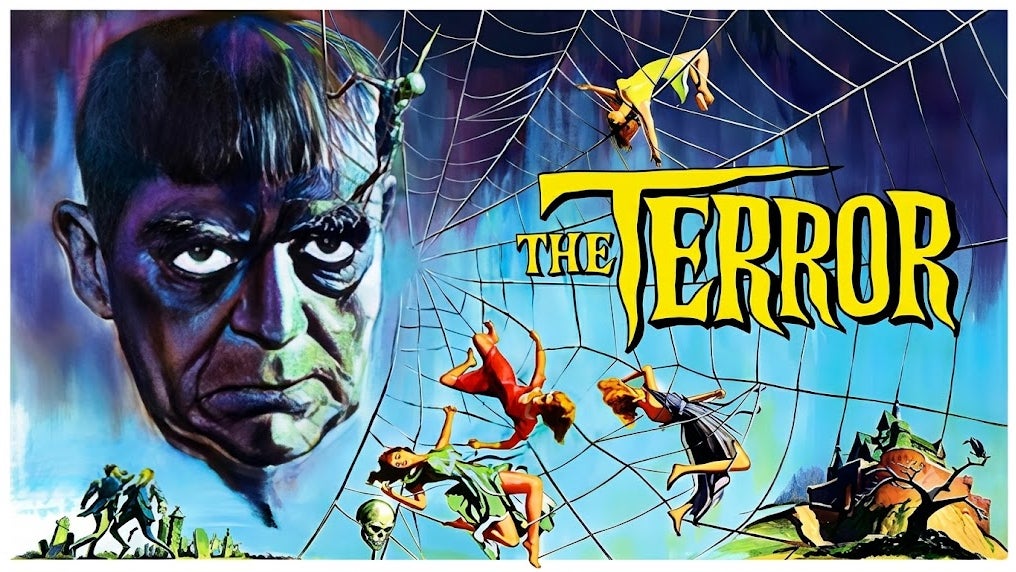
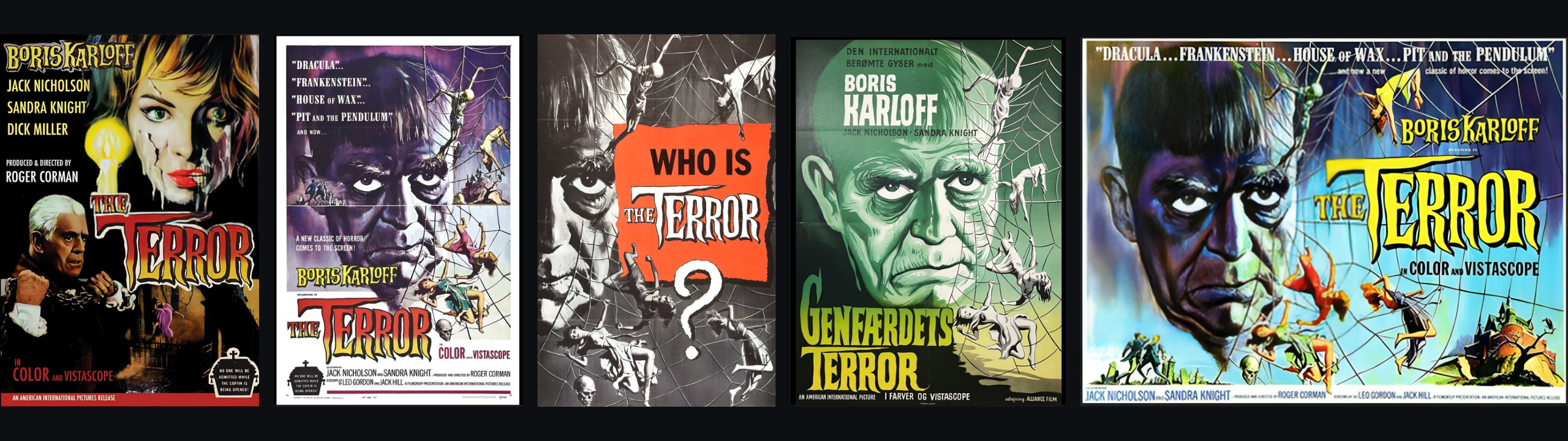
1963 The Terror In Depth Review


SYNOPSIS:
The Terror is a 1963 American Gothic horror film directed by Roger Corman, with additional sequences directed by Francis Ford Coppola, Jack Hill, Monte Hellman, and Jack Nicholson. The screenplay was written by Leo Gordon and Jack Hill, with uncredited contributions from several others during its unusual production.
Starring Boris Karloff, Jack Nicholson, Sandra Knight, Dick Miller, and Dorothy Neumann, the film blends supernatural horror, psychological mystery, and Gothic romance into a haunting tale set against the backdrop of a crumbling French castle. Produced on a modest budget, The Terror has since become a cult favorite, notable for its eerie atmosphere and the remarkable number of future filmmakers who contributed to its production.
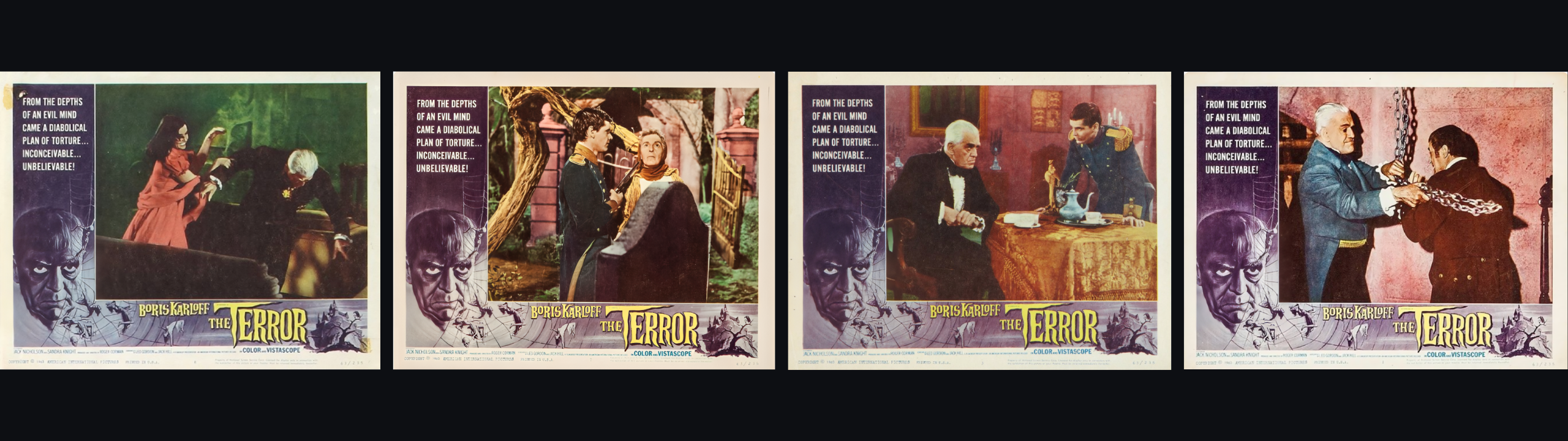
The story follows Lieutenant André Duvalier, a young French cavalry officer who becomes separated from Napoleon's army while traveling along the coast. After encountering a mysterious woman who suddenly vanishes, André is drawn to the isolated castle of the aging Baron Victor Frederick von Leppe. The Baron insists the woman could not possibly exist, yet André continues to encounter strange visions and unexplained events that suggest a sinister force is at work within the castle. As he searches for answers, he uncovers long-buried secrets involving betrayal, murder, and an ancient supernatural presence that refuses to remain buried.
Filmed almost entirely within the atmospheric sets originally constructed for The Raven (1963), The Terror relies on shadowy cinematography, Gothic architecture, and Boris Karloff's commanding performance to create an unsettling mood of suspense and mystery. Although its fragmented production resulted in an unconventional narrative, the film's dreamlike atmosphere and supernatural themes have earned it lasting appreciation among fans of classic Gothic horror and American independent cinema.
PLOT (Spoiler Alert):
During the Napoleonic Wars, Lieutenant André Duvalier becomes separated from his regiment while traveling along the French coastline. Exhausted and disoriented, he encounters a beautiful young woman named Helene, who silently guides him toward safety before mysteriously disappearing into the sea. Confused by the encounter, André follows her trail to a nearby castle occupied by the elderly Baron Victor Frederick von Leppe, who insists that no such woman lives there.
Despite the Baron's denials, André repeatedly catches glimpses of Helene wandering the castle grounds and surrounding countryside. The servants behave nervously whenever she is mentioned, and the Baron becomes increasingly agitated by André's questions. Determined to uncover the truth, André begins exploring the castle, discovering abandoned chambers, hidden passageways, and evidence of a tragic event that occurred many years earlier.
As André investigates further, he learns that the Baron's wife, Ilsa, was accused of betraying her husband and was executed after being lured to her death along the cliffs overlooking the sea. The Baron has lived ever since burdened by grief and guilt, convinced that supernatural forces continue to haunt his estate. Meanwhile, Helene appears and disappears without explanation, drawing André ever deeper into the mystery.
A local witch reveals that Helene is not an ordinary woman but a physical manifestation created by an evil spirit inhabiting the castle. The spirit manipulates the appearance of the Baron's dead wife in order to torment him and lure new victims into its power. André realizes that Helene herself is trapped by forces beyond her control and struggles to free her before the supernatural entity claims another life.
The spirit's influence grows stronger, causing violence and madness throughout the castle. André confronts the Baron's loyal falconer, Stefan, whose devotion to the Baron and fear of the supernatural have blinded him to the truth. As the castle's dark secrets are finally revealed, André discovers that revenge, guilt, and deception have sustained the curse for decades.
In the climactic confrontation, the evil spirit is finally destroyed, releasing Helene from its control and bringing an end to the haunting that has plagued Castle von Leppe. The Baron dies reconciled with the memory of his wife, while André escapes the castle as peace is finally restored. The film concludes with the ancient evil defeated and the tragic history of the castle finally laid to rest.
PRODUCTION:
The Terror was produced by Roger Corman in 1963 following the completion of The Raven. To maximize the use of the elaborate Gothic castle sets already constructed for that film, Corman quickly assembled a new production starring Boris Karloff, whose contractual availability lasted only two additional days. Much of Karloff's footage was completed during this brief period, while the remainder of the film was shot over several months using different casts, crews, and directors.
The film became notable for its unusually fragmented production, with Francis Ford Coppola, Jack Hill, Monte Hellman, Jack Nicholson, and Roger Corman each directing portions of the finished picture. Filming took place primarily at Castle Dracula sets on the MGM backlot and along the California coastline. Cinematographer Floyd Crosby created the film's atmospheric Gothic imagery, while composer Ronald Stein provided a dramatic orchestral score that enhanced its eerie, supernatural tone.
RELEASE:
The Terror was released theatrically in the United States on June 17, 1963, by Filmgroup Releasing. Contemporary reviews were mixed, with critics praising Boris Karloff's performance and the film's Gothic atmosphere while noting its occasionally confusing narrative, a result of its unconventional production. Despite its modest theatrical run, the film found a wider audience through television broadcasts and later home video releases.
Over the decades, The Terror has gained cult status among horror enthusiasts and film historians. It is frequently studied as an early collaboration involving several filmmakers who would later become major figures in American cinema, particularly Francis Ford Coppola and Jack Nicholson. Modern restorations have helped re-evaluate the film's visual style and historical significance, securing its reputation as an intriguing entry in Roger Corman's celebrated cycle of Gothic horror films.
CAST:
Boris Karloff as Baron Victor Frederick von Leppe
Jack Nicholson as Lt. André Duvalier
Sandra Knight as Helene / Ilsa von Leppe
Dick Miller as Stefan
Dorothy Neumann as Katrina
Jonathan Haze as Gustaf
CREW:
Director: Roger Corman
Producer: Roger Corman
Writers: Leo Gordon, Jack Hill
Cinematographer: Floyd Crosby
Editor: Ronald Sinclair
Music: Ronald Stein
Production Company: The Filmgroup
Distributor: Filmgroup Releasing
Release Date: June 17, 1963
Country of Origin: United States
Running Time: 81 minutes
Budget: Approximately $100,000
Box Office Return: N/A
IMDb Rating = 5.5 / 10
TRIVIA:
Much of the film was shot on the castle sets left standing after Roger Corman completed The Raven (1963).
Boris Karloff completed all of his scenes in just two days due to contractual commitments.
Five directors contributed to the finished film, including Roger Corman and a young Francis Ford Coppola.
Jack Nicholson not only starred in the film but also directed portions of it during production.
Monte Hellman and Jack Hill also directed additional scenes, making the film one of the most unusually assembled productions in horror history.
Cinematographer Floyd Crosby had previously photographed High Noon (1952) and many of Corman's Edgar Allan Poe adaptations.
The film's fragmented production schedule contributed to its dreamlike and often surreal narrative structure.
Roger Corman later described the film as an opportunity for several young filmmakers to gain practical directing experience.
The Terror has become a cult favorite despite its mixed critical reception upon release.
The film inspired the 1965 comedy horror The Comedy of Terrors only indirectly through its popularity in Gothic horror programming, but it remains best remembered today for launching the careers of several future Hollywood filmmakers.
Modern critics often view The Terror as an important historical curiosity, illustrating Roger Corman's remarkable ability to produce ambitious films with limited budgets while mentoring many future Academy Award-winning filmmakers.
Roger Corman shot the bulk of the film in four days, but the second-unit work was filmed over a nine month period by five directors, Francis Ford Coppola, Dennis Jakob, Monte Hellman, Jack Nicholson, and Jack Hill.
Francis Ford Coppola took 11 days to shoot his second-unit footage, only ten minutes of which wound up in the finished film.
Since the credits feature no copyright information, the film is in the public domain.
Having finished The Raven (1963), Roger Corman immediately shot this film using the same sets and the same two lead actors. All of the scenes involving Boris Karloff were filmed by Corman in four days, but the finished film, which was largely improvised, required nine months to complete, the longest production of Corman's career.
Jack Nicholson claims to have nearly drowned while filming in the surf of Big Sur, CA.
OUR MOVIE REVIEWERS SAY...

"The Terror transforms its modest budget into an atmospheric Gothic nightmare. Boris Karloff lends the film gravitas, while its eerie castle, haunting visuals, and unsettling mood make it a memorable cult horror classic."

"The Terror is an intriguing curiosity whose dreamlike atmosphere often proves more compelling than its story. Though the narrative can feel fragmented, its striking imagery and unusual production history make it worthwhile for classic horror enthusiasts."

"The Terror never quite lives up to its evocative title. Despite impressive Gothic settings and a distinguished cast, its disjointed plot and uneven pacing leave the film feeling more confusing than genuinely frightening."