
Podcast
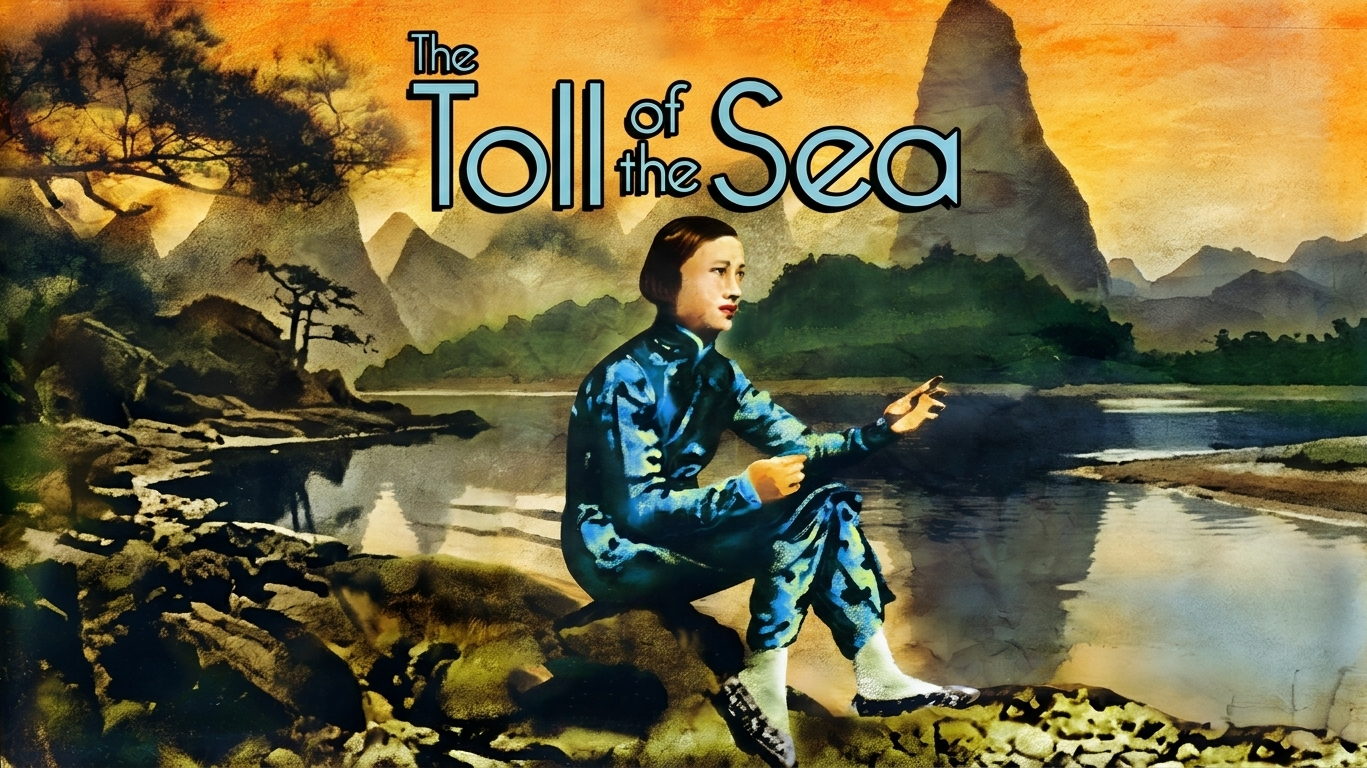
1922 The Toll of the Sea in depth review
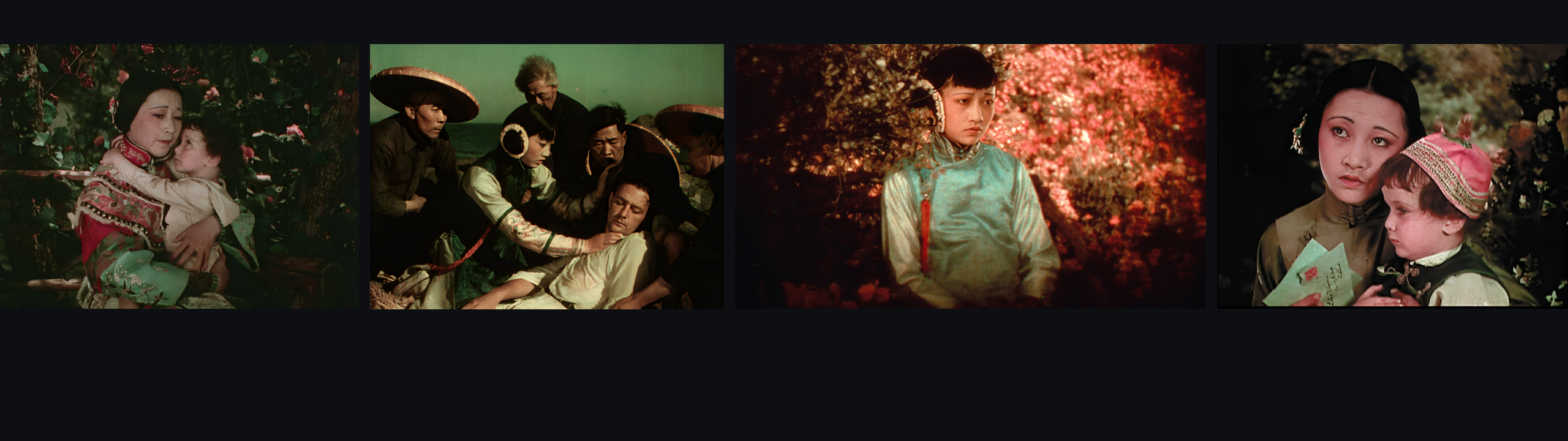
SYNOPSIS
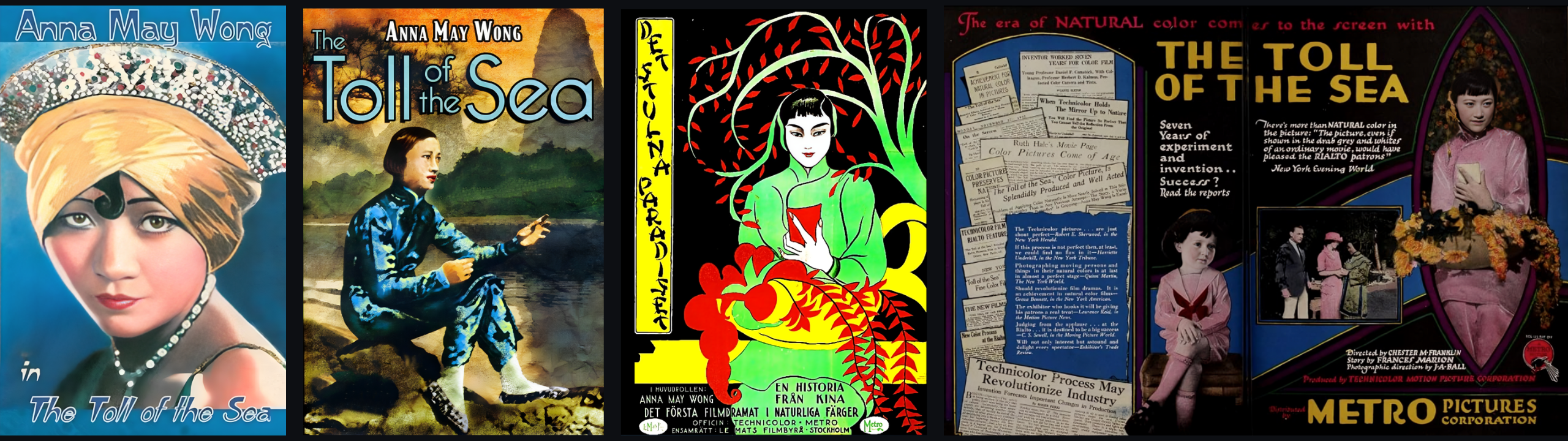
A young Chinese woman rescues an American sailor from the sea and falls deeply in love with him, believing that their marriage will bring them a lifetime of happiness. But when he returns to America without her, she is left to raise their child alone, clinging to the hope that he will eventually return. Anna May Wong delivers a poignant performance in this tragic romantic drama, a variation on the familiar Madama Butterfly story.
PLOT (Spoiler Alert)
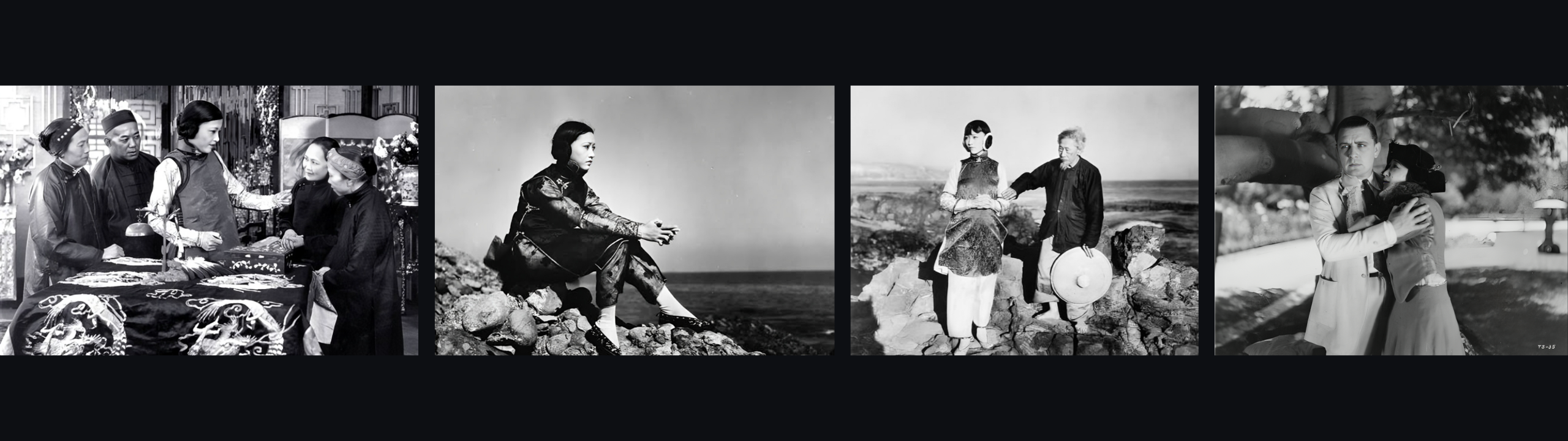
In a coastal village in China, a young woman named Lotus Flower hears cries from the sea and discovers an unconscious American, Allen Carver, who has been washed ashore. Despite warnings from an elderly Chinese man that the sea brings sorrow along with its gifts, Lotus Flower helps rescue Allen.
The two soon fall in love and marry according to Chinese customs. Allen promises to take her with him when he returns to America, but local women warn Lotus Flower that foreign men often abandon the Chinese women they marry. She refuses to believe them.
When Allen's departure approaches, his American friends persuade him that bringing Lotus Flower back to the United States would be impractical. He leaves without her, promising that he will eventually send for her. Time passes, and Lotus Flower gives birth to their son, whom she names Little Allen. She continues to believe that her husband will return, shielding the child from the painful truth of his father's absence.
Several years later, Allen comes back to China, but he is now accompanied by his American wife, Barbara. Lotus Flower is devastated to discover that the man she has faithfully awaited has built a new life without her. Barbara, however, is sympathetic toward Lotus Flower and agrees that the boy should be taken to America and raised by his father.
Believing that this will give her son a better future, Lotus Flower reluctantly agrees to surrender him. After watching Allen, Barbara, and the child depart, she returns to the sea and takes her own life, completing the tragic prophecy of the old man's warning.
PRODUCTION
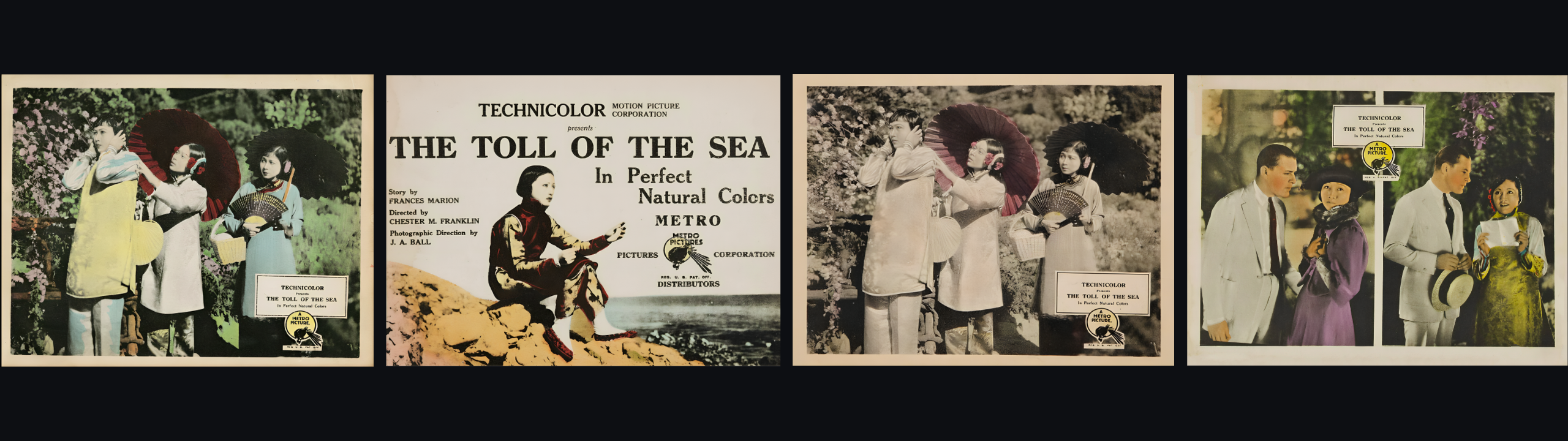
Produced by the Technicolor Motion Picture Corporation, The Toll of the Sea was an important milestone in the development of color cinematography. It was the first feature film photographed using Technicolor's improved two-strip process, which captured and reproduced color through a combination of red and green records. The process created a distinctive palette, particularly suited to the film's colorful costumes, gardens, and seaside settings.
The screenplay was written by Frances Marion, who adapted the central tragedy of Madama Butterfly, relocating the story from Japan to China. Seventeen-year-old Anna May Wong received her first leading role and gave a performance that helped establish her as one of Hollywood's most recognizable Asian American actresses.
RELEASE
The film premiered at the Rialto Theatre in New York City on November 26, 1922, before receiving its general American release in January 1923 through Metro Pictures Corporation. Although its original ending has not survived, the film was restored in 1985 by the UCLA Film & Television Archive using surviving camera-negative materials and recreated title cards to convey the missing conclusion.
CAST
Anna May Wong as Lotus Flower
Kenneth Harlan as Allen Carver
Beatrice Bentley as Barbara (Elsie) Carver
Priscilla Moran as Little Allen (as Baby Moran)
Etta Lee as Gossip
Ming Young as Gossip
CREW
Director: Chester M. Franklin
Producer: Herbert T. Kalmus
Screenplay: Frances Marion
Cinematography: J. Arthur Ball
Film Editing: Hal C. Kern
Production Company: Technicolor Motion Picture Corporation
Distributor: Metro Pictures Corporation
IMDb RATING
6.6/10 (at the time of research)
TRIVIA
The film was the first feature produced using Technicolor's improved two-strip color process, making it a landmark in motion-picture history.
It was the second feature-length Technicolor production, following The Gulf Between (1917).
Anna May Wong was only seventeen years old during production, and the film marked her first leading role.
Wong was born in Los Angeles's Chinatown and became one of the earliest Chinese American actresses to achieve international recognition.
Frances Marion later acknowledged that her screenplay was heavily inspired by Madama Butterfly, the tragic story popularized by Puccini's opera.
Unlike the original Japanese setting of Madama Butterfly, this adaptation takes place in China and centers on a Chinese heroine.
Cinematographer J. Arthur Ball was closely associated with the development of Technicolor and later received a special Academy Award in 1938 for his contributions to color photography.
The limitations of two-strip Technicolor meant that blue tones could not be reproduced accurately, giving the film its distinctive red-and-green appearance.
The Technicolor cameras required exceptionally bright lighting, making natural sunlight especially important during production.
The film's original camera negative survived, but its final sequence was missing when the restoration was undertaken in 1985.
The restored version uses newly created title cards to explain the missing final moments, including Lotus Flower's suicide.
The film helped demonstrate that color motion pictures could be exhibited using standard projectors, without requiring theaters to install specialized projection equipment.

WHAT OUR MOVIE REVIEWERS SAY...

What we are all about
The Toll of the Sea is a beautifully photographed and deeply moving romantic tragedy. Anna May Wong delivers a remarkably expressive performance, while the pioneering use of Technicolor gives this timeless story of love and betrayal an extraordinary visual beauty. A landmark of silent cinema.

The Toll of the Sea is a simple but emotionally affecting melodrama that benefits enormously from Anna May Wong's sensitive performance. Its story follows familiar themes of unrequited love and cultural misunderstanding, but its striking color photography and restrained storytelling make it a fascinating early cinematic achievement.

Despite its historical importance and attractive color photography, The Toll of the Sea is hampered by a predictable storyline and overly sentimental drama. The characters are somewhat one-dimensional, and the emotional conflicts unfold with little surprise. Its visual accomplishments are more impressive than its storytelling.