
SYNOPSIS
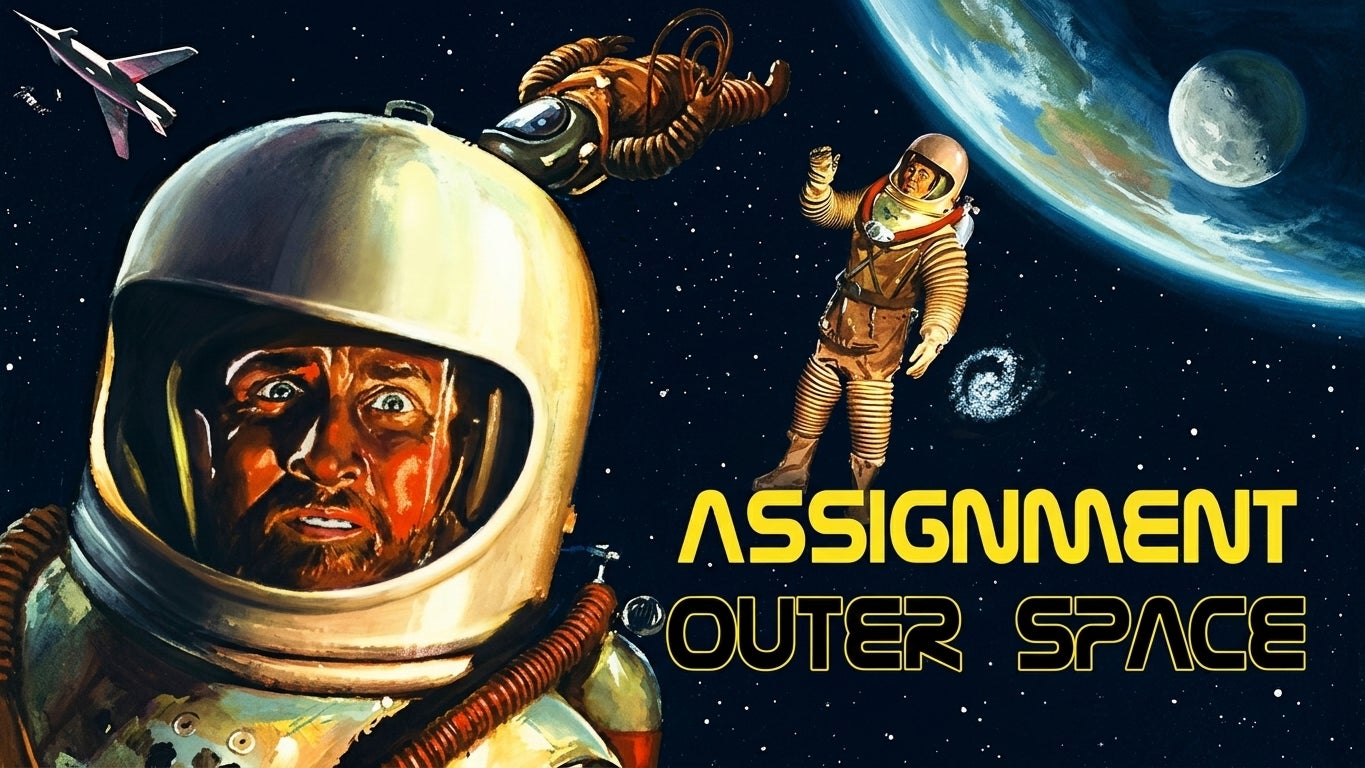
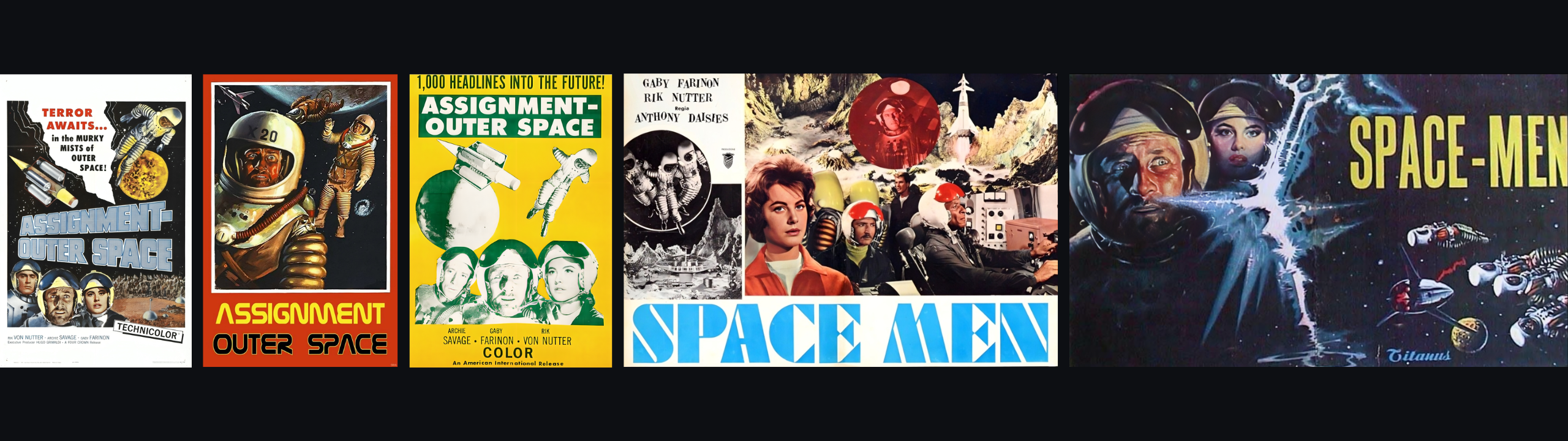
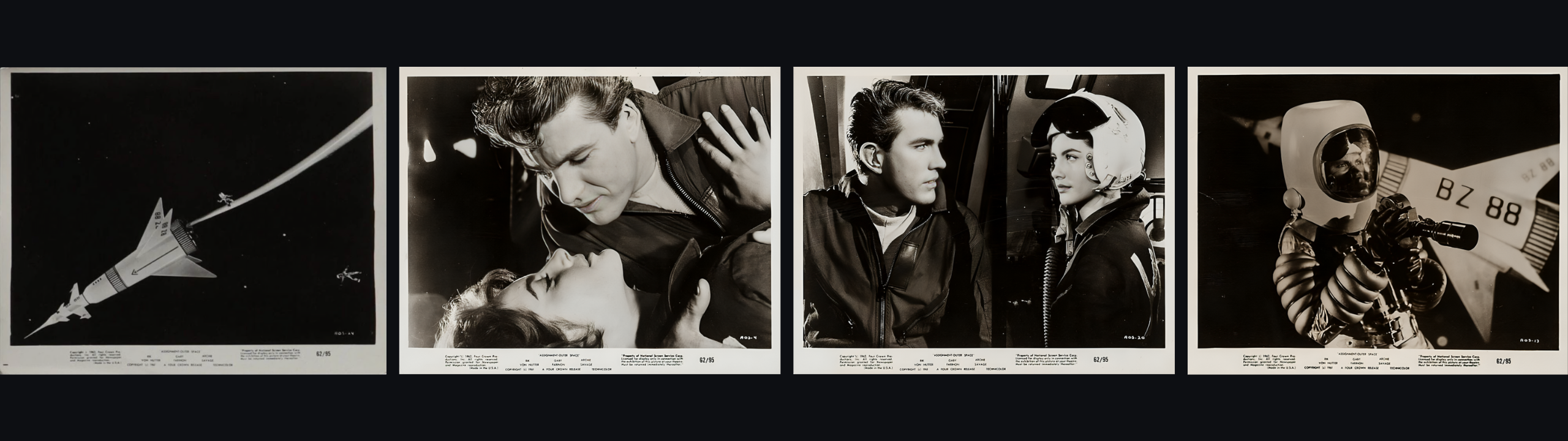
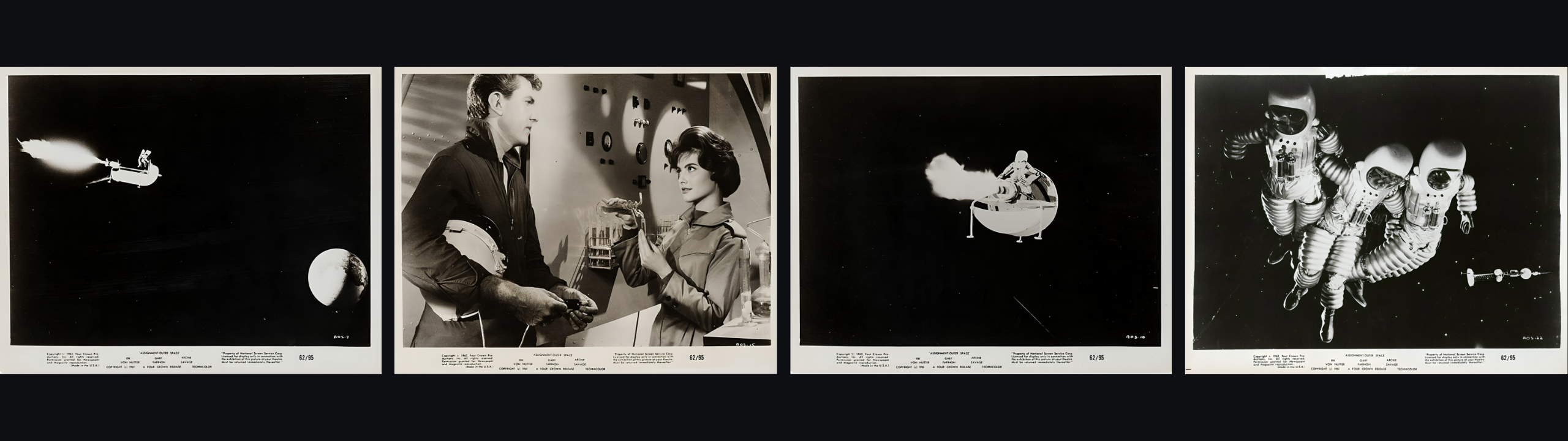
Assignment: Outer Space (1960), originally released in Italy as Space Men, is an Italian science-fiction adventure directed by Antonio Margheriti, credited on the original film as Anthony Daisies. The screenplay was written by Ennio De Concini, credited as Vassilji Petrov, with Jack Wallace providing additional narration for the English-language version. The film stars Rik Van Nutter as Ray Peterson, Gabriella Farinon as Lucy, David Montresor as Commander George, Archie Savage as Al, and Alain Dijon as Archie. Produced by Ultra Film and Titanus, it was Margheriti's first feature as a director and became an early example of Italian space adventure cinema.
Set in the future, the story follows Ray Peterson, a journalist for Interplanetary News who is sent to an orbiting space station to report on life in space. The station's commander resents the presence of the inexperienced reporter, but their differences become unimportant when the crew learns that the spacecraft Alpha Two is returning toward Earth without a functioning human pilot. Its damaged photon generators are producing an enormous energy field capable of destroying the Earth. Peterson joins the desperate attempt to find a way to intercept the ship before it reaches the planet.
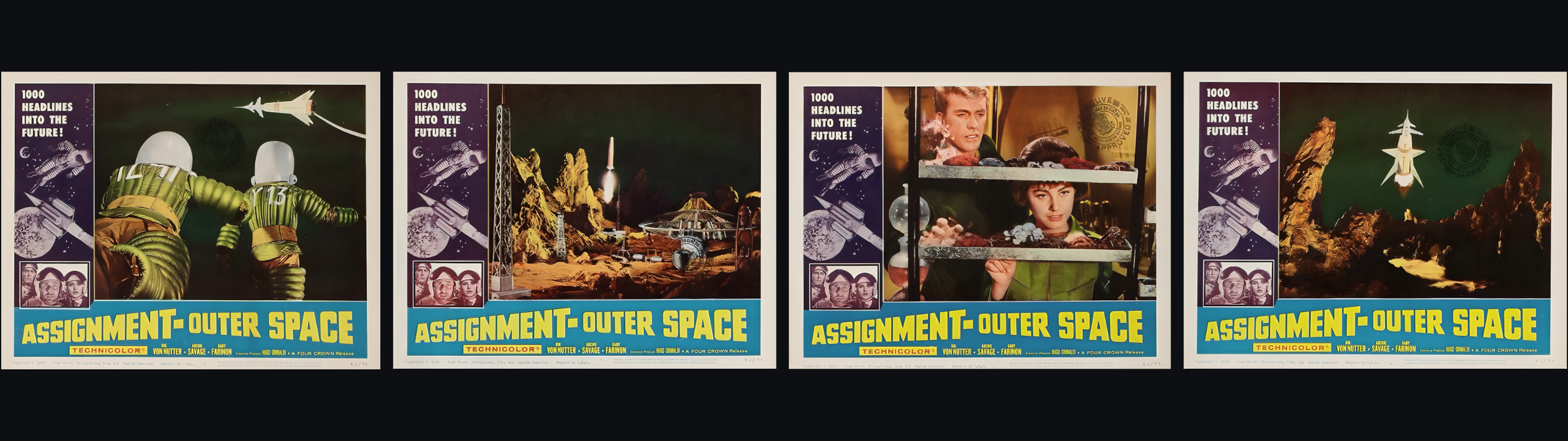
The film combines space adventure, suspense, romance, and technological science fiction, relying heavily on miniature spacecraft, studio sets, and optical effects to create its futuristic environments. Marcello Masciocchi's cinematography combines color photography with specially treated monochrome imagery for some of the space sequences, while Lelio Luttazzi, credited as J. K. Broady, composed the original score. Despite its extremely limited budget, Margheriti's efficient direction and imaginative miniature work allowed the film to create a surprisingly ambitious depiction of interplanetary travel. It subsequently became an important early work in the director's long career in genre cinema.
PLOT (Spoiler Alert)
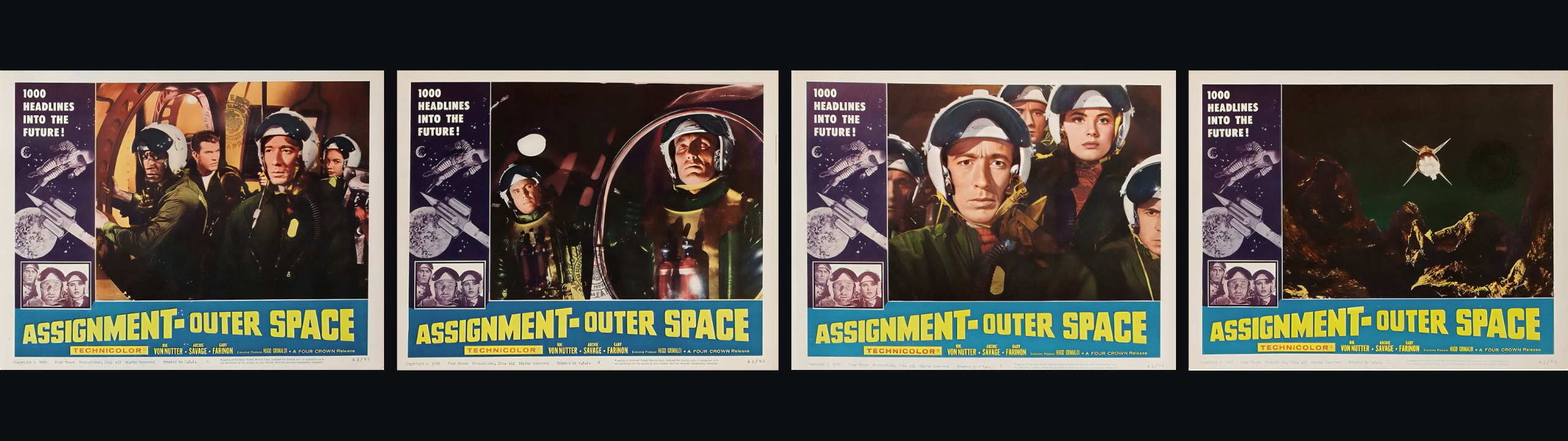
In the future, journalist Ray Peterson is sent from Earth to the orbital space station BZ-88 to prepare a report about the people living and working in space. The station commander, George, is immediately suspicious of Peterson and considers him an outsider who could interfere with the station's operations. Peterson nevertheless begins investigating the station and develops a relationship with Lucy, a young technician. His curiosity eventually brings him into the middle of a much more serious crisis when the crew receives news that the spacecraft Alpha Two is returning toward Earth without its pilot.
Alpha Two is equipped with experimental photon generators that have become dangerously unstable. The ship is surrounded by an intense energy field that produces enormous heat and is capable of destroying anything that approaches it. George initially attempts to destroy Alpha Two with atomic missiles, but the weapons fail to stop the vessel. The crew determines that someone must find a way through the dangerous field and reach the ship. Al, one of the station's pilots, volunteers for the mission and sacrifices himself while discovering that a narrow corridor exists through the energy field. His information gives the station crew a possible means of reaching Alpha Two.
Peterson insists on joining the rescue mission despite having no formal astronaut training. Using a small space taxi, he follows the route discovered by Al and manages to approach Alpha Two safely. He boards the runaway spacecraft and enters the section containing the electronic control system. Peterson succeeds in disabling the malfunctioning electronic brain and shuts down the photon generators, preventing the ship from reaching Earth and destroying the planet. However, his oxygen supply is nearly exhausted during the operation. Commander George reaches him in time, brings him back to the station, and returns him safely to Lucy. Peterson's successful mission transforms him from an unwelcome reporter into a genuine participant in the station's life.
PRODUCTION
Assignment: Outer Space was produced in Italy under the original title Space Men by Ultra Film and Titanus. It was the first feature directed by Antonio Margheriti, who used the pseudonym Anthony Daisies on the Italian production and was later credited as Anthony Dawson on English-language prints. The screenplay was written by Ennio De Concini, under the pseudonym Vassilji Petrov. The film was made on a very limited budget and was completed in approximately three weeks, including its special-effects work.
Marcello Masciocchi was responsible for the cinematography, while Mario Serandrei, credited as Sir Andrews on English-language prints, handled the editing. Lelio Luttazzi, credited as J. K. Broady, composed the original music, with Carlo Savina also receiving an uncredited composer credit. Special effects were created by Caesar Peace. The production relied heavily on miniature spacecraft, models, optical effects, and studio-built sets. Margheriti's work on the film established the practical-effects approach that would become an important characteristic of his subsequent science-fiction productions.
RELEASE
Space Men was released theatrically in Italy on August 25, 1960, with Titanus handling Italian distribution. The film was subsequently prepared for English-language markets under the title Assignment: Outer Space. American International Pictures distributed the English-language version in the United States, where it opened on December 13, 1961. The American release was substantially shorter than some of the longer versions that have circulated internationally, with the commonly listed U.S. running time being approximately 73 minutes.
The film was not a major critical success, but its imaginative use of miniature effects and its depiction of space travel helped establish Margheriti as a director capable of producing ambitious genre films on extremely small budgets. Its commercial performance was sufficient to allow Margheriti to continue making science-fiction films, leading to several subsequent productions set in his recurring futuristic universe. The film later entered the public domain in the United States, resulting in numerous inexpensive home-video and television releases. It is now primarily regarded as an early and historically interesting example of Italian science-fiction cinema.
CAST
Rik Van Nutter as Ray Peterson (IZ41)
Gaby Farinon as Lucy (Y13)
David Montresor as George, the Commander
Archie Savage as Al (X-15)
Alain Dijon as Archie (Y16)
CREW
Director: Antonio Margheriti (as Anthony Daisies)
Producers: Turi Vasile, Goffredo Lombardo; Hugo Grimaldi (English-language version)
Executive Producer: Samuel Z. Arkoff (English-language version)
Writer: Ennio De Concini (as Vassilji Petrov)
Additional English Version/Narration: Jack Wallace
Cinematographer: Marcello Masciocchi
Editor: Mario Serandrei (as Sir Andrews)
Music: Lelio Luttazzi (as J. K. Broady)
Additional Music: Carlo Savina (uncredited)
Special Effects: Caesar Peace
Production Companies: Ultra Film; Titanus
Distributor: Titanus (Italy); American International Pictures (U.S.)
Release Date: August 25, 1960 (Italy); December 13, 1961 (U.S.)
Country of Origin: Italy
Running Time: 73 minutes (U.S. version); longer versions have circulated
Budget: Approximately 50 million Italian lire
Box Office Return: N/A
IMDb Rating
IMDb Rating = 3.7 / 10
TRIVIA
The film's original Italian title was Space Men.
Antonio Margheriti used the pseudonym Anthony Daisies for the Italian release and was credited as Anthony Dawson on the American version.
Space Men was Margheriti's first feature film as a director.
Margheriti reportedly completed the production in approximately three weeks, an unusually short schedule for a science-fiction feature involving extensive miniature work.
The production was made for approximately 50 million Italian lire, an extremely modest budget for its ambitions.
The film was photographed at the same time that Mario Bava was filming Black Sunday at a neighboring soundstage.
Archie Savage, who played Al, was an American dancer and actor and was one of the few Black performers to receive a substantial role in an Italian science-fiction film of the period.
The American version changed or Anglicized several character names and credits, including Margheriti's directorial pseudonym and De Concini's writing credit.
The film is frequently associated with Margheriti's later Gamma One science-fiction productions, although Space Men predates the four films that are generally grouped under the Gamma One series.
Some of the film's exterior space scenes were photographed in black and white and subsequently tinted, giving the sequences a distinctive appearance.
The film does not actually feature extraterrestrial beings; its central threat is a human spacecraft whose malfunctioning photon technology places Earth in danger.
The runaway Alpha Two and its destructive energy field provide the film's central science-fiction premise.
Lelio Luttazzi, credited as J. K. Broady, supplied the original musical score, while the English-language version received additional editorial and sound work.
The film's modest commercial success helped Margheriti establish himself as a specialist in low-budget genre filmmaking, leading to a career that eventually encompassed science fiction, horror, adventure, westerns, espionage films, and action pictures.
OUR MOVIE REVIEWERS SAY...

"Assignment: Outer Space is a brisk, imaginative piece of low-budget science fiction that makes excellent use of its miniature effects and outer-space imagery. The film's sense of adventure and cosmic danger gives it the charm of a classic space-age B-movie."

"Assignment: Outer Space is a modest science-fiction adventure that succeeds more through atmosphere and spectacle than character development. Its story is fairly conventional, but the space sequences and futuristic imagery provide enough entertainment for fans of vintage science fiction."

"Assignment: Outer Space has the look of a space adventure but not the substance. The dialogue is wooden, the characters are thinly developed, and the recycled effects become increasingly obvious. What should be thrilling often feels like a routine trip through familiar territory."