
SYNOPSIS
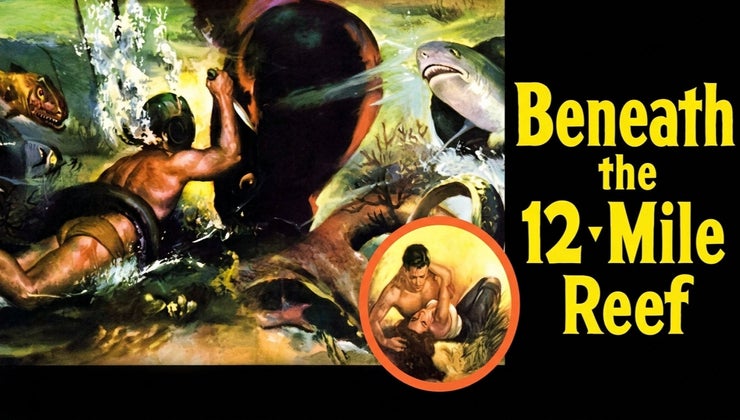
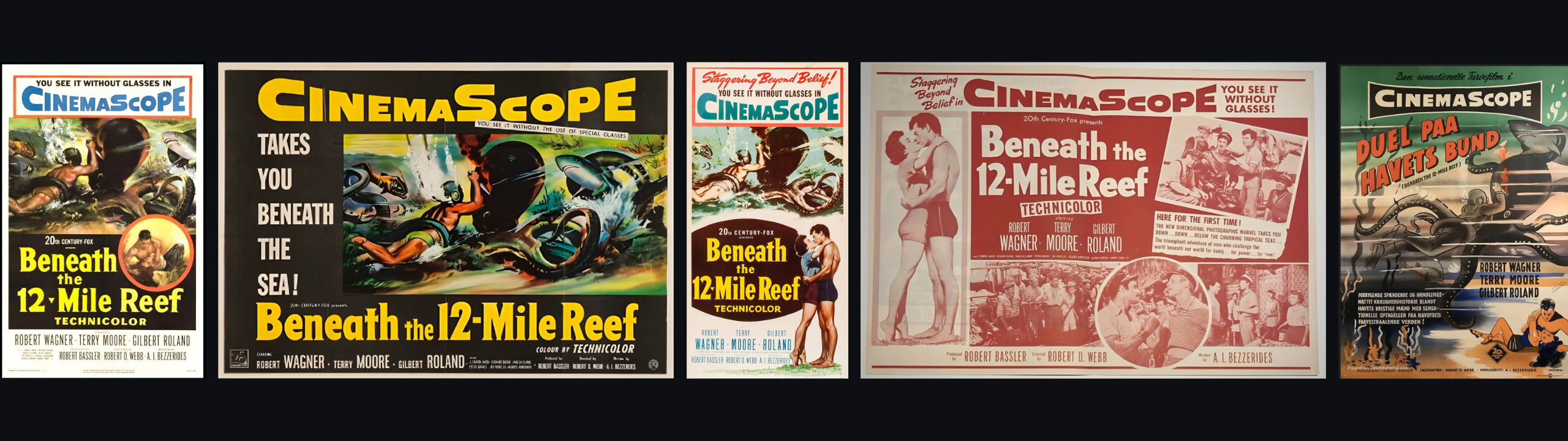
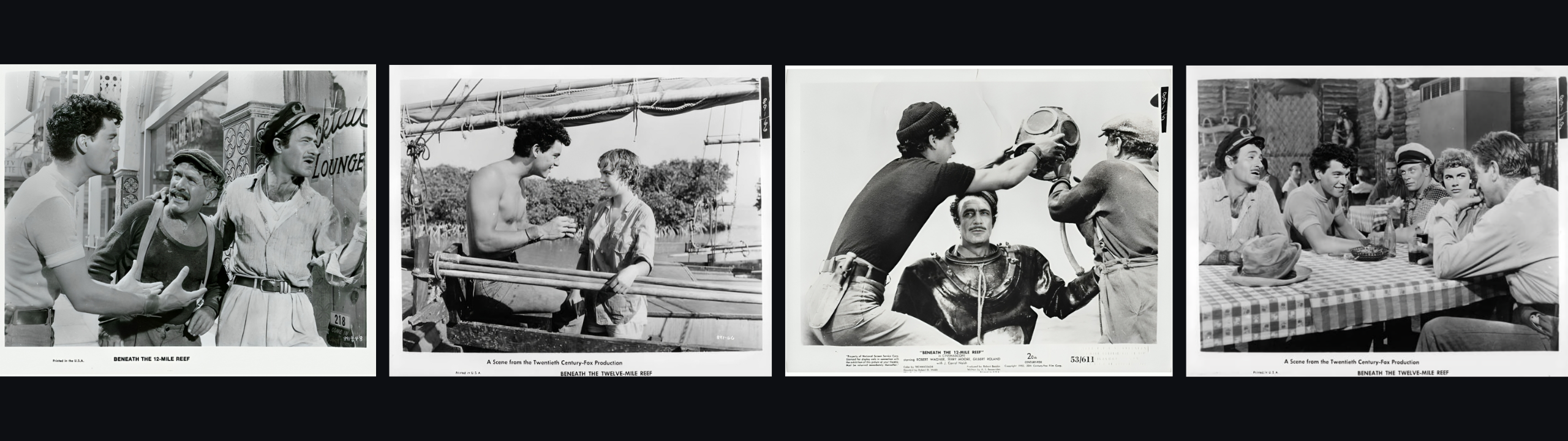
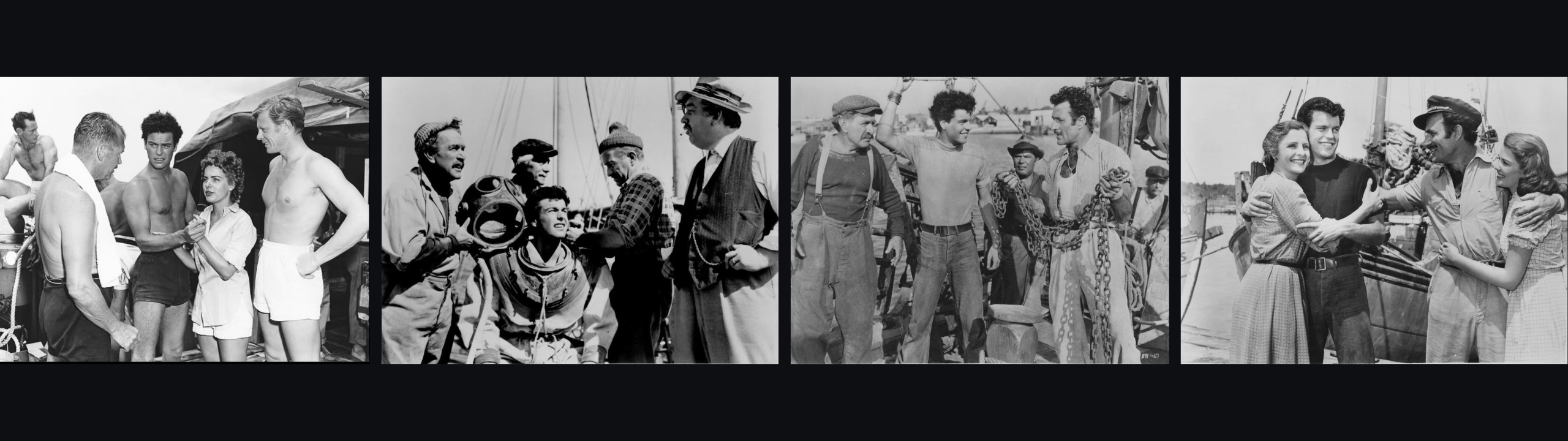
Beneath the 12-Mile Reef (1953) is an American Technicolor adventure drama directed by Robert D. Webb and written by A. I. Bezzerides. The film stars Robert Wagner as Tony Petrakis, Terry Moore as Gwyneth Rhys, Gilbert Roland as Mike Petrakis, J. Carrol Naish as Socrates "Soak" Houlis, Richard Boone as Thomas Rhys, and Peter Graves as Arnold Dix. Produced by Robert Bassler for Twentieth Century-Fox, the film is notable for being one of the earliest CinemaScope productions and for making extensive use of underwater photography. Its combination of widescreen photography, Florida locations, and underwater sequences made it an important technical showcase for the new format.
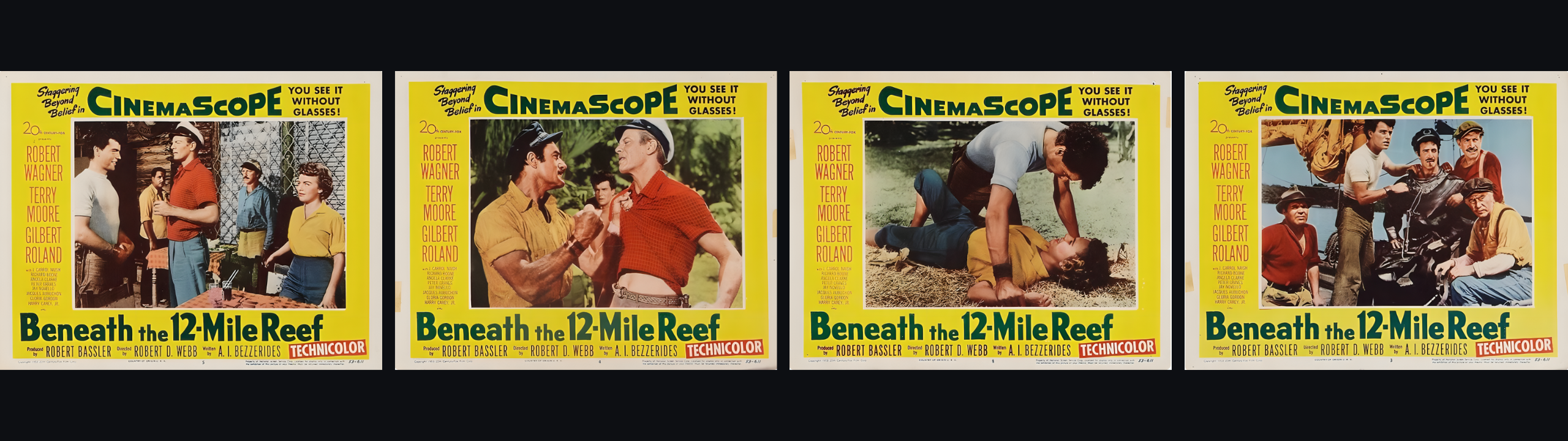
The story centers on Mike Petrakis and his son Tony, Greek-American sponge fishermen working from Tarpon Springs, Florida. Their livelihood is threatened by poor fishing and growing competition from American fishermen led by the Rhys family. When Mike ventures into waters traditionally regarded as off-limits to Greek fishermen, the Petrakis crew encounters hostility from their rivals. The conflict becomes more complicated when Tony falls in love with Gwyneth Rhys, the daughter of his father's principal rival, creating a romance between two families divided by economic competition and longstanding resentment.
The film combines adventure, romance, family drama, and maritime spectacle. Edward Cronjager's Technicolor cinematography makes particularly effective use of CinemaScope's expansive image, while the underwater photography provides some of the film's most distinctive imagery. Bernard Herrmann's original score, recorded for CinemaScope's four-track stereophonic presentation, adds considerable atmosphere. Although the screenplay was criticized for its conventional romantic drama, the film remains historically significant for its pioneering use of widescreen and underwater cinematography and for its depiction of the Greek-American sponge-fishing community of Tarpon Springs.
PLOT (Spoiler Alert)
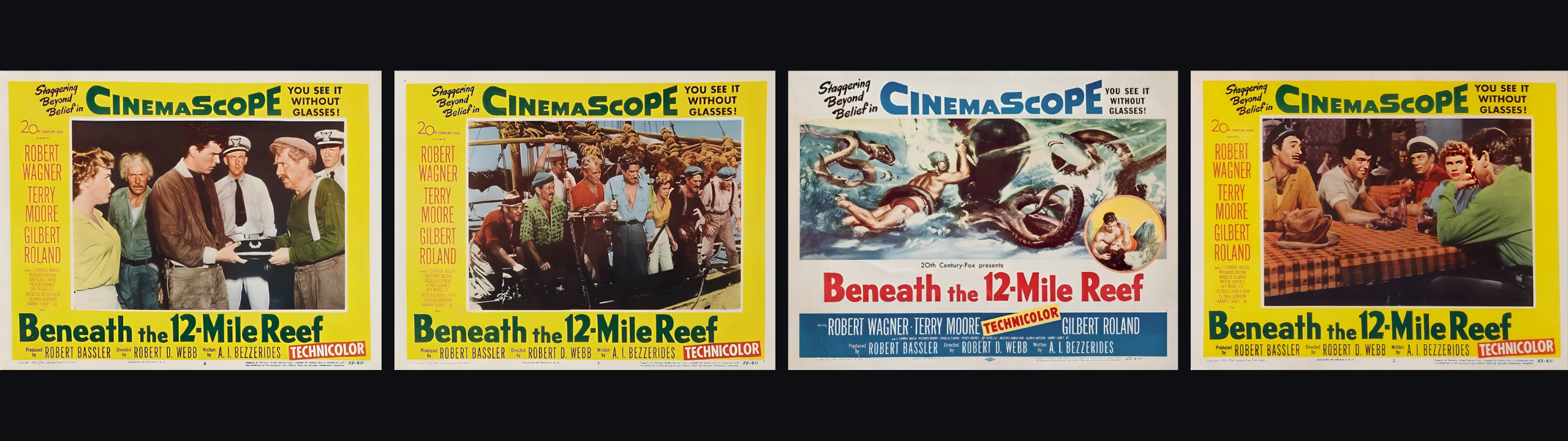
Greek-American sponge fisherman Mike Petrakis returns to Tarpon Springs with his son Tony and the crew of the Aegli after another disappointing fishing expedition. Mike is under financial pressure from moneylender Demetrios Sofotes, who invested in the boat. The Petrakis family learns that another vessel, the Helios, has returned with a profitable catch from the dangerous Twelve-Mile Reef. During the Greek Orthodox Epiphany celebration, Tony wins an underwater diving contest and persuades his father to allow him to dive on their next expedition. Believing the waters near Tarpon Springs are no longer productive, Mike decides to take the Aegli toward Key West, an area unofficially regarded as off-limits to Greek fishermen.
The decision brings the Petrakis crew into conflict with American sponge fishermen Arnold Dix and Griff Rhys, who threaten the divers and take their catch. At Key West, Tony meets Gwyneth Rhys, Arnold's sweetheart and the daughter of Thomas Rhys, and the two quickly become attracted to each other. A confrontation between the rival fishermen leads to a brawl, while Mike later gets revenge on Arnold. Mike then takes the Aegli to the Twelve-Mile Reef, but disaster strikes when he slips during a dive and rises too quickly, suffering decompression sickness. He subsequently dies. While Tony is away mourning his father, Arnold and Griff loot the Aegli, and a confrontation involving other American fishermen results in the boat being set ablaze.
Gwyneth brings Tony to her father Thomas, who is more reasonable than Arnold and orders Arnold and his associates to compensate Tony for the stolen sponges. Arnold refuses to accept his father's decision and beats Tony. After recovering, Tony and Gwyneth take the Conch and head to sea, where they begin their own sponge-fishing operation at the Twelve-Mile Reef. Arnold and his companions eventually locate them and confront the couple. During the ensuing fight, Tony and Arnold fall into the water. Arnold becomes trapped in underwater vegetation, but Tony rescues him despite their history of hostility. Grateful for having been saved, Arnold reconciles with Tony, ending the feud between the two sides. Gwyneth decides to marry Tony, and the Petrakis and Rhys families come together to arrange their wedding.
PRODUCTION
Beneath the 12-Mile Reef was produced by Robert Bassler, with Darryl F. Zanuck credited as executive producer, for Twentieth Century-Fox Film Corporation. The screenplay was written by A. I. Bezzerides, and the film was directed by Robert D. Webb. Production began on April 6, 1953, and continued through late May. The working title was 12 Mile Reef. The production was photographed on location in Tarpon Springs and Key West, Florida, with the final underwater scenes filmed in Nassau, Bahamas.
Edward Cronjager served as director of photography, with Lyle Wheeler and George Patrick as art directors and William Reynolds as editor. The film was photographed in Technicolor and CinemaScope, using Western Electric recording and the four-track stereophonic sound system associated with early CinemaScope productions.
Underwater sequences were photographed using a specially designed French Aquaflex camera, while puppeteer Jack Shafton created miniature diving figures used in certain underwater scenes. Bernard Herrmann composed the music, with Urban Thielmann credited as music arranger.
RELEASE
The film received its world premiere at the Roxy Theatre in New York on December 16, 1953, followed by its Los Angeles opening on December 25, 1953. Twentieth Century-Fox handled both production and distribution. The film was released in December 1953 and carried an original running time of approximately 101–102 minutes. Its CinemaScope presentation used an exceptionally wide 2.55:1 aspect ratio, making it one of the earliest productions to demonstrate the new format's potential for expansive outdoor and underwater imagery.
The film received mixed critical reviews. Critics generally praised the Florida locations, underwater photography, and technical achievement while considering the romantic storyline conventional. Edward Cronjager was nominated for the Academy Award for Best Cinematography, Color, although the award went to Shane. Director Robert D. Webb also received a nomination for the Grand Prize at the 1954 Cannes Film Festival. The film earned approximately $3.6 million in U.S. rentals and $3.5 million in foreign rentals. Its copyright was not renewed, and the film subsequently entered the public domain in the United States, resulting in numerous later home-video editions.
CAST
Robert Wagner as Tony Petrakis
Terry Moore as Gwyneth Rhys
Gilbert Roland as Mike Petrakis
J. Carrol Naish as Socrates "Soak" Houlis
Richard Boone as Thomas Rhys
Angela Clarke as Mama Petrakis
CREW
Director: Robert D. Webb
Executive Producer: Darryl F. Zanuck
Producer: Robert Bassler
Writer: A. I. Bezzerides
Cinematographer: Edward Cronjager
Editor: William Reynolds
Music: Bernard Herrmann
Music Arranger: Urban Thielmann
Art Directors: Lyle Wheeler, George Patrick
Set Decorator: Fred J. Rode
Costume Designer: Dorothy Jeakins
Wardrobe Director: Charles LeMaire
Special Photographic Effects: Ray Kellogg
Miniatures: Jack Shafton
Production Company: Twentieth Century-Fox Film Corporation
Distributor: Twentieth Century-Fox Film Corporation
Release Date: December 16, 1953 (New York premiere)
Country of Origin: United States
Running Time: 101–102 minutes
Budget: $1,560,000 (estimated)
Box Office Return: Approximately $3.6 million U.S. rentals; $3.5 million foreign rentals
IMDb Rating
IMDb Rating = 5.7 / 10
TRIVIA
The film's original working title was 12 Mile Reef.
Beneath the 12-Mile Reef was the third film made in CinemaScope, following The Robe and How to Marry a Millionaire.
It was among the earliest CinemaScope productions to demonstrate the process through extensive underwater photography.
The film was photographed in the original 2.55:1 CinemaScope ratio, considerably wider than the standard television and theatrical formats of the period.
Underwater photography was carried out using a specially designed French Aquaflex camera.
Robert Wagner nearly drowned while filming at Tarpon Springs after being accidentally kicked in the stomach by another swimmer. Production records indicate that he had to be rescued after sinking underwater.
Jack Shafton created miniature diving figures that were used during some of the underwater sequences.
The film's screenplay was inspired by the basic Romeo and Juliet pattern, with the romance developing between the children of two competing families.
Bernard Herrmann composed the score, which was recorded in four-track stereophonic sound for the original CinemaScope presentation.
The film's only Academy Award nomination was for Edward Cronjager's cinematography in color.
The final underwater scenes were filmed in Nassau, Bahamas, while principal location work took place in Tarpon Springs and Key West.
The film contains an authentic representation of Greek Orthodox Epiphany celebrations in Tarpon Springs, reflecting the area's historic Greek-American community.
Its copyright was not renewed, and the film subsequently entered the public domain in the United States.
The film remains particularly notable for its combination of early CinemaScope, Technicolor, location photography, and underwater cinematography, rather than for its conventional romantic storyline.
Filmed in Tarpon Springs, FL. As of 2019 it is still the home of the natural sponge industry in the US, and has the highest percentage of Greek-Americans of any city in the country.
Kathleen Crowley and Debra Paget were considered for the female lead that went to Terry Moore.
The last of 4 films in which Gilbert Roland and J. Carrol Naish both appeared.
Composer Bernard Herrmann reused his music for the fire sequence in Jason and the Argonauts 1963.

OUR MOVIE REVIEWERS SAY...

"Beneath the 12-Mile Reef takes audiences beneath the Florida waters for a colorful adventure filled with danger, romance, and spectacular underwater photography. Robert Wagner and Gilbert Roland give the story energy, while the underwater sequences remain the film's real attraction."

"Beneath the 12-Mile Reef is a straightforward adventure that works best when it takes us beneath the surface. The human story is familiar and occasionally melodramatic, but the underwater photography gives the film an unusual visual appeal and a sense of genuine adventure."

"Beneath the 12-Mile Reef has one great idea and spends too much time away from it. The underwater photography is impressive, but the predictable romance, familiar conflicts, and conventional dialogue make the story feel like little more than a framework for the scenery."