
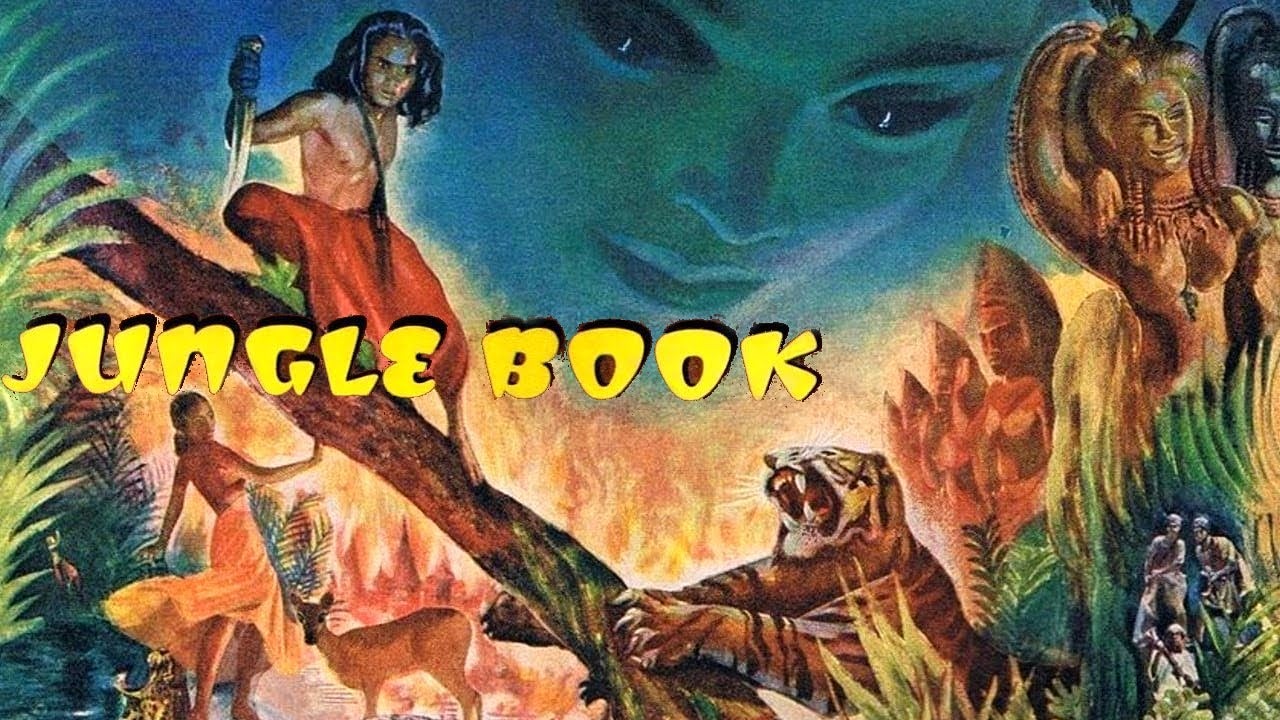
Enjoy our In-Depth podcast of 1942 Jungle Book
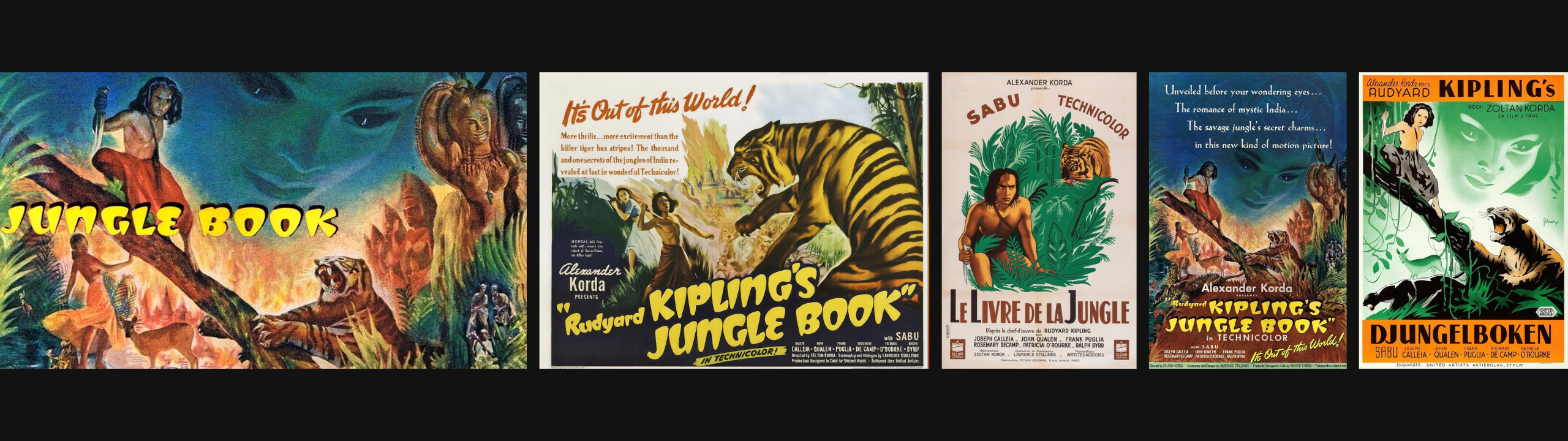
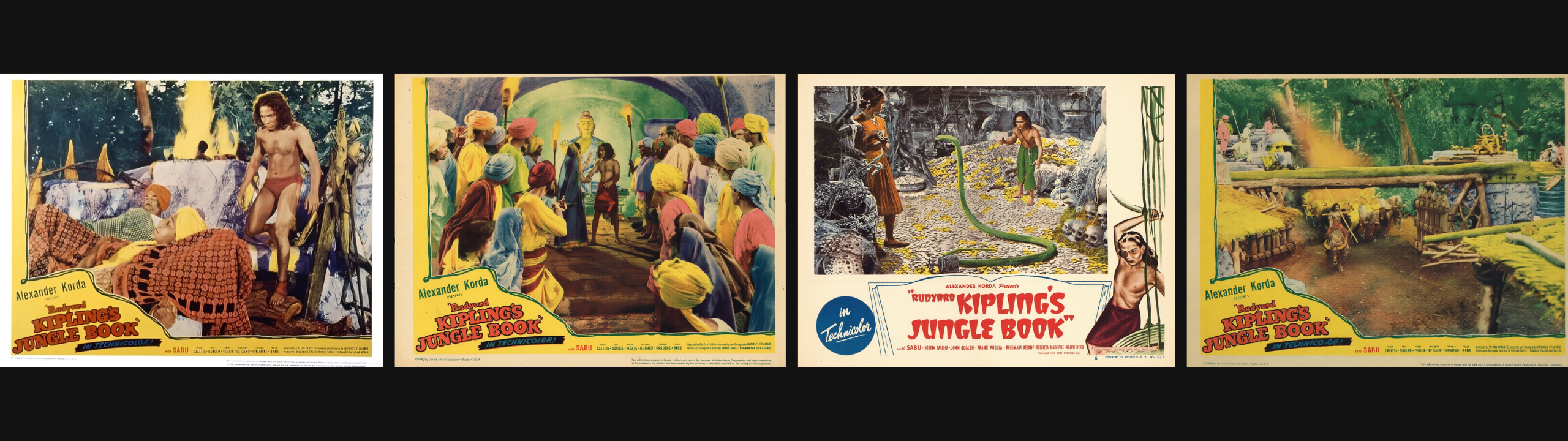
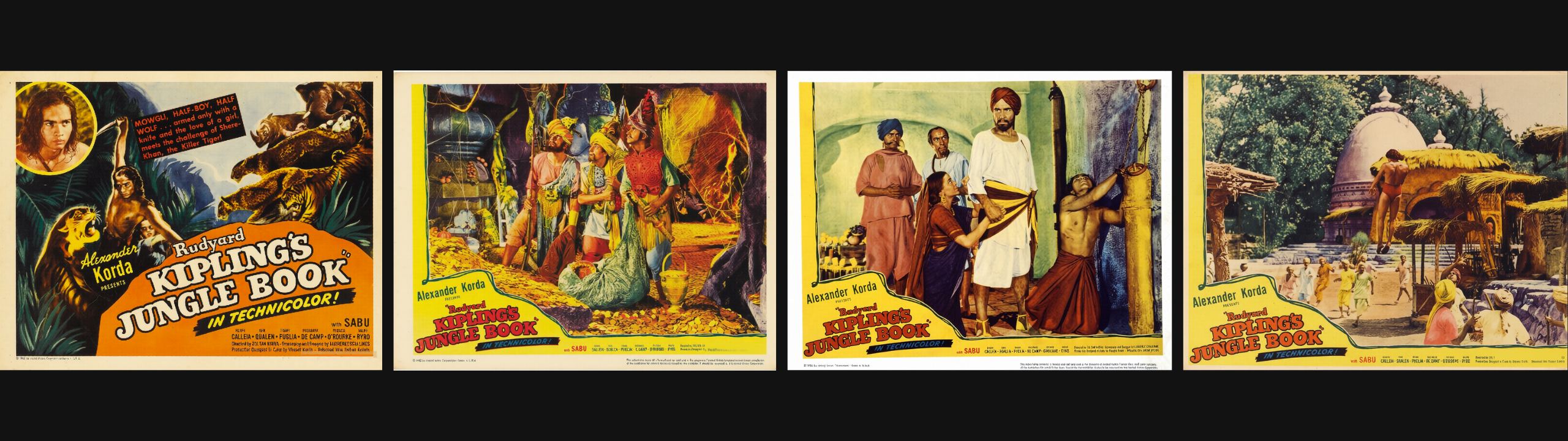

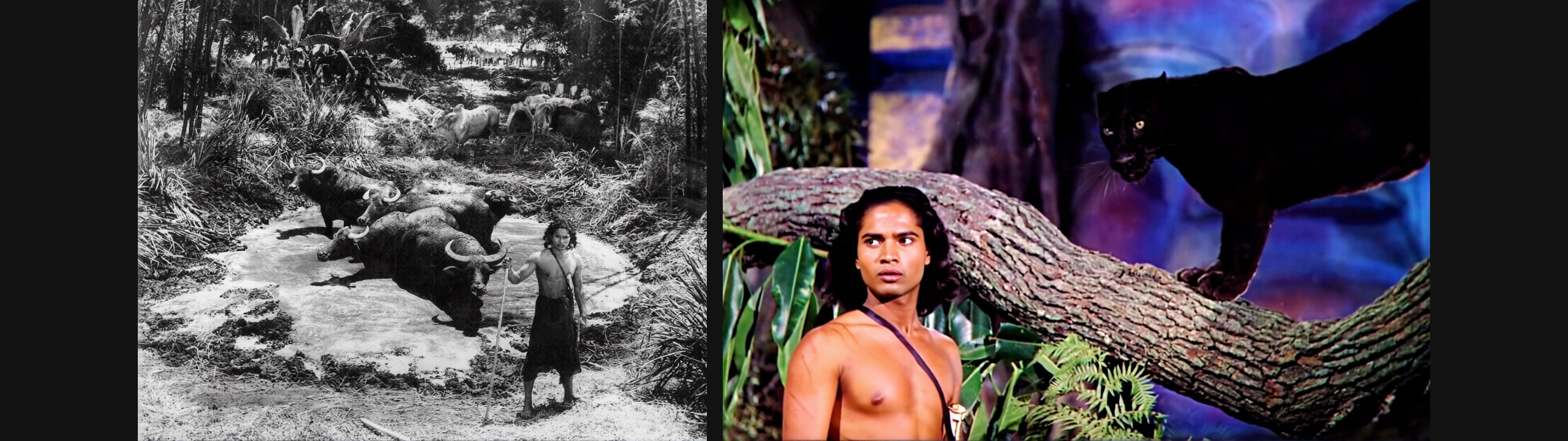
SYNOPSIS: "Jungle Book" (1942) is a lavish adventure fantasy directed by Zoltán Korda and based on Rudyard Kipling's classic collection of stories. The film stars Sabu as Mowgli, a young boy who, after being separated from his family as an infant, is raised in the jungles of India by a pack of wolves. Living among the animals and guided by his loyal friends, Mowgli grows into a fearless and resourceful young man who knows the ways of the jungle better than any human.
When Mowgli is discovered by villagers and brought back into human society, he struggles to adapt to the customs, greed, and ambitions of the civilized world. His knowledge of a legendary hidden treasure soon attracts the attention of those who seek wealth and power. Torn between two worlds, Mowgli must decide where he truly belongs as he confronts betrayal, danger, and the destructive consequences of human greed. Renowned for its stunning Technicolor cinematography, memorable musical score, and enchanting atmosphere, "Jungle Book" remains one of the most celebrated adaptations of Kipling's beloved tale.
PLOT Spoiler Alert: "Jungle Book" (1942) opens deep within the Indian jungle, where an infant survives a tiger attack and is adopted by a wolf pack. The child, named Mowgli, grows up under the protection of the animals and becomes a respected member of the jungle community. Years later, he encounters a group of villagers who recognize that he is human and bring him back to their village.
Although welcomed at first, Mowgli finds human society confusing and often dishonest. He becomes particularly close to the kind-hearted Mahala, who sees goodness in him despite his unusual upbringing. During his time in the village, Mowgli reveals the location of a long-lost treasure hidden in the ruins of an ancient city. News of the treasure spreads quickly, awakening greed and suspicion among the villagers.
Obsessed with riches, the villagers organize an expedition to recover the treasure. Their quest soon turns violent as mistrust and selfishness consume them. Mowgli watches in dismay as the treasure drives people to betray one another, proving that the dangers of human nature can be greater than those found in the jungle.
As chaos erupts, the jungle itself seems to rise against the intruders. In the film's dramatic climax, a massive stampede of elephants destroys the ancient city and buries the treasure forever. Realizing that the greed of mankind can never be satisfied, Mowgli rejects village life and returns to the jungle. He leaves civilization behind and rejoins his animal family, finding peace in the world where he truly belongs.
PRODUCTION: "Jungle Book" (1942) was produced by Alexander Korda and directed by his brother, Zoltán Korda. The film was adapted from the stories of Rudyard Kipling, although it takes considerable creative liberties with the source material. Production began in the early 1940s and represented one of the most ambitious adventure films of its era.
The picture was filmed primarily on elaborate studio sets in California, where extensive jungle environments were constructed to recreate the atmosphere of colonial India. The production made groundbreaking use of Technicolor photography, resulting in vibrant imagery that became one of the film's most celebrated achievements. Cinematographer W. Howard Greene won an Academy Award for his work on the film's visual presentation.
Special attention was devoted to the film's animal sequences. A combination of trained animals, practical effects, miniatures, and carefully staged action scenes helped bring the jungle to life. The production also featured an acclaimed musical score by Miklós Rózsa, whose compositions contributed greatly to the film's sense of adventure and wonder.
Sabu, already an international star from earlier Korda productions, was cast as Mowgli and performed many physically demanding scenes. His energetic performance became one of the defining elements of the film and helped establish "Jungle Book" as a classic adventure fantasy.
RELEASE: "Jungle Book" (1942) was released by United Artists on April 3, 1942. The film premiered during a period when audiences sought escapist entertainment, and its colorful visuals and adventurous storyline provided a welcome contrast to the realities of World War II.
Upon release, the film received strong reviews from critics, who praised its Technicolor photography, imaginative storytelling, and Sabu's charismatic performance as Mowgli. The picture proved successful at the box office and became one of the most popular adventure films of the decade.
The film earned multiple Academy Award nominations such as Best Art Direction (Color), Best Original Music Score and Best Special Effects, and Best Cinematography (Color). Over the years, "Jungle Book" has continued to be admired for its visual artistry and remains one of the most enduring screen adaptations of Rudyard Kipling's work. Its influence can be seen in many later jungle-themed adventure films and adaptations of the Mowgli story.
CAST:
Sabu as Mowgli
Joseph Calleia as Buldeo
John Qualen as The Barber
CREW:
Director: Zoltán Korda
Producer: Alexander Korda
Writers: Laurence Stallings (screenplay), based on stories by Rudyard Kipling
Cinematographer: W. Howard Greene
Editor: Henry Berman
Music: Miklós Rózsa
Production Company: London Films
Distributor: United Artists
Release Date: April 3, 1942
Country of Origin: United States
Running Time: 108 minutes
Box Office Return: Major commercial success for United Artists
IMDB Rating = 7.2 / 10
TRIVIA:
The film was one of the earliest and most successful Technicolor adventure films of the 1940s.
Sabu's performance as Mowgli became his most famous role and cemented his status as an international star.
The screenplay differs significantly from Rudyard Kipling's original stories, focusing more heavily on the treasure-hunt storyline.
The film won the Academy Award for Best Cinematography (Color).
Composer Miklós Rózsa's score received widespread acclaim and is considered one of the highlights of the film.
Many of the jungle environments were elaborate studio constructions rather than real jungle locations.
The elephant stampede climax was one of the most ambitious action sequences of its era.
Producer Alexander Korda and director Zoltán Korda collaborated on several acclaimed adventure films during the 1930s and 1940s.
The film's visual style later influenced numerous adaptations of Kipling's works, including later versions of "The Jungle Book."
"Jungle Book" remains one of the most respected live-action adaptations of Rudyard Kipling's classic stories and is often praised for its blend of fantasy, adventure, and moral themes concerning humanity and nature.
This was the first film for which original soundtrack recordings were issued. Previously, when record companies released music from a film, they had insisted on re-recording the music in their own studios with their own equipment. The "Jungle Book" records were taken from the same recordings used for the film's soundtrack, and their commercial success paved the way for more original-soundtrack albums.
Sabu never starred in any Indian movies, and was only in British, European and Hollywood films. He was lined up to star in Indian films, but could not get a valid work permit, because he was a naturalized US Citizen, (even though he was born in India). However, to this day, many people still regard him as an Indian movie star.
Rudyard Kipling's two Jungle Book anthologies comprise fifteen stories, four of which were used in this film: "Mowgli's Brothers," "How Fear Came," "Tiger! Tiger!" and "The King's Ankus."
Although Mowgli speaks to several jungle animals, only the two snakes, Father of Cobras and Kaa, respond in English. As two of the few models used to represent the animals, they were easier to control and slower than the real ones.
Although this movie was set in India, the production was actually shot in California, USA
OUR MOVIE REVIEWERS SAY...

"Jungle Book" (1942) is one of those rare adventure films that manages to be both visually spectacular and emotionally engaging. Sabu delivers a charismatic performance as Mowgli, bringing an infectious energy to every scene. The Technicolor photography is breathtaking, creating a jungle world that feels magical and alive. While the story takes liberties with Kipling's original work, it succeeds as a grand cinematic adventure filled with memorable characters, impressive animal sequences, and a timeless message about greed and humanity. It's a classic that still holds up remarkably well.

"Jungle Book" (1942) is an ambitious adaptation that offers plenty of entertainment, even if it doesn't always stay faithful to Rudyard Kipling's stories. The film's greatest strengths are its lush Technicolor visuals and Sabu's spirited performance, both of which carry the picture through some slower narrative stretches. The treasure-hunt plot occasionally overshadows the more interesting themes of Mowgli's struggle between civilization and the wild. While not every element works equally well, the film remains an intriguing and often enjoyable example of Hollywood adventure filmmaking from its era.

Despite its impressive production values, "Jungle Book" (1942) often feels more like a conventional treasure-hunt adventure than a meaningful adaptation of Kipling's beloved tales. The Technicolor cinematography is undeniably striking, but the story frequently wanders, relying on melodrama and spectacle at the expense of character development. Sabu is likable as Mowgli, yet even his performance can't fully overcome a screenplay that simplifies many of the richer themes found in the source material. The result is a visually attractive film that never quite reaches the emotional depth or narrative power it aims for.