

Ansco Color Process
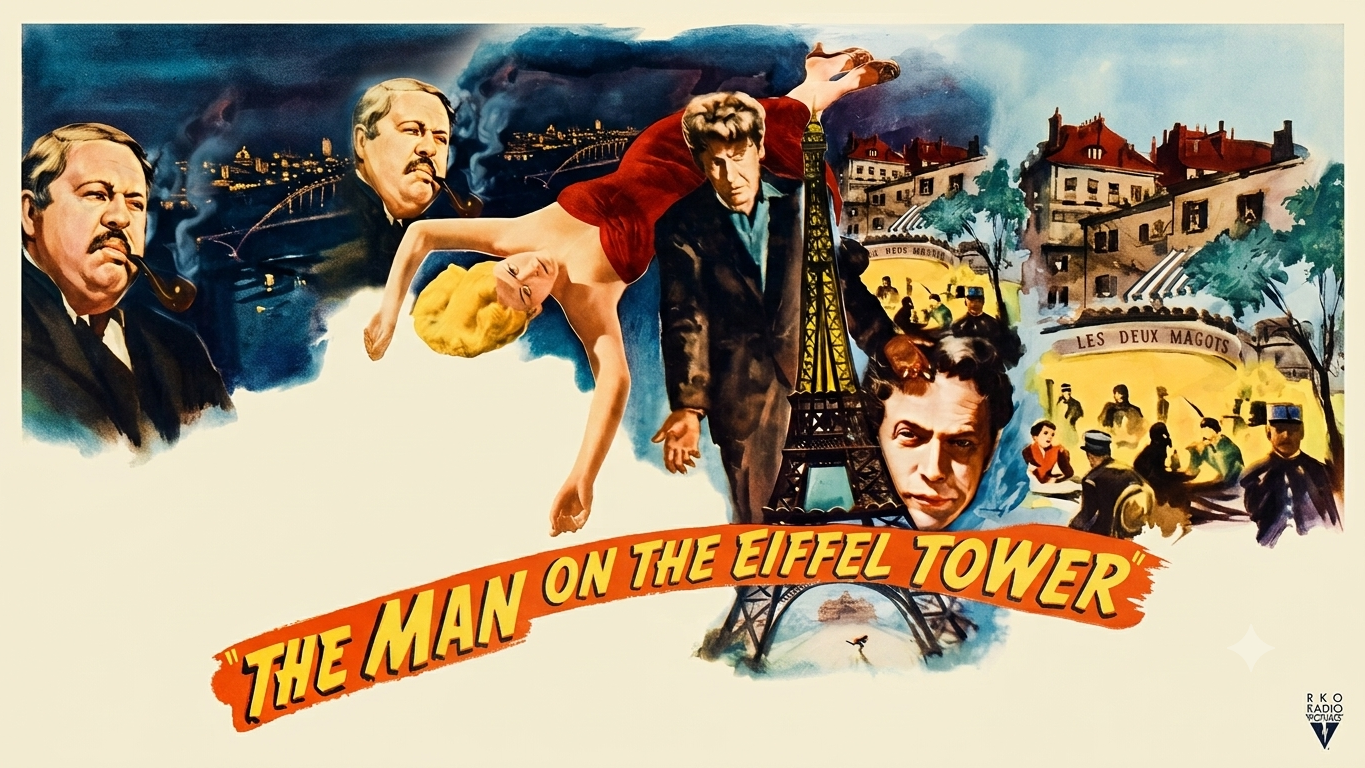
The Man on the Eiffel Tower (1949/1950) was photographed using Ansco Color, a wartime American derivative of Germany's Agfacolor integral tripack reversal/negative color film technology
Enjoy our Podcasts

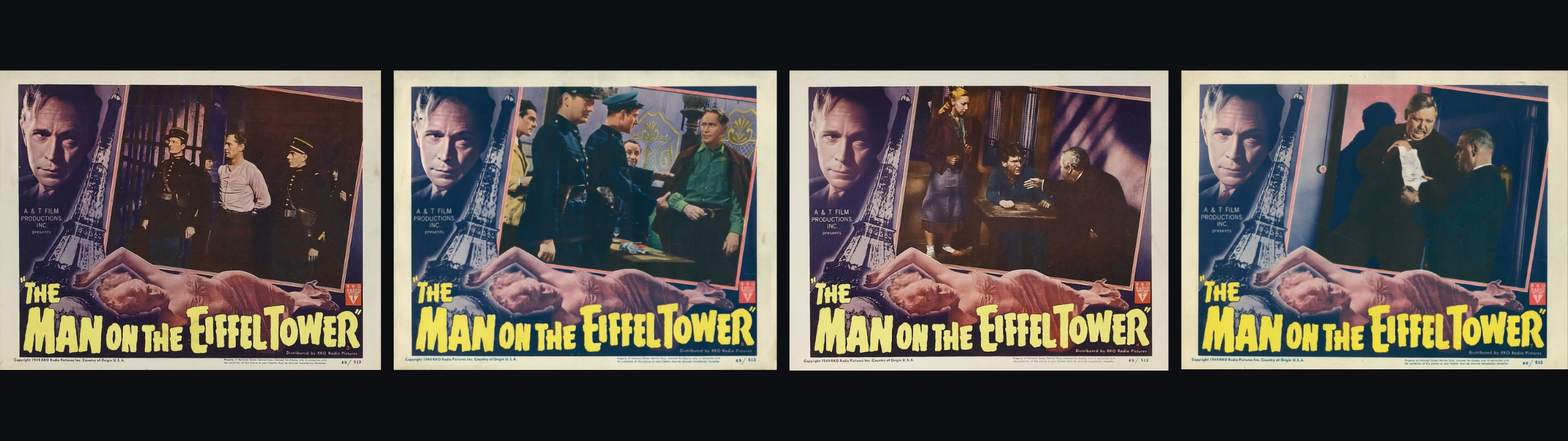
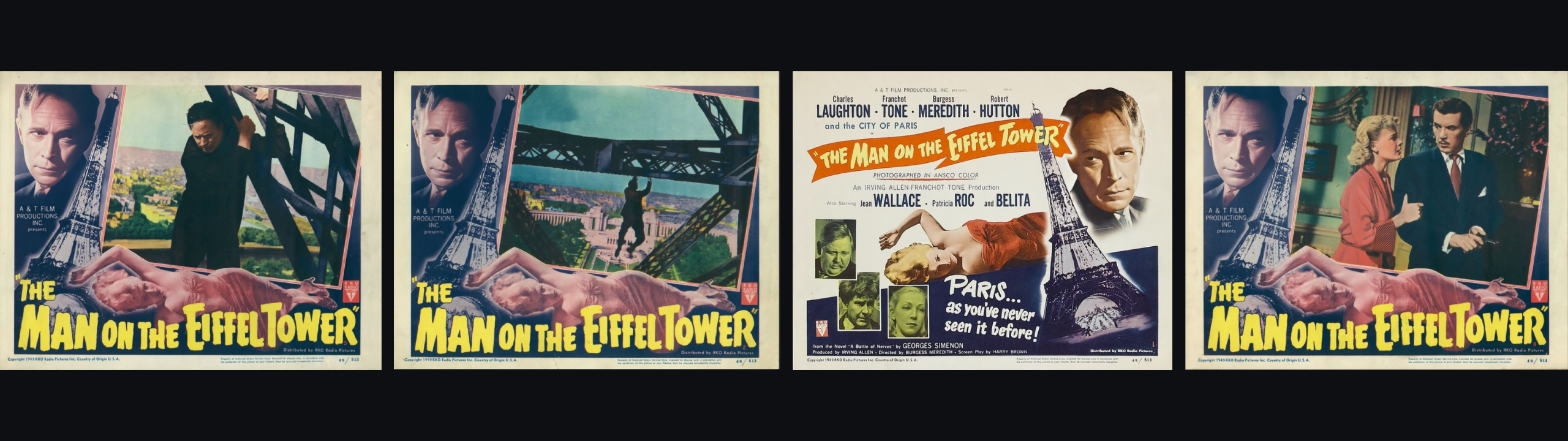
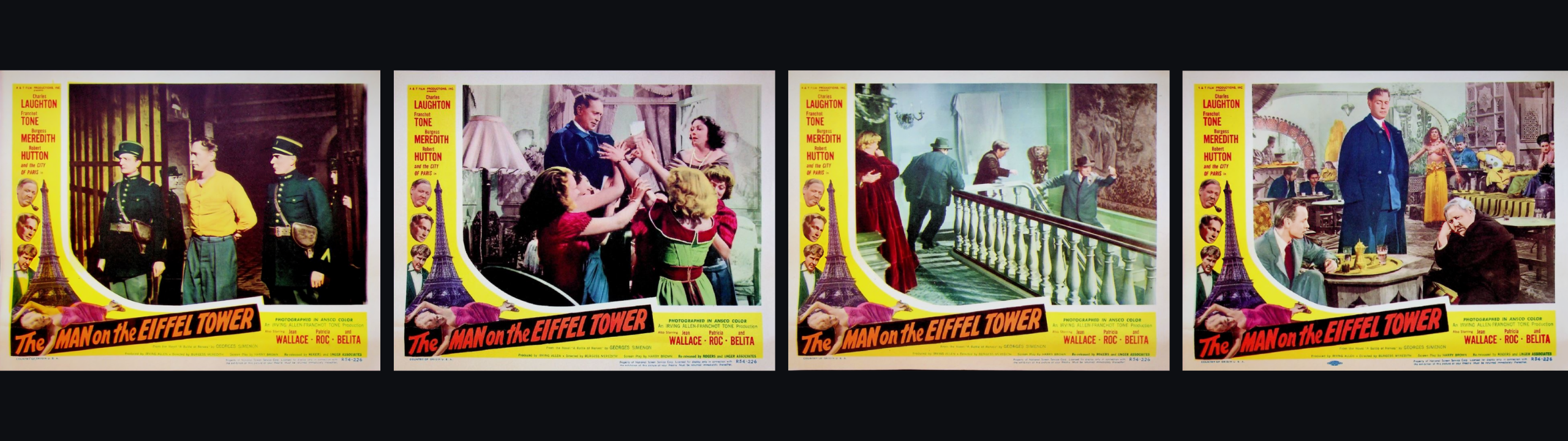
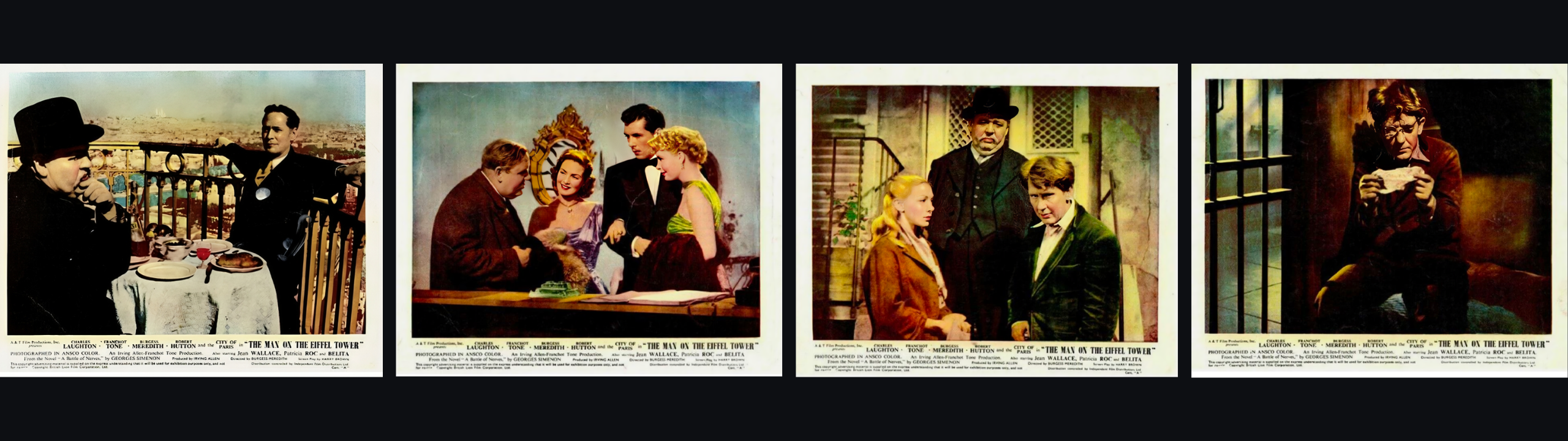
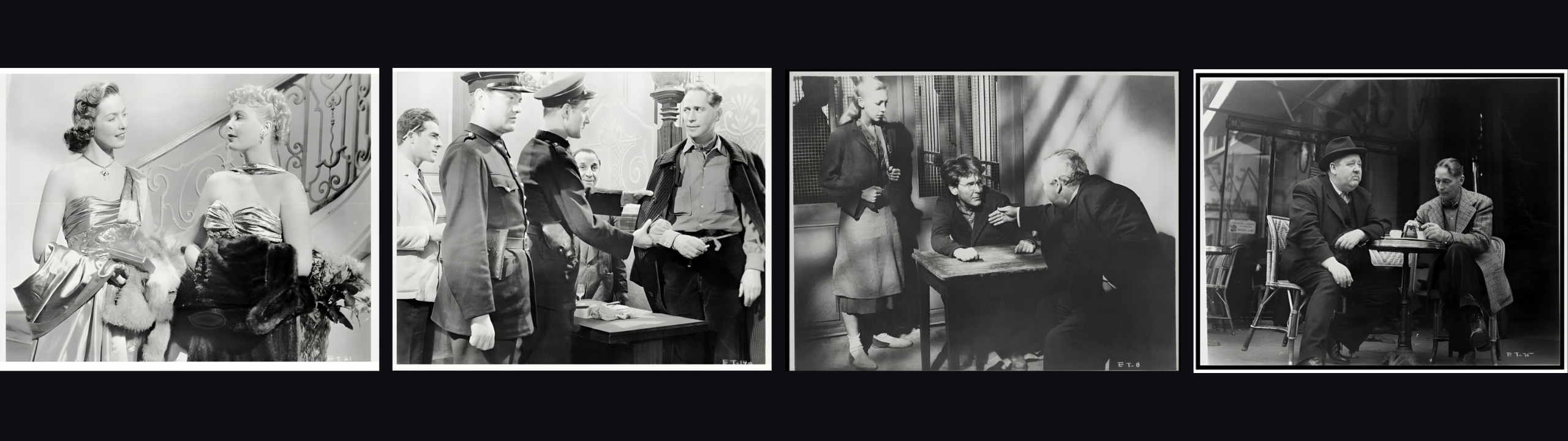
The Man on the Eiffel Tower is a 1949 American mystery crime thriller directed by Burgess Meredith and Irving Allen, based on Georges Simenon's 1931 novel La Tête d'un Homme (A Battle of Nerves). Starring Charles Laughton, Franchot Tone, Burgess Meredith, Robert Hutton, and Patricia Roc, the film blends detective fiction, psychological suspense, and film noir against the atmospheric backdrop of post-war Paris.
Featuring one of Charles Laughton's most memorable performances as Inspector Jules Maigret, the film is regarded as one of the earliest and most faithful English-language adaptations of Simenon's celebrated detective.
The story follows the methodical and perceptive Inspector Jules Maigret, who investigates the murder of a wealthy widow after a young foreign student is arrested for the crime. Convinced that the accused is merely an unwilling pawn, Maigret deliberately allows him to escape in the hope of exposing the brilliant criminal mastermind responsible for the murder. As the investigation leads through the streets, cafés, and landmarks of Paris, Maigret must outwit an intelligent and manipulative killer whose carefully planned scheme threatens to remain one step ahead of the law.
Featuring striking location photography of Paris, an unforgettable climax atop the Eiffel Tower, and Charles Laughton's commanding portrayal of the famous detective, The Man on the Eiffel Tower combines suspense with thoughtful police investigation. Its atmospheric cinematography, authentic Parisian setting, and faithful adaptation of Simenon's novel have earned the film lasting recognition as a distinctive entry in the classic detective and film noir genres.
PLOT (Spoiler Alert):
Inspector Jules Maigret of the Paris Police is assigned to investigate the murder of Madame Henderson, a wealthy American widow living in Paris. A young Czech medical student, Johann Radek, appears to have been implicated in the crime after being lured into what seems to be an obvious trap. Although the evidence points toward Radek, Maigret quickly senses that the timid student lacks both the motive and the confidence to have orchestrated such an elaborate murder.
Believing a far more dangerous criminal is manipulating events from the shadows, Maigret makes the unusual decision to allow Radek to escape police custody. His colleagues question the wisdom of the plan, but Maigret believes that by following Radek rather than imprisoning him, the true murderer will eventually reveal himself. As expected, Radek attempts to contact the mysterious man who coerced him into participating in the crime.
The investigation uncovers the involvement of Joachim, an intelligent but deeply disturbed opportunist who carefully manipulated Radek into becoming the apparent culprit. Joachim's motives stem from greed and a desire to demonstrate his intellectual superiority over society and the police. He delights in controlling those around him and believes himself capable of committing the perfect crime.
As Maigret pieces together the evidence, Joachim becomes increasingly desperate to eliminate anyone who could expose him. Witnesses disappear or are intimidated, and Radek finds himself in constant danger as he struggles to prove his innocence. Throughout the investigation, Maigret remains calm and patient, relying more on psychological insight than conventional police methods to close in on his suspect.
The pursuit eventually leads to the Eiffel Tower, where Joachim attempts a final escape high above Paris. A tense confrontation unfolds on the tower's observation platforms as Maigret and the police corner the killer. Refusing to surrender, Joachim lashes out before losing his footing during the struggle and falling to his death from the famous landmark.
With Joachim dead, Radek is cleared of all suspicion, and the full truth behind the murder is finally revealed. Maigret's unconventional methods are vindicated, demonstrating that careful observation, patience, and an understanding of human nature are often more valuable than force. The film concludes with justice restored, leaving Inspector Maigret to quietly reflect on another successfully solved case.
PRODUCTION:
Production of The Man on the Eiffel Tower began in 1948 under producers Irving Allen and Harry M. Popkin, with filming taking place largely on location in Paris, France. The film was directed by Burgess Meredith, although producer Irving Allen also received co-director credit after supervising portions of the production. The screenplay, adapted from Georges Simenon's novel La Tête d'un Homme, sought to introduce Inspector Jules Maigret to English-speaking audiences while remaining faithful to the original story.
The production made extensive use of authentic Parisian locations, including the Eiffel Tower, the Seine, and numerous city streets and cafés, giving the film an unusual realism for its time. Cinematographer Stanley Cortez combined location photography with expressive film noir lighting to create a tense atmosphere, while composer Michel Michelet provided a dramatic orchestral score that complemented the film's suspenseful tone.
RELEASE:
The Man on the Eiffel Tower premiered in the United States on January 12, 1950, following its completion in late 1949. Distributed by RKO Radio Pictures, the film received generally favorable reviews for Charles Laughton's performance, Stanley Cortez's striking cinematography, and its authentic Parisian locations. Critics particularly praised the film's intelligent mystery and atmospheric presentation, although some found its deliberate pacing slower than contemporary crime thrillers.
The film achieved moderate commercial success and has since developed a reputation as one of the finest early screen adaptations of Georges Simenon's Inspector Maigret novels. Modern critics continue to admire Charles Laughton's thoughtful portrayal of the famous detective, while the film's spectacular climax atop the Eiffel Tower remains one of the most memorable finales in classic detective cinema.
CAST:
Charles Laughton as Inspector Jules Maigret
Franchot Tone as Johann Radek
Burgess Meredith as Joachim Radek
Jean Wallace as Edna Warren
Robert Hutton as Bill Kirby
Patricia Roc as Helen Kirby
Belita as Gisèle
Wilfrid Hyde-White as Inspector Janvier
Robert Douglas as Commissioner Coméliau
CREW:
Director: Burgess Meredith, Irving Allen
Producers: Irving Allen, Harry M. Popkin
Writers: Harry Brown (screenplay), based on La Tête d'un Homme by Georges Simenon
Cinematographer: Stanley Cortez
Editor: Richard L. Van Enger
Music: Michel Michelet
Production Company: Burgess Meredith Productions
Studio: RKO Radio Pictures
Distributor: RKO Radio Pictures
Release Date: January 12, 1950 (United States)
Country of Origin: United States
Running Time: 97 minutes
Budget: N/A
Box Office Return: N/A
IMDb Rating = 6.7 / 10
TRIVIA:
The film is based on Georges Simenon's 1931 novel La Tête d'un Homme, one of the earliest Inspector Maigret stories.
Charles Laughton's portrayal of Inspector Maigret is widely regarded as one of the character's finest English-language screen interpretations.
Much of the film was shot on location in Paris, an uncommon practice for Hollywood productions of the late 1940s.
The climactic sequence atop the Eiffel Tower was filmed using a combination of location photography and carefully constructed studio sets.
Director Burgess Meredith also appears in the film, playing the intelligent and manipulative villain Joachim.
Cinematographer Stanley Cortez was acclaimed for his atmospheric visual style and later photographed The Night of the Hunter (1955).
The film was one of the first major English-language adaptations of a Georges Simenon novel.
Inspector Maigret would later become one of the most frequently portrayed detectives in film and television, appearing in dozens of adaptations worldwide.
The authentic Parisian locations give the film a documentary-like quality that distinguishes it from many studio-bound detective films of the era.
Although not a major box-office success, The Man on the Eiffel Tower has gained appreciation among fans of classic mysteries and film noir for its intelligent storytelling, memorable performances, and distinctive setting.
Producer Irving Allen was the original director, but after only three days of shooting, Charles Laughton threatened to quit if Burgess Meredith did not take over. Laughton directed the scenes in which Meredith appeared.
The first American picture to be shot wholly in color in Paris, the Ansco Color process being used to maximize the cinematic impact of the story's authentic locations.
According to her book "My Life in France," Julia Child and her husband Paul Child met Burgess Meredith and Franchot Tone at the restaurant Les Deux Magots, where the two were filming this movie. It would be another 12 years before Julia would begin her rise to fame.
The film had various production problems, including Charles Laughton's threatening to walk off the picture if the original director, Irving Allen (who was also one of the film's producers) wasn't replaced (star Burgess Meredith then took over as director). Allen himself was very dissatisfied with the final results. After its initial run, he bought the film rights back from RKO and kept the prints out of circulation for a long time. Many, including Meredith, believed that the film was lost. However, it has since been released on VHS and DVD.
OUR MOVIE REVIEWERS SAY...

"The Man on the Eiffel Tower is a stylish and atmospheric mystery elevated by Charles Laughton's commanding performance as Inspector Maigret. Its memorable Parisian setting and suspenseful climax make it a rewarding detective thriller."

"The Man on the Eiffel Tower is an intriguing adaptation that values mood over momentum. While the pacing can be uneven, its strong performances and evocative locations provide enough intrigue to keep mystery fans engaged."

"Despite an excellent cast and an unforgettable setting, The Man on the Eiffel Tower never generates the suspense its premise promises. The investigation unfolds too leisurely, leaving the climactic confrontation more visually impressive than emotionally satisfying."