
Enjoy Our Podcasts
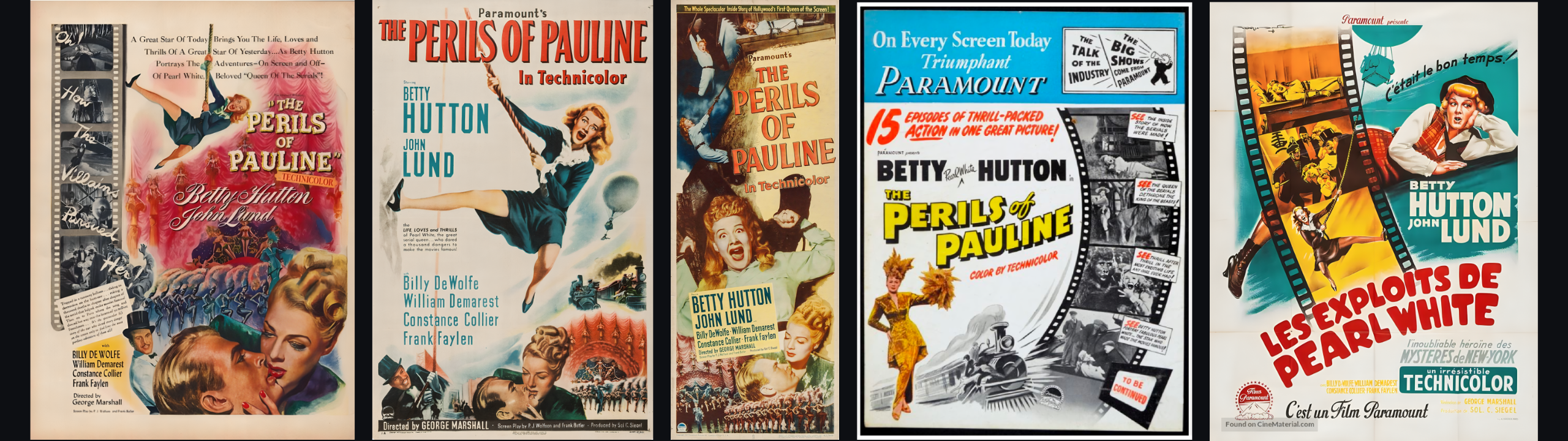
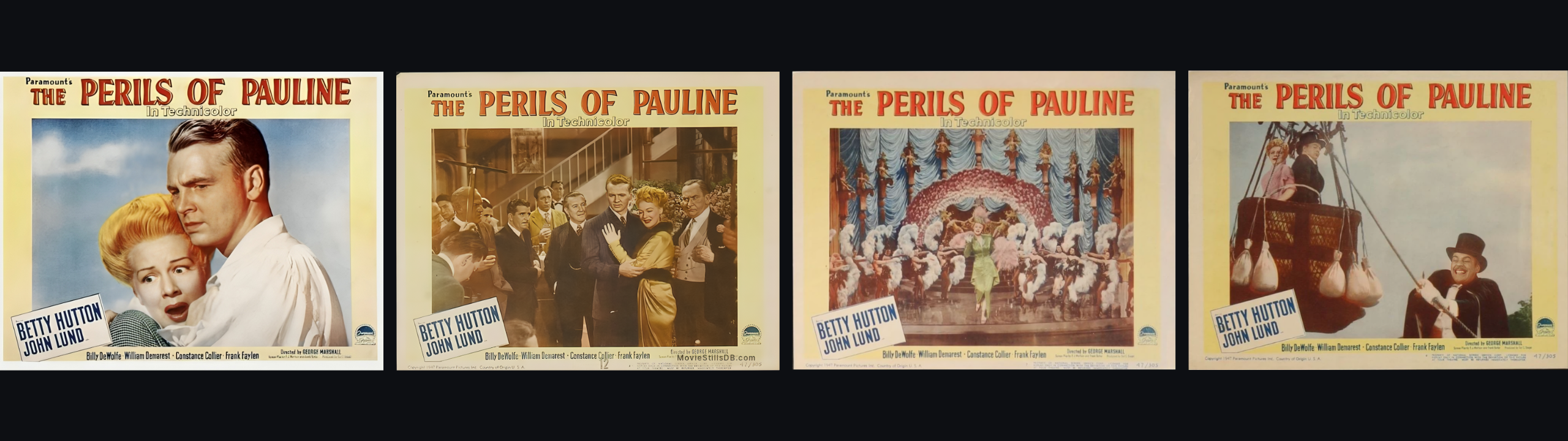
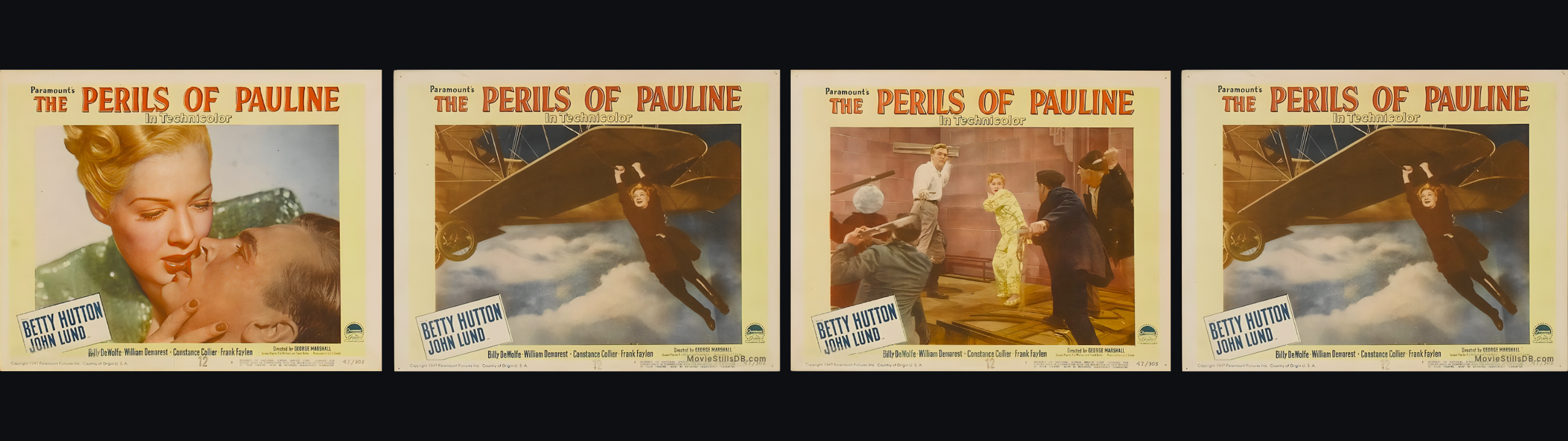
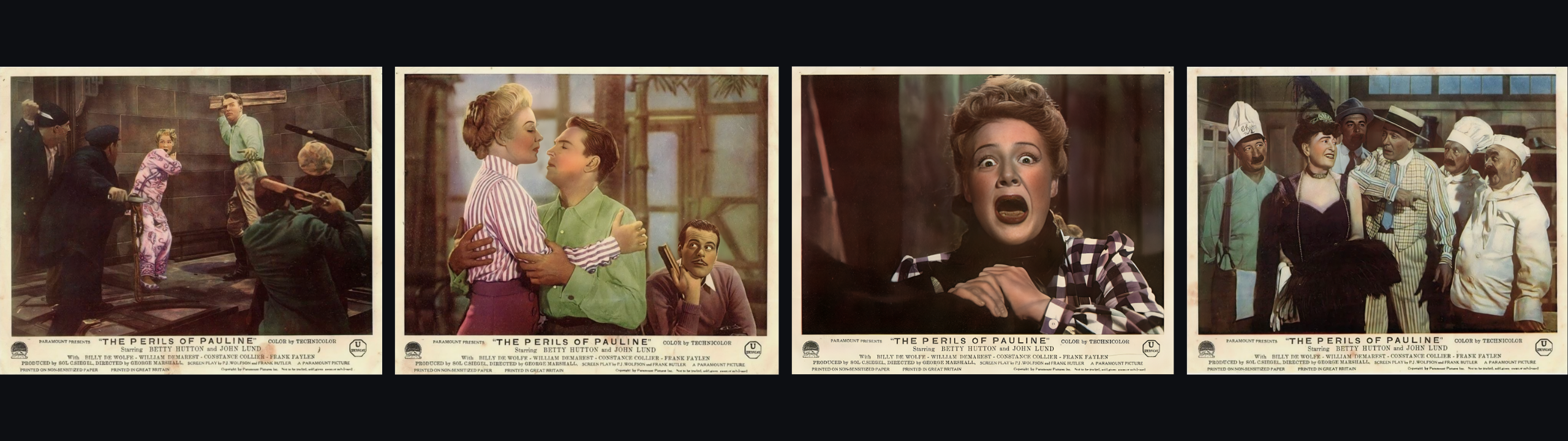
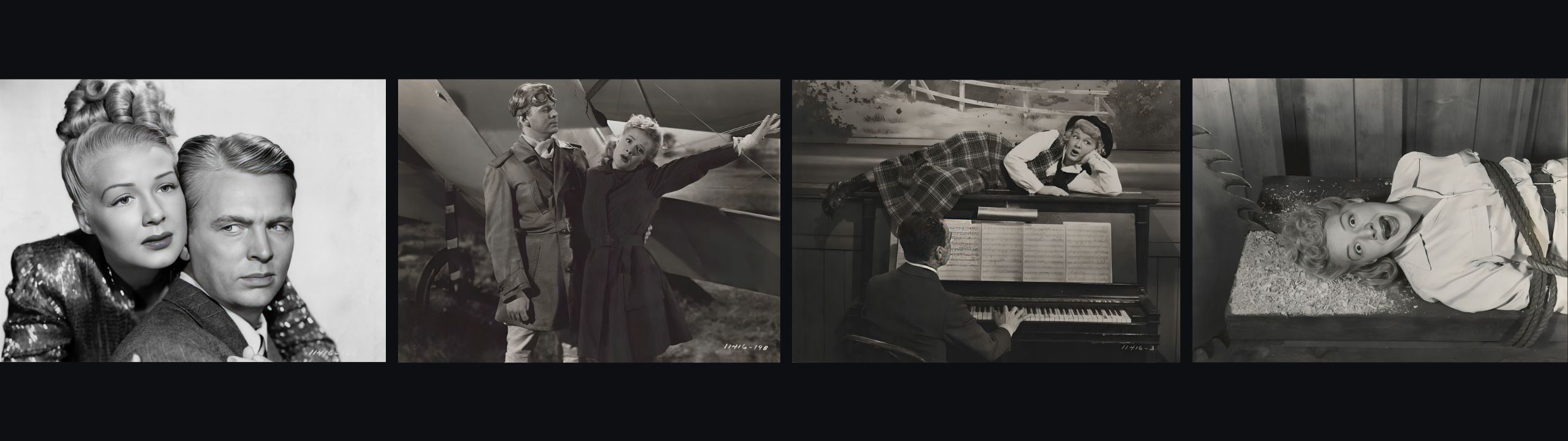
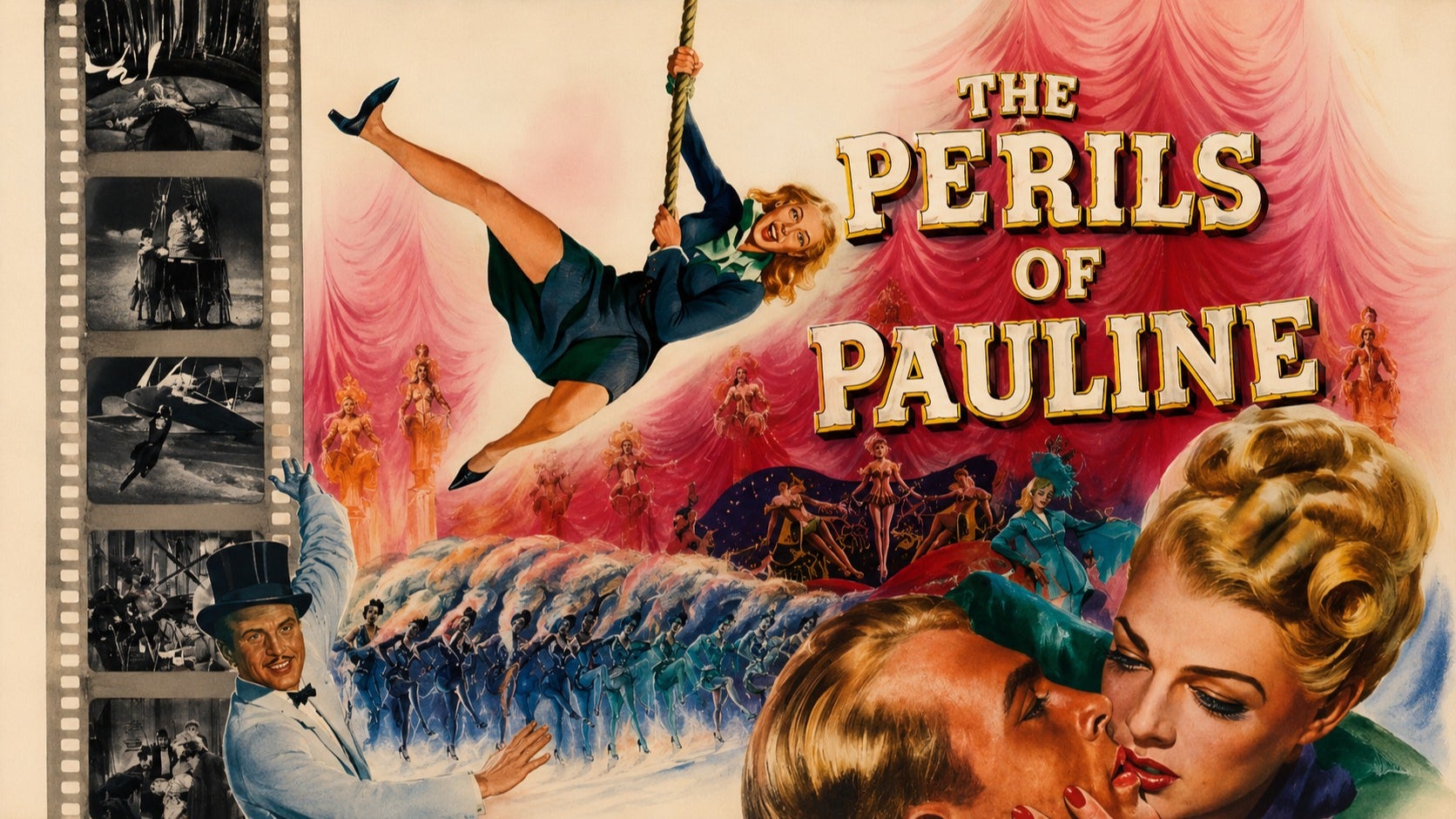
SYNOPSIS: The Perils of Pauline is a 1947 American Technicolor musical comedy directed by George Marshall and starring Betty Hutton, John Lund, Billy De Wolfe, and William Demarest. Produced by Paramount Pictures, the film presents a highly fictionalized account of the life and career of silent film serial star Pearl White.
Blending comedy, romance, and lavish musical performances, the film follows Pearl's determined pursuit of a career in show business despite the many obstacles placed in her path.
As Pearl rises from aspiring stage performer to one of Hollywood's biggest silent-era stars, she becomes famous for performing her own daring stunts in action-packed serials. Along the way, she navigates professional rivalries, romantic complications, and the demands of an ever-changing entertainment industry while remaining committed to achieving success on her own terms.
Although only loosely based on the real life of Pearl White, The Perils of Pauline is remembered as an energetic and entertaining musical biography. Betty Hutton's spirited performance, colorful Technicolor photography, and lively musical numbers helped make the film one of Paramount's most successful productions of the late 1940s, while introducing a new generation of audiences to one of cinema's earliest action heroines.
PLOT Spoiler Alert: The Perils of Pauline (1947) follows Pearl White, an ambitious young woman determined to become a successful entertainer despite repeated setbacks early in her career. Refusing to accept conventional expectations, she pursues opportunities on the stage before eventually finding success in the rapidly growing motion picture industry. Her fearless attitude and willingness to perform dangerous stunts quickly distinguish her from other actresses.
As Pearl's popularity grows, she becomes the star of thrilling adventure serials that captivate audiences across America. Alongside her professional success, she develops a complicated relationship with her longtime friend and manager, Michael Farrington, whose support proves invaluable throughout her career. Together they overcome studio politics, demanding productions, and the challenges of maintaining fame in an evolving industry.
Pearl's courage and determination ultimately earn her widespread recognition as one of silent cinema's greatest stars. The film concludes by celebrating her remarkable achievements and lasting influence on early Hollywood, emphasizing her adventurous spirit and pioneering role as one of the screen's first female action heroes.
PRODUCTION: Production on The Perils of Pauline began in 1946 under the direction of George Marshall for Paramount Pictures. Rather than creating a historically accurate biography, the filmmakers crafted a lighthearted musical inspired by the life of Pearl White, allowing Betty Hutton to combine her energetic comedic style with elaborate musical performances. The screenplay emphasized entertainment over historical fact, resulting in a colorful celebration of Hollywood's silent era.
Filmed in Technicolor, the production featured elaborate costumes, large-scale sets, and impressive recreations of early film serials. Cinematographer Ray Rennahan captured the vibrant visuals, while Victor Young's musical score complemented the film's lively pace. Betty Hutton performed many of the film's demanding action sequences, adding authenticity to her portrayal of the fearless silent-screen star.
RELEASE: The Perils of Pauline premiered in the United States on July 4, 1947. Audiences responded enthusiastically to its energetic performances, colorful production values, and blend of comedy, music, and adventure. Betty Hutton's charismatic portrayal of Pearl White received particular praise and further established her as one of Paramount's leading musical stars.
Although historians have noted the film's many historical inaccuracies, it proved to be both a critical and commercial success upon release. Today, it is remembered as an entertaining Hollywood musical and a nostalgic tribute to the excitement and spectacle of the silent film era.
CAST:
Betty Hutton as Pearl White
John Lund as Michael Farrington
William Demarest as George "Mac" McGuire
Billy De Wolfe as J. P. Borden
Constance Collier as Madame Helene
Frank Faylen as Pat O'Hare
Paul Panzer as Himself
CREW:
Director: George Marshall
Producer: Adolph Zukor
Screenplay: Frank Butler
Based on the life of: Pearl White
Cinematographer: Ray Rennahan
Editor: Stuart Gilmore
Music: Victor Young
Production Company: Paramount Pictures
Distributor: Paramount Pictures
Release Date: July 4, 1947
Country of Origin: United States
Running Time: 96 minutes
Budget: Approximately $2 million
Box Office Return: Successful (exact figures unavailable)
IMDb Rating = 6.5 / 10
TRIVIA:
Betty Hutton performed many of the film's action sequences, echoing the real Pearl White's reputation for performing dangerous stunts.
Despite being marketed as a biography, the film takes significant liberties with Pearl White's real life and career.
The film was photographed in vibrant Technicolor, highlighting Paramount's lavish post-war production style.
Several sequences recreate the style and excitement of classic silent-film adventure serials.
Victor Young's musical score complements the film's blend of comedy, romance, and action.
The movie helped introduce the legacy of silent-film star Pearl White to audiences unfamiliar with her work.
Betty Hutton's energetic performance is widely regarded as one of the highlights of her career.
Today, The Perils of Pauline remains a colorful and entertaining tribute to one of cinema's earliest female action stars and Hollywood's silent-film era.
The balloon in the balloon sequence was shipped from Goodyear in Akron, Ohio. It was handled by Navy balloonist J.J. Leonard, and was equipped with an automatic camera to avoid the weight of a cameraman.
Many actors who were in Pearl White's movies had roles in this film: Paul Panzer played the villain in the original serial, The Perils of Pauline (1914); Creighton Hale was the hero in White's serial The Exploits of Elaine (1914); William Farnum came out of retirement to play himself, appearing in the same costume he wore in Riders of the Purple Sage (1918). In addition, Louis J. Gasnier, who directed the original film (The Perils of Pauline (1914)), was a technical advisor on this film.
When the movie was screened to test audiences, there was one scene that had Pauline being attacked by a gorilla played by Charles Gemora. This was paying homage to the silent film where Pauline gets attacked by a gorilla. However, that scene scared women who left the theater holding on to their throats due to how horrific it was. As a result, the sequence was deleted. All that remains of this scene is a photograph.
According to an article in the 12 May 1946 edition of the New York Times, Betty Hutton did all her own stunts in this film.
There never was any scene with the heroine tied to railroad tracks in the original The Perils of Pauline (1914). The scene like that in this film is a recreation of a scene in a Keystone comedy called Teddy at the Throttle (1917). A similar scene also occurred in an earlier Keystone comedy called Barney Oldfield's Race for a Life (1913).
OUR MOVIE REVIEWERS SAY...

"The Perils of Pauline is a delightful blend of comedy, romance, and old-fashioned Hollywood charm. Betty Hutton delivers a spirited and charismatic performance that keeps the film lively from beginning to end, while the colorful musical numbers and lighthearted humor make for consistently enjoyable entertainment. Though only loosely inspired by the silent film star's life, it succeeds as an exuberant celebration of Hollywood's early years."

"The Perils of Pauline presents an entertaining, fictionalized account of silent film star Pearl White's career, placing comedy and musical spectacle ahead of historical accuracy. Betty Hutton's energetic performance carries the film through its whimsical story, even when the narrative feels episodic. While audiences looking for a faithful biography may be disappointed, those seeking lighthearted entertainment will likely appreciate its cheerful spirit."

"Although The Perils of Pauline features an enthusiastic performance from Betty Hutton and several entertaining musical sequences, its highly fictionalized story lacks depth and historical authenticity. The constant emphasis on comedy and spectacle often overshadows the characters, leaving the film feeling more like a series of loosely connected set pieces than a satisfying biography. Its exuberance is undeniable, but the narrative ultimately sacrifices substance for style."