
Podcast
SYNOPSIS
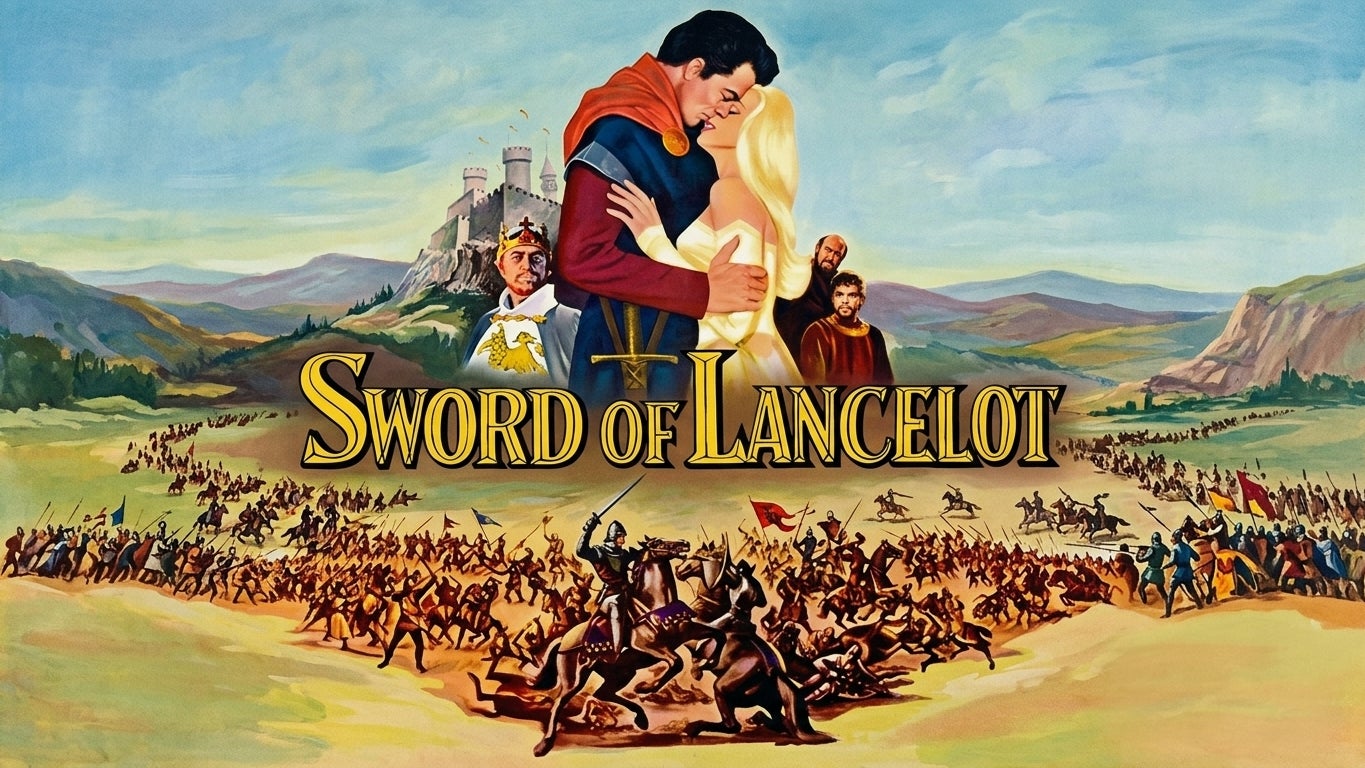
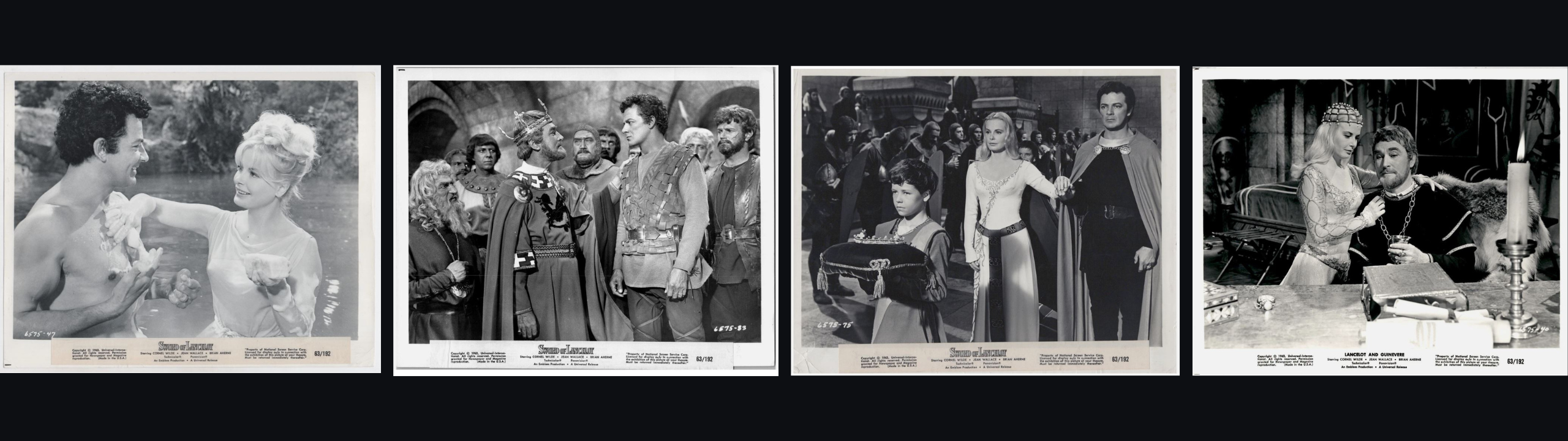
Sword of Lancelot (1963), originally released in Britain as Lancelot and Guinevere, is a British-American medieval fantasy adventure directed, produced, and co-written by Cornel Wilde, who also stars as Sir Lancelot. The film co-stars Jean Wallace as Guinevere, Brian Aherne as King Arthur, George Baker as Sir Gawaine, Archie Duncan as Sir Lamorak, and Michael Meacham as Sir Modred. The screenplay was written by Richard Schayer and Cornel Wilde, credited as Jefferson Pascal. The film presents a relatively mature interpretation of the Arthurian legend, emphasizing the tragic relationship between Lancelot and Guinevere and its consequences for Arthur's kingdom.
The story begins when King Arthur seeks to marry Guinevere, daughter of King Leodogran. Arthur sends his greatest knight, Lancelot, to defeat Leodogran's champion and then escort Guinevere to Camelot. During the journey, Lancelot protects Guinevere from an assassination attempt and the two develop a mutual attraction. Although Guinevere becomes Arthur's queen, her relationship with Lancelot eventually develops into an affair, placing Lancelot's loyalty to Arthur and the stability of the kingdom in conflict with their love.
Photographed in Panavision and Eastmancolor by Harry Waxman, the film combines romantic drama with swordplay, jousting, battles, and medieval pageantry. Ron Goodwin's orchestral score gives the production a strong heroic and romantic character, while Wilde's direction emphasizes physical action and the darker consequences of the Arthurian story. Although the film was not as successful or influential as better-known Arthurian productions, its ambitious scale, unusual emphasis on the Lancelot-Guinevere relationship, and distinctive approach to medieval legend have maintained interest among Arthurian-film enthusiasts.
PLOT (Spoiler Alert)
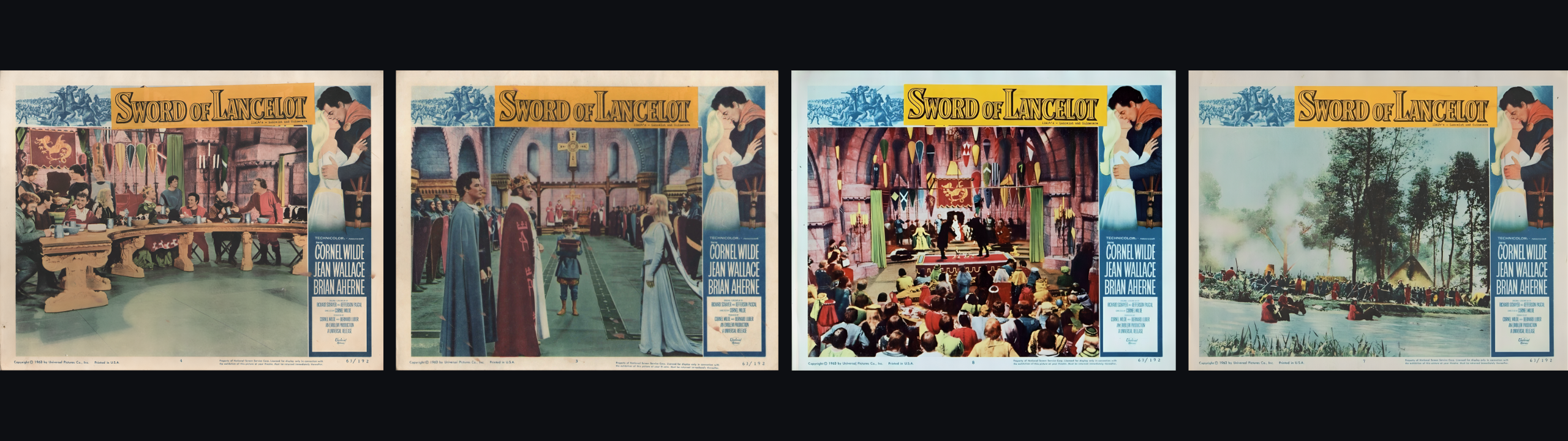
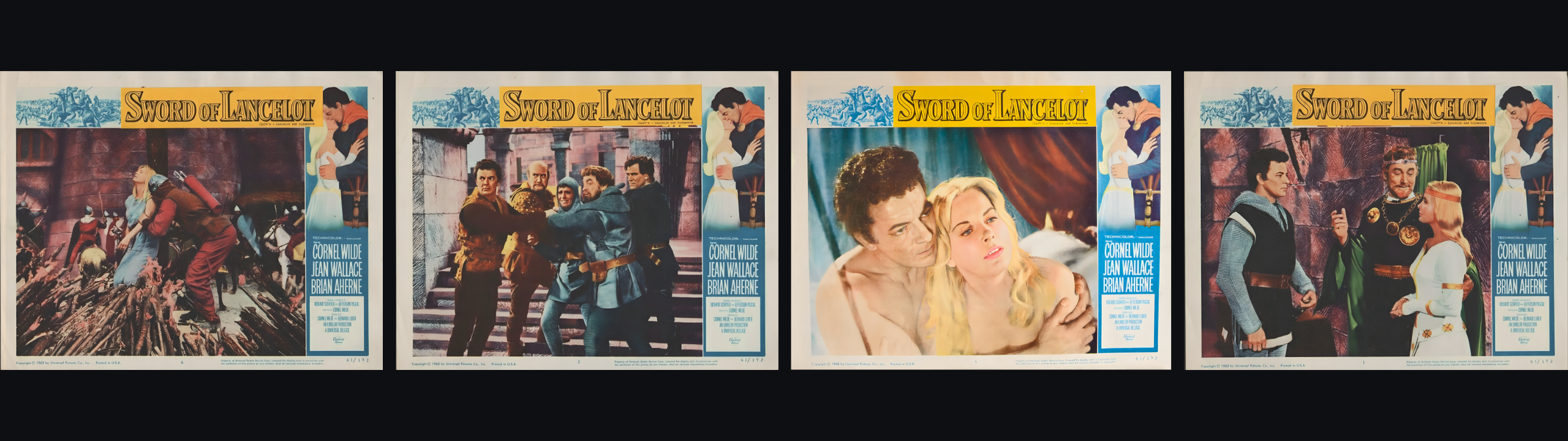
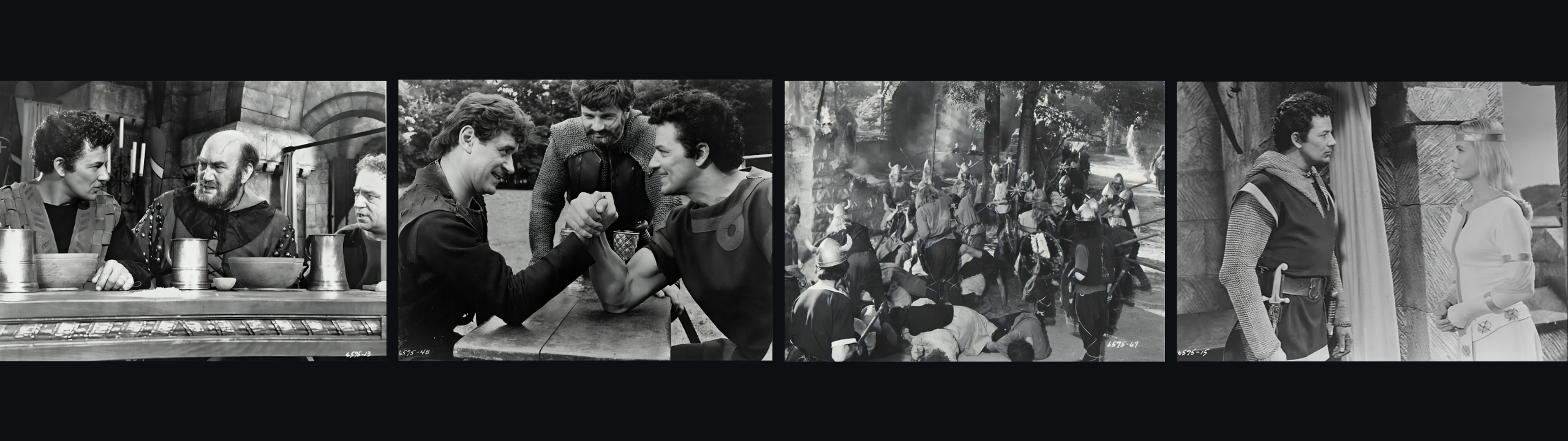
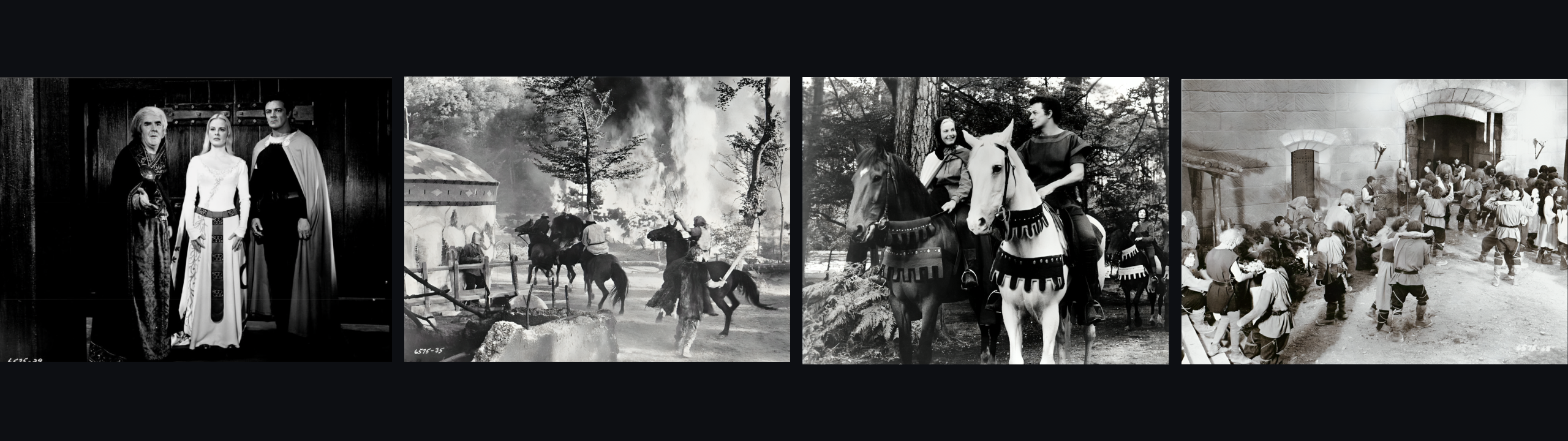
King Arthur seeks to strengthen his kingdom through marriage to Guinevere, daughter of King Leodogran. Before agreeing to the marriage, Leodogran requires Arthur to provide a knight capable of defeating his champion. Arthur chooses Sir Lancelot, his greatest knight, who defeats the champion and then escorts Guinevere to Camelot. During the journey, Sir Modred, Arthur's illegitimate son, attempts to have Guinevere killed. Lancelot prevents the assassination, and during their journey the two gradually fall in love. Despite their feelings, Guinevere marries Arthur and becomes Queen of Britain.
Lancelot remains devoted to Arthur, but he and Guinevere eventually begin a secret affair. Modred discovers their relationship and informs Arthur. Lancelot escapes, while Guinevere is condemned to death by burning. Lancelot returns to rescue her and offers himself in exchange for her safety. Arthur accepts his surrender but ultimately banishes Lancelot and sends Guinevere to a convent. The separation does not restore stability, however, and Modred eventually turns against Arthur, murders him, and claims the throne.
Lancelot returns to Britain during the resulting conflict and confronts Modred. He defeats him, bringing the rebellion to an end, but the victory cannot restore the kingdom to what it was before the affair. Lancelot then finds Guinevere at the convent, where she is preparing to take her vows as a nun. Rather than abandoning her religious commitment, Guinevere chooses to remain at the convent and atone for her actions. Lancelot accepts their separation, leaving the lovers reunited only briefly and their relationship ultimately sacrificed to the consequences of their betrayal.
PRODUCTION
Sword of Lancelot, released in Britain as Lancelot and Guinevere, was produced by Cornel Wilde and Bernard Luber, with George Pitcher as associate producer. Wilde directed the film and co-wrote the screenplay with Richard Schayer, using the pseudonym Jefferson Pascal. Production began on May 7, 1962. The film was made at Pinewood Studios in London, with location assistance from Studio Belgrade, and included location filming in Yugoslavia.
The cinematography was by Harry Waxman, using Panavision and Eastmancolor. Maurice Carter served as art director, Terence Morgan designed the costumes, and Frederick Wilson edited the film. Ron Goodwin composed and conducted the score. The production encountered financial difficulties during filming, particularly during the Yugoslavian location work. Its original Film Finances budget was £494,746, while the final audited production cost reached £690,971, approximately £196,225 over budget.
RELEASE
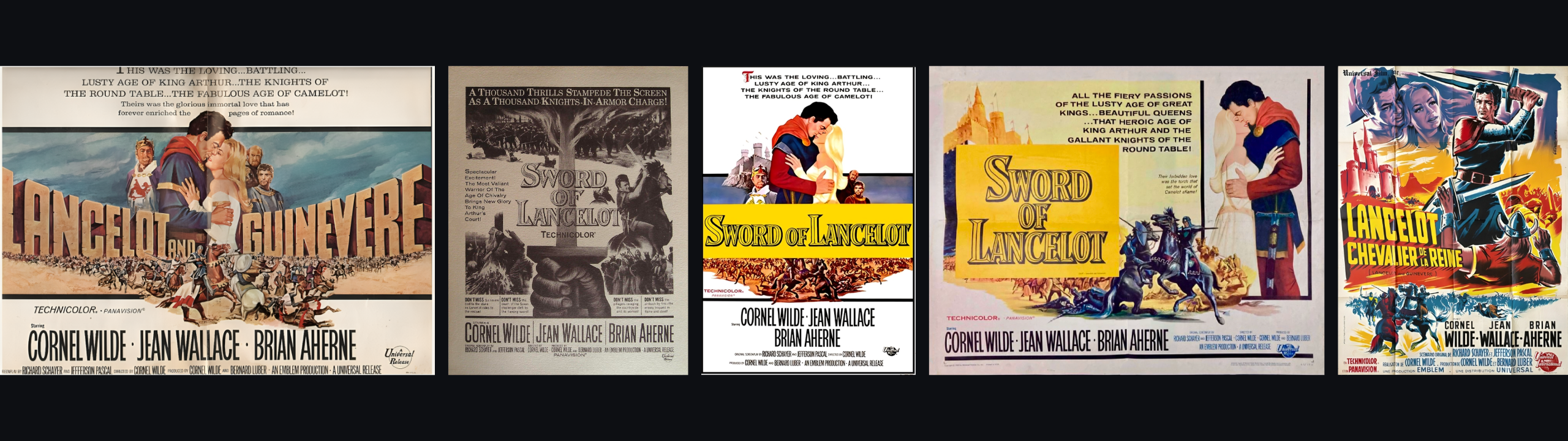
The film premiered in the United Kingdom on June 2, 1963, under its original title, Lancelot and Guinevere. It opened in the United States on June 5, 1963, under the title Sword of Lancelot. Universal Pictures handled the American release, while Rank Film Distributors handled the British release. The film was subsequently released in several European territories during 1963.
Contemporary reviews were mixed, with some critics recognizing the scale of the production and its battle sequences while finding weaknesses in its dialogue and romantic drama. The film did not achieve the lasting popularity of larger Arthurian productions, but it has remained of interest to audiences and historians of Arthurian cinema. It has subsequently circulated through home-video and television releases and is now primarily remembered as an ambitious early-1960s interpretation of the Lancelot and Guinevere legend.
CAST
Cornel Wilde as Sir Lancelot
Jean Wallace as Guinevere
Brian Aherne as King Arthur
George Baker as Sir Gawaine
Archie Duncan as Sir Lamorak
Adrienne Corri as Lady Vivian
Michael Meacham as Sir Modred
CREW
Director: Cornel Wilde
Producers: Cornel Wilde, Bernard Luber
Associate Producer: George Pitcher
Writers: Richard Schayer, Cornel Wilde (as Jefferson Pascal)
Cinematographer: Harry Waxman
Editor: Frederick Wilson
Music: Ron Goodwin
Art Director: Maurice Carter
Costume Designer: Terence Morgan
Production Company: Emblem Productions
Distributor: Universal Pictures Company, Inc. (U.S.); Rank Film Distributors (U.K.)
Release Date: June 2, 1963 (U.K.); June 5, 1963 (U.S.)
Country of Origin: United Kingdom / United States
Running Time: 116 minutes
Budget: £494,746 original budget; final audited cost £690,971
Box Office Return: N/A
IMDb Rating
IMDb Rating = 5.7 / 10
TRIVIA
The film's original British title was Lancelot and Guinevere; it was retitled Sword of Lancelot for the United States.
Cornel Wilde and Jean Wallace were married in real life when they made the film.
Wilde served as the film's star, director, producer, and co-writer, making it one of his most personal productions.
Wilde received his screenplay credit under the pseudonym Jefferson Pascal.
The film was photographed in Panavision and Eastmancolor with a widescreen presentation.
Principal production began on May 7, 1962.
The film's Yugoslavian location work contributed significantly to the production's financial difficulties and eventual cost overrun.
The final audited cost of £690,971 was approximately 40 percent higher than the original Film Finances budget of £494,746.
The production represented an example of the increasing involvement of American financing and distribution in British filmmaking during the early 1960s.
The film was adapted into a Dell Movie Classic comic book, Lancelot and Guinevere, published in October 1963.
The film takes several liberties with traditional Arthurian sources, particularly in its treatment of Modred and his relationship to Arthur.
Ron Goodwin's score was composed specifically for the production and is one of its notable technical elements.
The film's Arthurian interpretation places unusual emphasis on the romantic and tragic consequences of Lancelot and Guinevere's relationship, rather than concentrating solely on Arthur's heroic exploits.
For some reason, at some point after the film's release, the film became treated as public domain in America. Floods of inferior-quality releases have been floating around the market, usually sourced from either the original MCA Home Video VHS or a lower-quality source.
Brian Aherne also played King Arthur in Prince Valiant (1954).
Many of the sets were later used for The Mouse on the Moon (1963).
OUR MOVIE REVIEWERS SAY...

"Sword of Lancelot brings Arthurian legend to the screen with sweeping adventure, handsome production design, and a commanding performance from Cornel Wilde. Its romance and chivalric spectacle give the film an old-fashioned grandeur that remains thoroughly entertaining."

"Sword of Lancelot is a straightforward telling of the familiar Arthurian triangle, relying more on spectacle and atmosphere than psychological depth. The story is traditional, but the colorful settings, costumes, and performances make it an enjoyable example of early-1960s historical adventure."
"Sword of Lancelot looks impressive, but its story never escapes the limitations of a conventional costume epic. The characters are broadly drawn, the romance feels rushed, and the action lacks the excitement needed to make this retelling of Arthurian legend truly memorable."