
Enjoy Our Podcasts


SYNOPSIS:
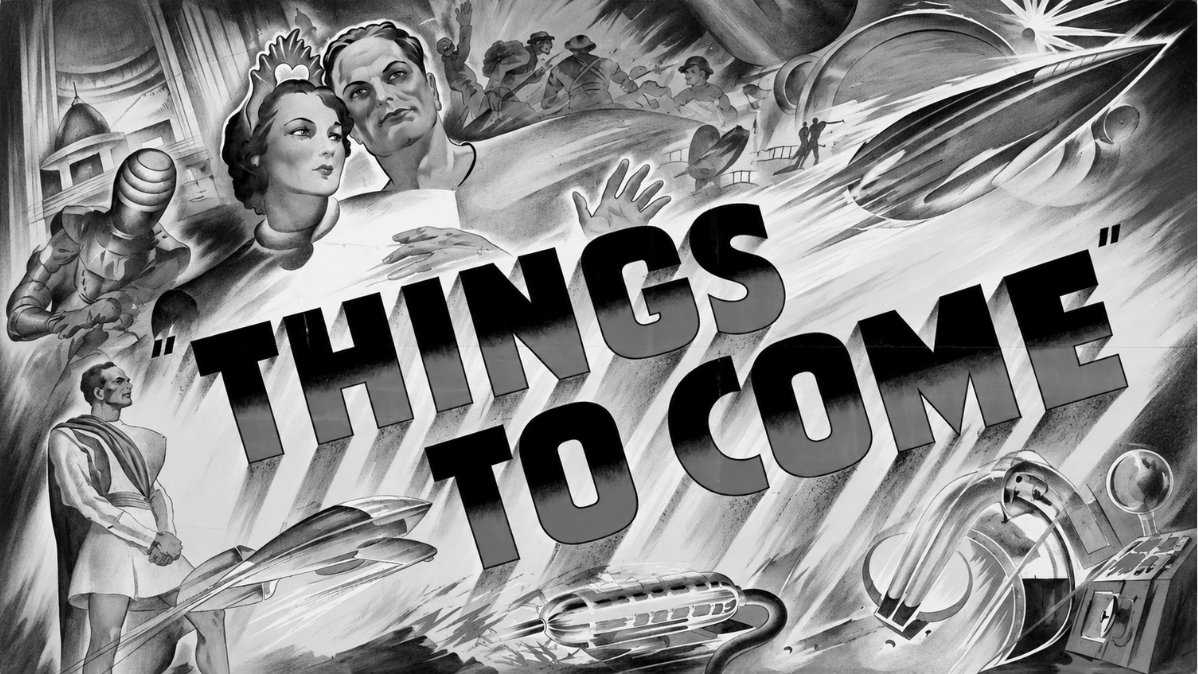
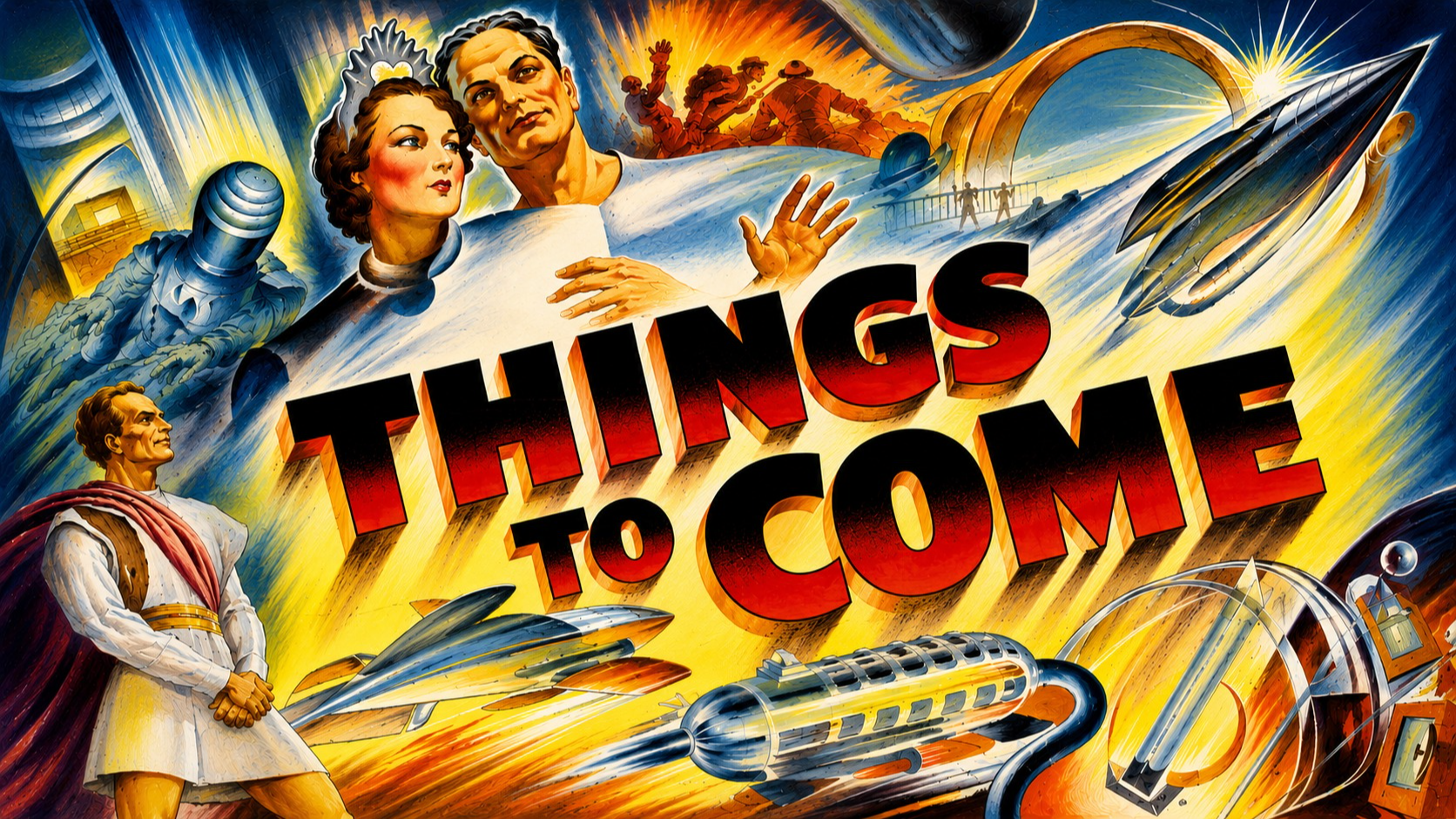
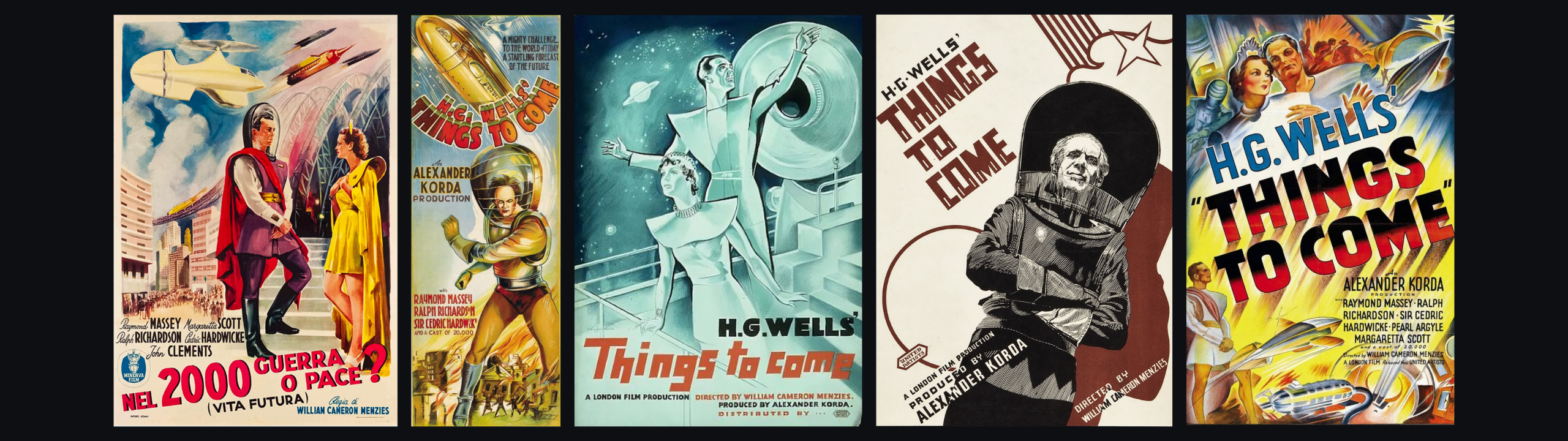
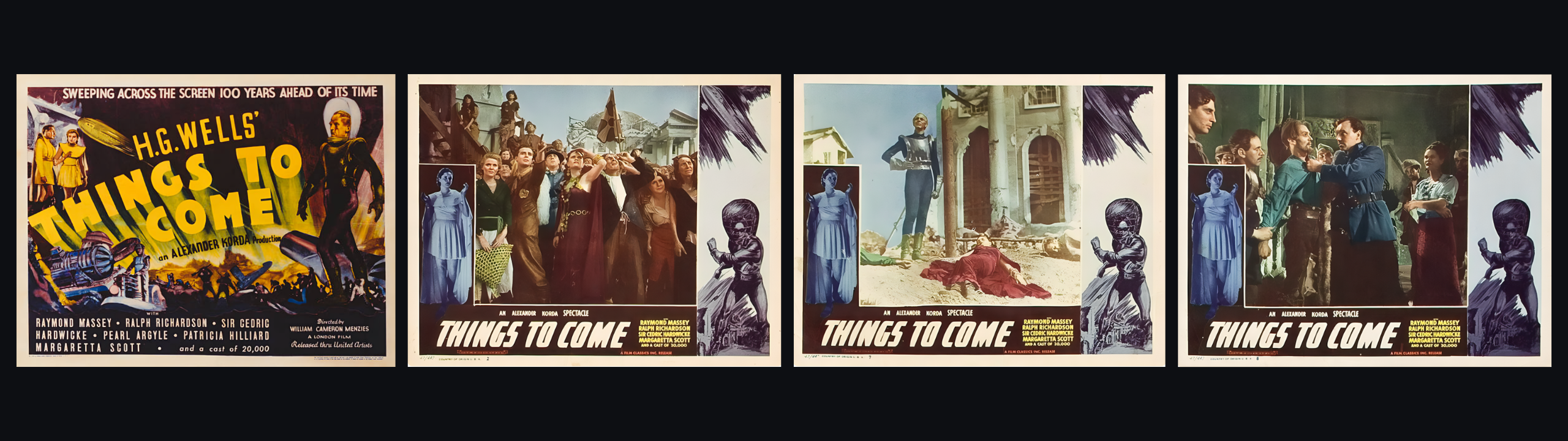
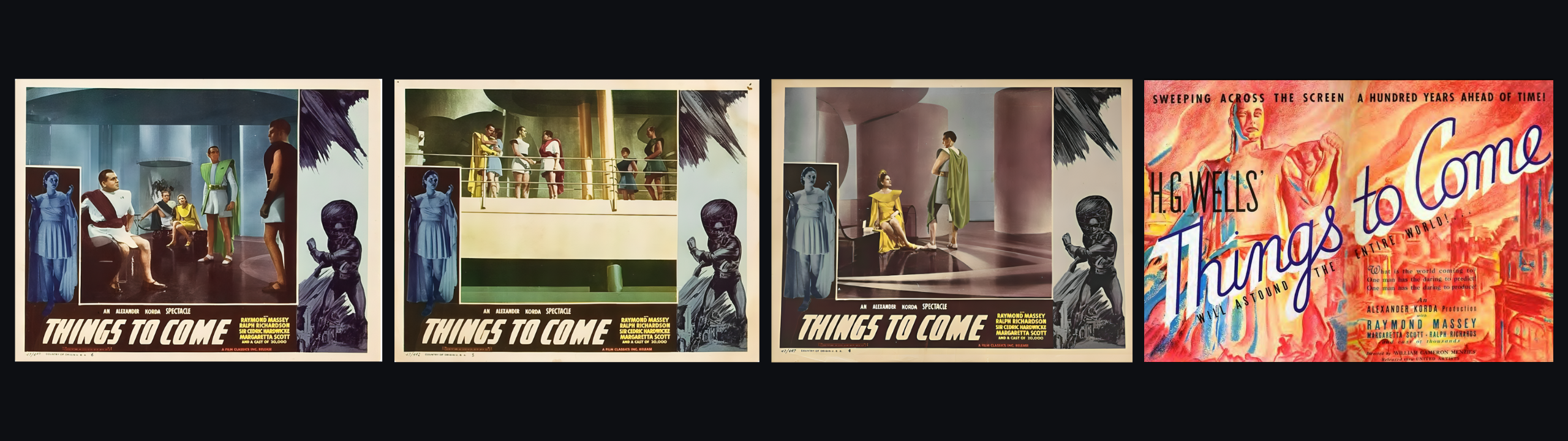
Things to Come is a 1936 British science fiction drama directed by William Cameron Menzies and written by H. G. Wells, based on his 1933 book The Shape of Things to Come. Starring Raymond Massey, Edward Chapman, Ralph Richardson, and Margaretta Scott, the film blends science fiction, political drama, and social commentary into an ambitious vision of humanity's future. Widely regarded as one of the most influential science fiction films of its era, Things to Come explores the devastating consequences of war and the role of science in rebuilding civilization.
The story follows the citizens of the fictional city of Everytown, where the outbreak of a global war in 1940 plunges the world into decades of destruction and social collapse. As disease, poverty, and dictatorship replace order, hope emerges through Wings Over the World, an international organization of scientists, engineers, and aviators determined to restore peace through knowledge and technological progress. Their efforts to unite humanity eventually lead to a conflict between those who embrace the future and those who fear change.
Featuring groundbreaking visual effects, striking Art Deco-inspired production design, and a memorable orchestral score by Arthur Bliss, Things to Come remains a landmark of early science fiction cinema. Its imaginative vision of the future and its thought-provoking exploration of war, progress, and human ambition have ensured its lasting reputation as one of the genre's greatest classics.
PLOT (Spoiler Alert):
The film opens in Everytown during Christmas 1940, as businessman John Cabal and his friend Passworthy discuss the growing threat of another world war. Their fears are quickly realized when enemy bombers attack the city, beginning a devastating conflict that spreads across the globe. The war drags on for decades, destroying nations and reducing civilization to ruin. Chemical weapons, aerial bombardment, and a deadly plague leave the survivors struggling to rebuild amid lawlessness and despair.
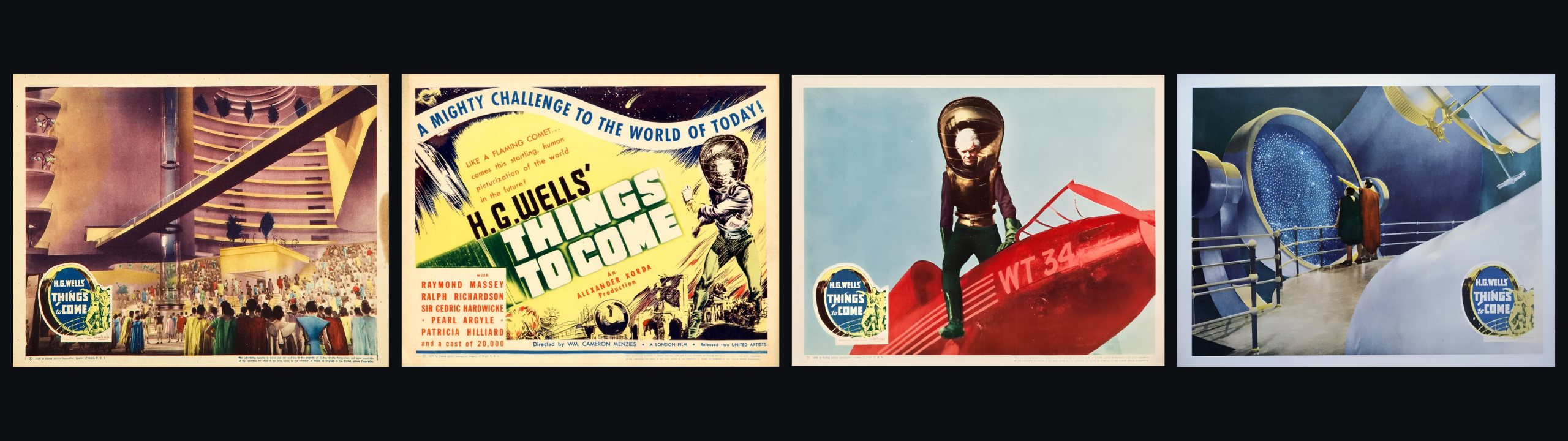
By the 1970s, Everytown has become little more than a collection of primitive settlements ruled by the ruthless warlord known as The Boss, who controls the region with an aging fleet of aircraft and a small private army. His authority is challenged when John Cabal, now an elderly pilot representing the international organization Wings Over the World, arrives in a futuristic aircraft. Cabal explains that scientists and engineers have preserved knowledge elsewhere and are working to restore civilization through science rather than conquest.
The Boss rejects Cabal's vision and attempts to destroy the visitors. Wings Over the World responds by using a harmless sleeping gas to incapacitate his forces without bloodshed. The Boss's dictatorship comes to an end, allowing scientists and engineers to begin rebuilding Everytown into a modern, technologically advanced city governed by reason and cooperation instead of violence.
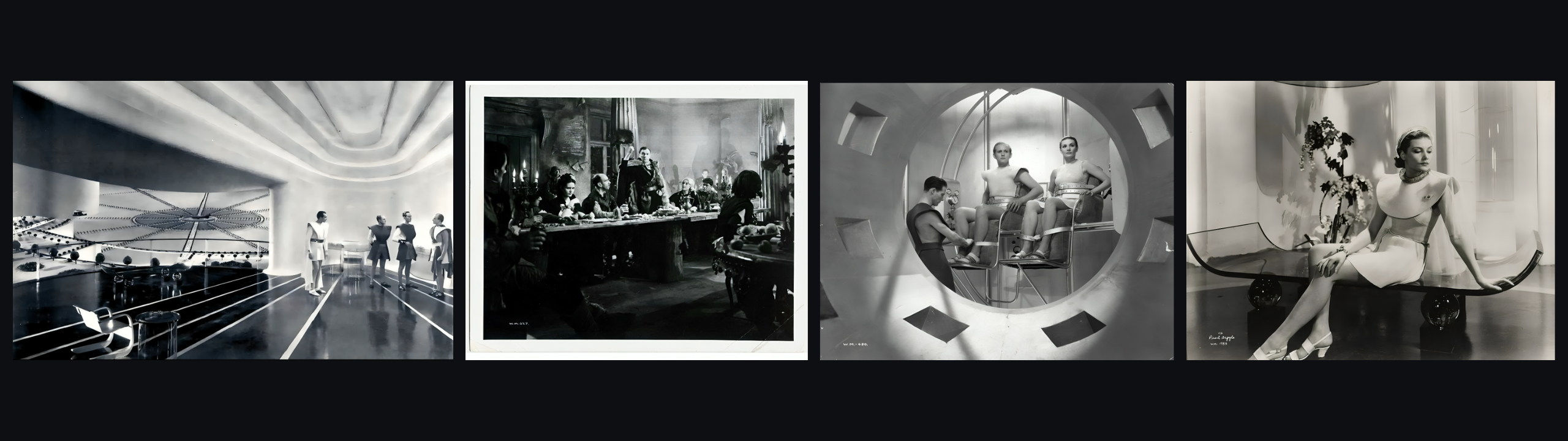
Decades later, in the year 2036, humanity has entered a new golden age. Vast underground cities, advanced transportation systems, and remarkable engineering achievements have transformed society. Scientific progress has eliminated many of the hardships that once plagued civilization, and the people of Everytown now enjoy peace and prosperity.
Despite these advances, not everyone welcomes continued progress. Theotocopulos, an influential sculptor and political leader, argues that humanity has advanced far enough and opposes a planned space mission to the Moon. He believes further exploration is unnecessary and fears that constant scientific advancement will rob people of stability and happiness. His speeches inspire growing public opposition to the launch.
As protests erupt, Cabal's daughter Catherine and her fellow scientists refuse to abandon the project. The lunar spacecraft is successfully launched despite attempts to stop it, carrying two explorers on humanity's first journey beyond Earth. The launch symbolizes mankind's refusal to surrender its desire for discovery and progress.
The film concludes with John Cabal reflecting on humanity's destiny. He declares that mankind must continue reaching outward into the universe rather than accept stagnation, asking whether humanity's future lies in endless exploration or in surrendering to fear and complacency. The film ends with the spacecraft soaring toward the Moon, leaving the audience with an optimistic vision of mankind's limitless potential.
PRODUCTION:
Production on Things to Come began in 1935 under producer Alexander Korda for London Film Productions. H. G. Wells personally wrote the screenplay, making it one of the few film adaptations directly scripted by the author of the original work. Director William Cameron Menzies, celebrated for his visual imagination, created an ambitious futuristic world using elaborate sets, miniatures, matte paintings, and innovative special effects that were considered groundbreaking for their time.
Filming took place primarily at Denham Studios in Buckinghamshire, England. The striking Art Deco-inspired designs by Vincent Korda and the powerful orchestral score by Arthur Bliss became defining elements of the production. Although the film was one of Britain's most expensive productions of the 1930s, its artistic achievements have earned it lasting recognition as a milestone in science fiction filmmaking.
RELEASE:
Things to Come premiered in London on 21 February 1936 before receiving a wider release in the United Kingdom and the United States later that year. Critics praised the film's ambitious scope, imaginative visual design, and Wells' optimistic vision of scientific progress, though some found its philosophical themes more compelling than its dramatic story.
While its box office performance was modest compared to its substantial budget, the film's reputation has grown considerably over the decades. Today, Things to Come is widely regarded as one of the greatest science fiction films ever made and a pioneering influence on later classics such as 2001: A Space Odyssey, Star Trek, and numerous futuristic films exploring humanity's technological future.
CAST:
Raymond Massey as John Cabal
Edward Chapman as Pippa Passworthy / Raymond Passworthy
Margaretta Scott as Roxana / Rowena
Ralph Richardson as The Boss
Cedric Hardwicke as Theotocopulos
Maurice Braddell as Dr. Harding
Pearl Argyle as Catherine Cabal
Derrick De Marney as Richard Gordon
Sophie Stewart as Mrs. Cabal
CREW:
Director: William Cameron Menzies
Producer: Alexander Korda
Writer: H. G. Wells (screenplay), based on The Shape of Things to Come
Cinematographer: Georges Périnal
Editor: Stephen Harrison
Music: Arthur Bliss
Production Company: London Film Productions
Distributor: United Artists (UK), United Artists (US)
Release Date: February 21, 1936 (London Premiere)
Country of Origin: United Kingdom
Running Time: 100 minutes (original release)
Budget: Approximately £300,000
Box Office Return: Modest; below production costs
IMDb Rating = 6.6 / 10
TRIVIA:
H. G. Wells wrote the screenplay himself, making Things to Come one of the few films directly adapted for the screen by its original author.
The film predicts a second world war beginning in 1940, three years before World War II actually started in 1939.
William Cameron Menzies is often credited with establishing the modern role of the production designer, and his futuristic visual concepts heavily influenced later science fiction films.
The elaborate futuristic city sets were designed by Vincent Korda, brother of producer Alexander Korda.
Composer Arthur Bliss wrote one of the earliest feature film scores intended for concert performance as well as the film itself.
Many of the film's visual effects relied on highly detailed miniatures, matte paintings, and optical photography, techniques that were considered state-of-the-art in the 1930s.
The character John Cabal represents H. G. Wells' belief that scientists and engineers would play a central role in humanity's future.
Although the film was not a major financial success upon release, critics and historians now consider it one of the defining science fiction films of the twentieth century.
The film's futuristic architecture and technology influenced the visual design of numerous later science fiction productions, including 2001: A Space Odyssey (1968).
Things to Come remains one of the most ambitious British films of the 1930s, admired for its bold vision of humanity's future and its enduring message that progress depends on curiosity, knowledge, and the willingness to explore the unknown.
The date on the newspaper in the scene in which the war ends is September 21, 1966, which would have been the 100th birthday of H.G. Wells.
Ralph Richardson stated that he intentionally modelled his character, the despotic boss of Everytown, after Italian fascist dictator Benito Mussolini.
Ralph Richardson stated that he intentionally modelled his character, the despotic boss of Everytown, after Italian fascist dictator Benito Mussolini.
Before filming started, author H.G. Wells told everyone connected with the film how much he'd hated Fritz Lang's film Metropolis (1927) and how he wanted them to do the opposite of what Lang (whom he called "Lange") and his crew had done.
The film accurately predicts the scale and usage of large-format, flat-screen jumbo-tron style LCD television screens.
OUR MOVIE REVIEWERS SAY...

"Things to Come is an astonishingly ambitious vision of humanity's future. Its sweeping ideas, striking production design, and unwavering optimism make it feel decades ahead of its time—a science fiction landmark that still inspires."

"Things to Come is more fascinated by ideas than by people. While the characters often serve as mouthpieces for its grand vision, the film's imagination and historical significance make it a compelling, if occasionally distant, experience."

"For all its groundbreaking ambition, Things to Come struggles to engage on a human level. Its speeches overwhelm the drama, and the film often feels like an illustrated lecture rather than a satisfying piece of storytelling."