

Enjoy our Podcasts
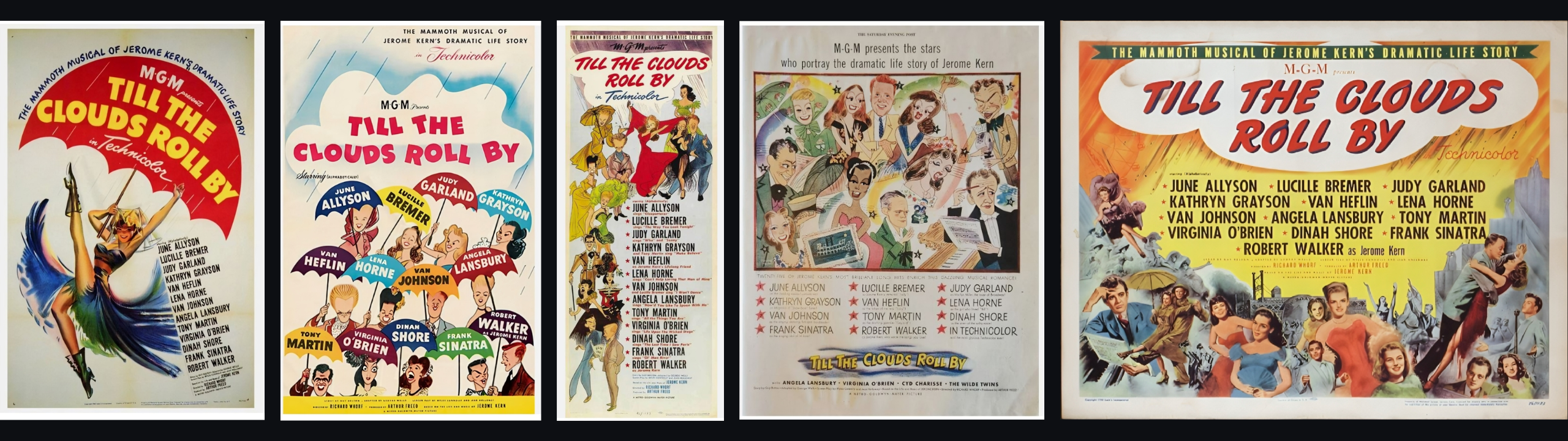
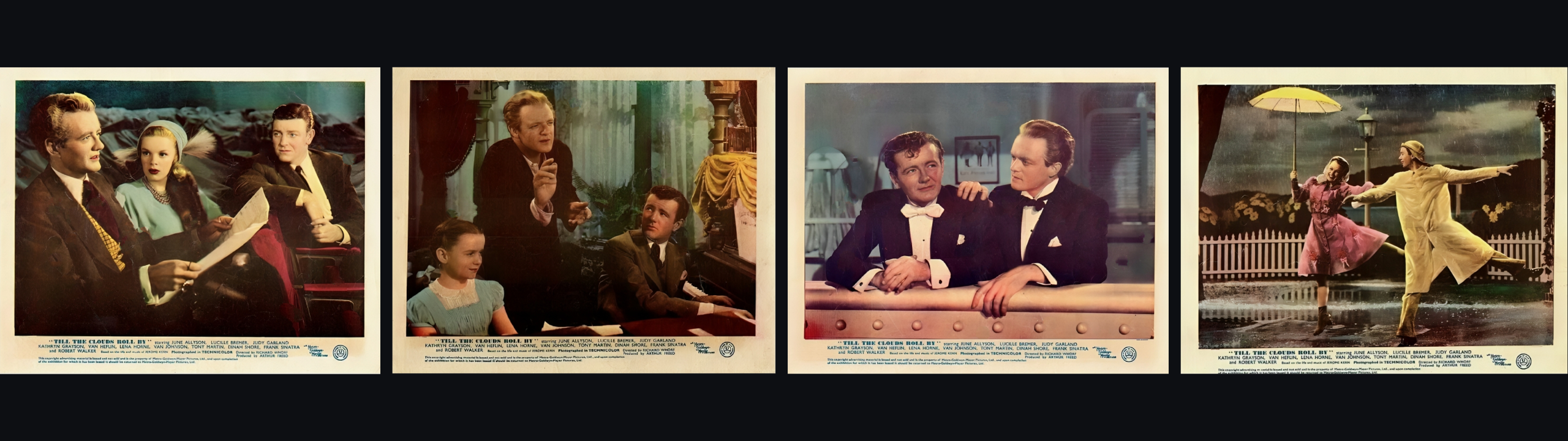
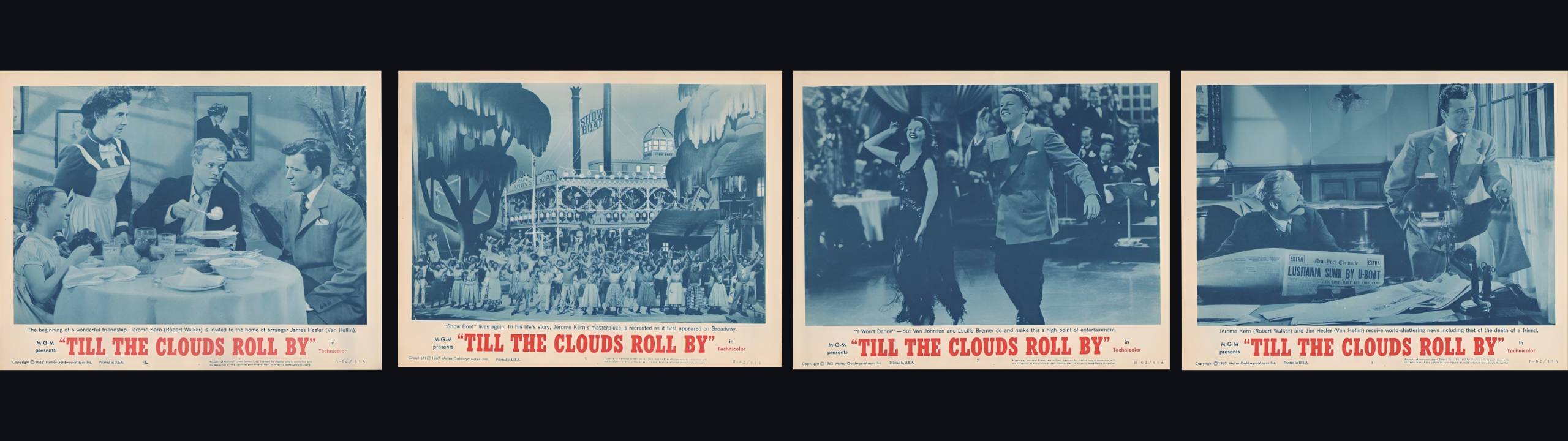
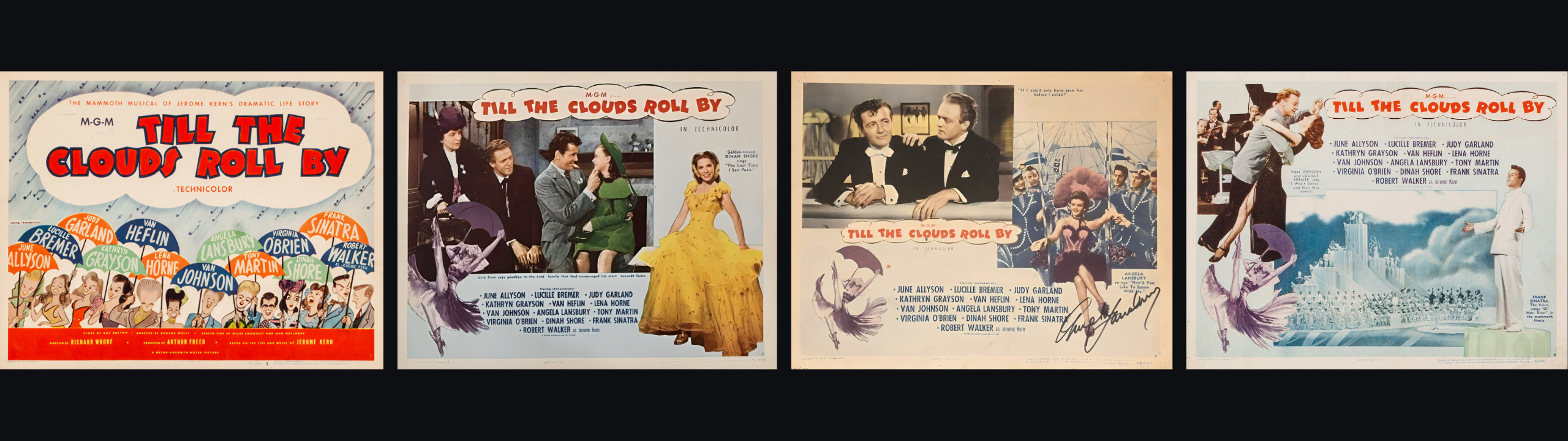

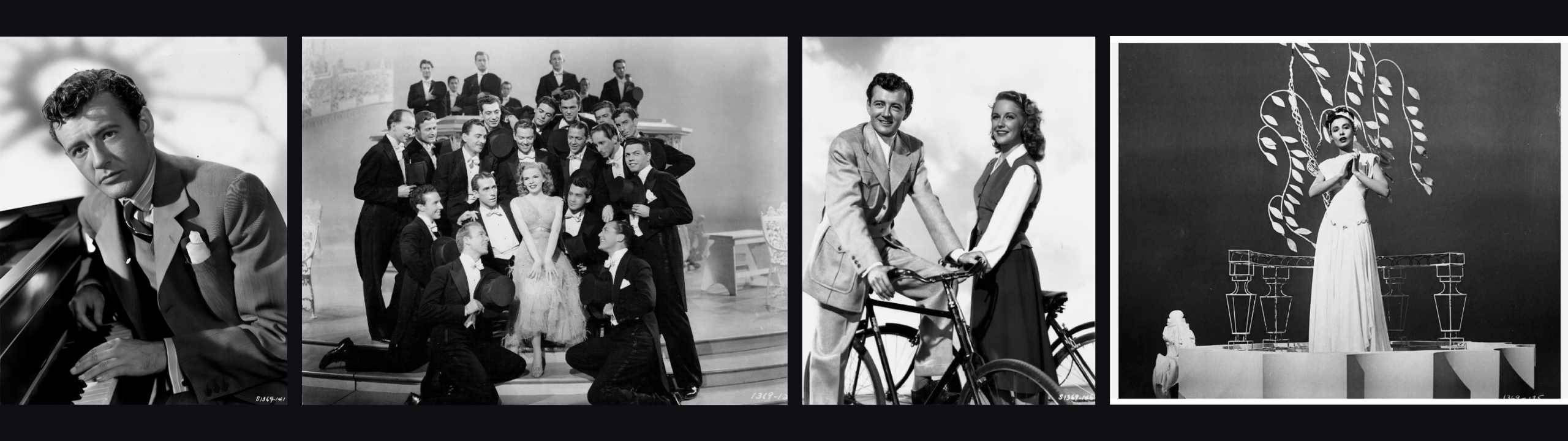
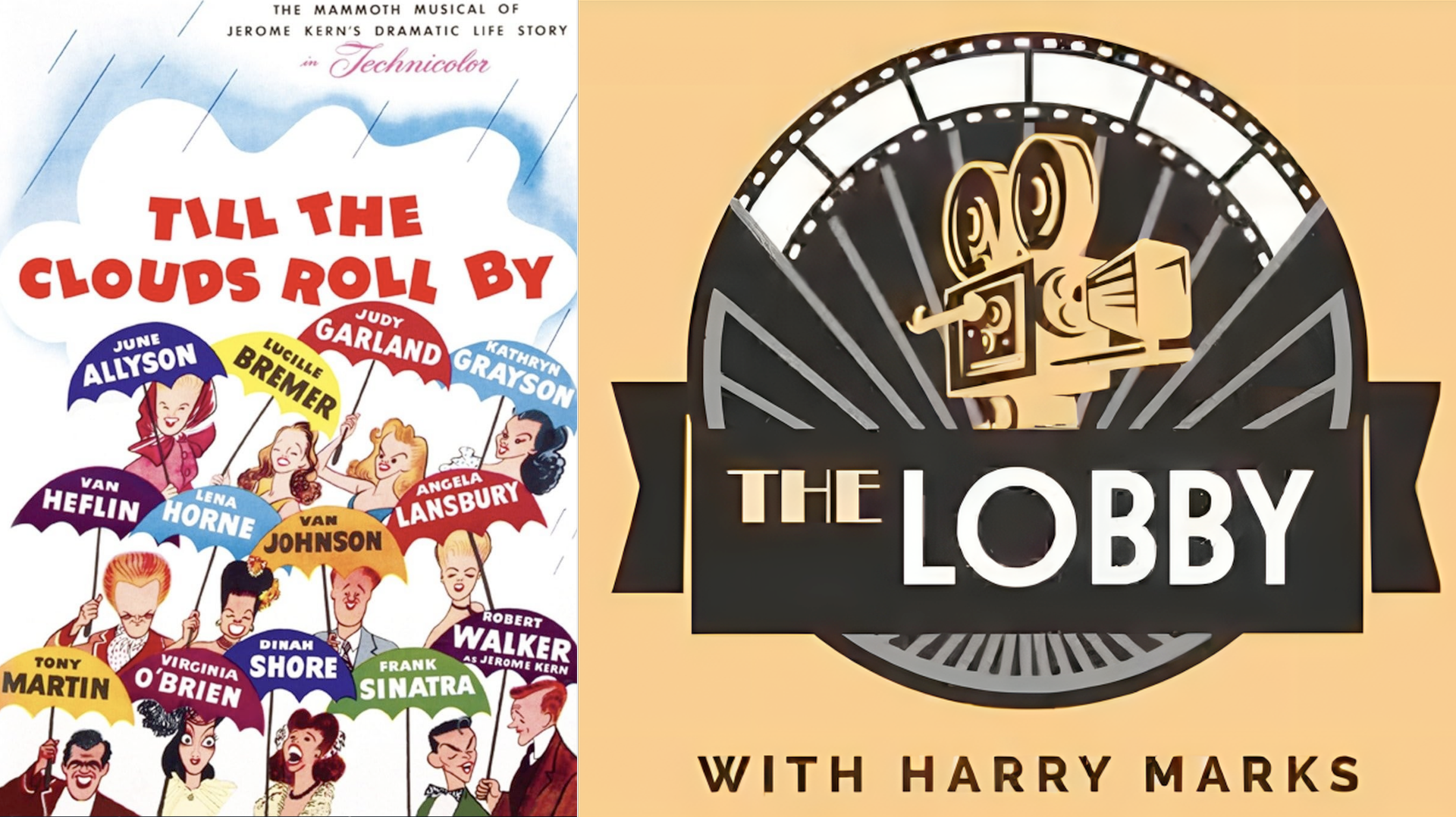
SYNOPSIS: Till the Clouds Roll By is a 1946 American Technicolor musical biographical film directed by Richard Whorf and starring Robert Walker, June Allyson, Lucille Bremer, and Van Heflin. Produced by Metro-Goldwyn-Mayer (MGM), the film presents a highly fictionalized account of the life and career of celebrated Broadway composer Jerome Kern, tracing his rise from an aspiring songwriter to one of the most influential figures in American musical theatre.
Featuring lavish production numbers and an all-star cast, the film celebrates Kern's enduring contributions to stage and screen while showcasing many of his best-known compositions.
Beginning with Kern's early struggles to establish himself as a composer, the film follows his determination to bring greater sophistication and emotional depth to musical theatre.
Along the way, he forms lasting friendships, collaborates with some of Broadway's most talented performers, and overcomes professional setbacks as his innovative songs gradually earn widespread acclaim. Interwoven throughout the narrative are elaborate musical performances drawn from Kern's most famous stage productions, many featuring some of MGM's biggest stars.
Although its depiction of Jerome Kern's personal life takes considerable dramatic liberties, Till the Clouds Roll By remains one of MGM's most ambitious and entertaining musical biographies. Renowned for its spectacular Technicolor cinematography, extravagant production values, and memorable performances by an ensemble that includes Judy Garland, Frank Sinatra, Lena Horne, Kathryn Grayson, and Angela Lansbury, the film stands as both a tribute to one of America's greatest composers and a showcase of Hollywood's Golden Age musical filmmaking.
PLOT Spoiler Alert: Till the Clouds Roll By (1946) chronicles the fictionalized life of composer Jerome Kern, beginning with his early ambition to write music for the Broadway stage despite facing skepticism from producers and critics. Determined to elevate the quality of American musical theatre, Kern perseveres through numerous disappointments before finally achieving recognition with a series of successful productions. His growing reputation allows him to collaborate with celebrated performers and playwrights, establishing him as one of Broadway's leading composers.
As Kern's career flourishes, the film highlights many of the songs that made him famous through lavish musical sequences performed by an all-star cast. While balancing the demands of his professional life, Kern also develops meaningful personal relationships that provide encouragement during periods of creative uncertainty. Despite occasional setbacks and changing public tastes, his commitment to writing memorable, emotionally resonant music never wavers.
The narrative follows Kern's continued success as his compositions become staples of both the Broadway stage and Hollywood musicals. His influence expands beyond the theatre, inspiring a new generation of performers and composers while helping redefine the American musical. Throughout the film, elaborate performances of classics such as "Ol' Man River," "Smoke Gets in Your Eyes," and "The Last Time I Saw Paris" celebrate the remarkable breadth of his songwriting career.
The film concludes by honoring Jerome Kern's lasting legacy as one of the architects of the modern American musical. Although many events have been romanticized or altered for dramatic effect, the story emphasizes the enduring popularity of his music and the profound impact his compositions had on both Broadway and motion pictures. The final musical performances serve as a celebration of Kern's artistic achievements and the timeless appeal of his work.
PRODUCTION: Production on Till the Clouds Roll By began in 1945 at Metro-Goldwyn-Mayer under producer Arthur Freed, whose unit was responsible for many of the studio's most celebrated musicals. Directed by Richard Whorf, the screenplay by Sonya Levien and William Ludwig took significant creative liberties with Jerome Kern's life, choosing to focus on entertaining musical performances rather than historical accuracy. The result was a lavish tribute to Kern's career rather than a conventional biography.
The film assembled one of the most impressive casts ever featured in an MGM musical. Robert Walker portrayed Jerome Kern, while dozens of the studio's biggest stars—including Judy Garland, Frank Sinatra, Lena Horne, Kathryn Grayson, Van Johnson, Cyd Charisse, Angela Lansbury, and Virginia O'Brien—appeared in elaborate musical sequences celebrating Kern's most beloved compositions. Their performances became the film's greatest attraction and remain among its most memorable elements.
Filmed entirely in Technicolor, the production showcased MGM's renowned craftsmanship through elaborate costumes, richly detailed sets, and sophisticated choreography. Cinematographer George Folsey captured the vibrant musical numbers with striking visual elegance, while editor Harold F. Kress maintained a lively pace that balanced dramatic storytelling with extended musical performances. The film exemplified the lavish production style that defined MGM musicals during the 1940s.
RELEASE: Till the Clouds Roll By premiered in the United States on December 5, 1946, and was warmly received by audiences eager for lavish post-war entertainment. Critics praised the film's spectacular musical numbers, colorful production values, and impressive roster of performers, although many noted that its portrayal of Jerome Kern's life sacrificed historical accuracy in favor of entertainment.
The film proved to be a major commercial success for MGM, becoming one of the studio's highest-grossing releases of the year. Audiences were particularly drawn to its collection of Jerome Kern standards performed by some of Hollywood's most celebrated musical stars, helping preserve many of his compositions for new generations of moviegoers.
In the decades since its release, Till the Clouds Roll By has remained a popular example of the lavish Hollywood musical biography. While modern historians recognize its fictionalized narrative, the film continues to be admired for its extraordinary musical performances and its role in preserving the legacy of Jerome Kern's songs. Today, it stands as one of the defining productions of MGM's Golden Age of musicals.
CAST:
Robert Walker as Jerome Kern
June Allyson as Eva Kern
Lucille Bremer as Sally Hessler
Van Heflin as James Hessler
Judy Garland as Marilyn Miller
Frank Sinatra as Himself
Lena Horne as Julie La Verne
Kathryn Grayson as Magnolia Hawks
Van Johnson as Alexander Woollcott
Angela Lansbury as London Singer
Tony Martin as Gaylord Ravenal
CREW:
Director: Richard Whorf
Producer: Arthur Freed
Screenplay: Sonya Levien, William Ludwig
Based on the life and music of: Jerome Kern
Cinematographer: George Folsey
Editor: Harold F. Kress
Music: Jerome Kern
Production Company: Metro-Goldwyn-Mayer (MGM)
Distributor: Metro-Goldwyn-Mayer (MGM)
Release Date: December 5, 1946
Country of Origin: United States
Running Time: 133 minutes
Budget: Approximately $2.7 million
Box Office Return: Approximately $6.7 million (worldwide rentals)
IMDb Rating = 6.6 / 10
TRIVIA:
Till the Clouds Roll By was the first major Hollywood film biography devoted to composer Jerome Kern.
Although presented as a biography, many events and relationships depicted in the film were heavily fictionalized for dramatic purposes.
The film features appearances by many of MGM's biggest musical stars, including Judy Garland, Frank Sinatra, Lena Horne, Kathryn Grayson, and Cyd Charisse.
Judy Garland's performance of "Look for the Silver Lining" is widely regarded as one of the film's standout musical moments.
Lena Horne's rendition of "Can't Help Lovin' Dat Man" remains one of the most celebrated performances of her career.
The film was produced by Arthur Freed, whose production unit was responsible for many of MGM's greatest musicals during the 1940s and 1950s.
Its lavish Technicolor photography and elaborate production design exemplify the height of MGM's Golden Age musical productions.
Despite its historical inaccuracies, the film helped introduce Jerome Kern's music to millions of post-war movie audiences.
Several of the featured musical numbers recreate scenes from Kern's famous Broadway productions rather than depicting events from his personal life.
Today, Till the Clouds Roll By is remembered as both an entertaining musical showcase and a fitting tribute to one of the most influential composers in American musical theatre.
When M-G-M asked Jerome Kern what he thought about Robert Walker portraying him, Kern said it was fine but wanted to hear his wife's opinion. He phoned her from the studio and she told him to stay there, portray himself and send Walker home to her.
The film's script had to be reconsidered after Jerome Kern died suddenly during pre-production.
During the "Who?" segment, Judy Garland and the chorus move smoothly down the staircase. They did this by standing on a slide that was hydraulically controlled. It was supposed to ease to a stop at the bottom but, instead, stopped abruptly. There is a quick cut that partly hides this, but it can still be seen as everyone suddenly gives a little lurch just before the cut.
Forty one years after this film was released, Angela Lansbury performed 'How'd You Like to Spoon With Me,' her specialty song from the movie, on 'Murder She Wrote.'
Judy Garland, who played real-life singer-dancer Marilyn Miller, was pregnant with her first daughter, Liza Minnelli. She was placed behind stacks of dishes while singing "Look For the Silver Lining", but it was not to hide her belly as some have thought, because moments before her number, she is shown walking over to the set and even during her song as she is standing behind the dishes, her abdomen is not disguised.
OUR MOVIE REVIEWERS SAY...

"Till the Clouds Roll By is a lavish and entertaining musical that celebrates the life and music of Jerome Kern with remarkable style. The colorful production numbers are beautifully staged, and the impressive roster of performers ensures there's never a dull moment. While it takes liberties with historical events, the film succeeds as a joyful showcase of classic American songwriting and Hollywood's golden-age spectacle."

"Till the Clouds Roll By offers an attractive blend of biography and musical revue, featuring many of Jerome Kern's most beloved compositions. The film places greater emphasis on its elaborate musical performances than on historical accuracy, making it feel more like a celebration than a traditional biography. Though the narrative occasionally loses momentum between musical numbers, fans of classic Hollywood musicals will likely find much to enjoy."

"Despite its impressive cast and memorable music, Till the Clouds Roll By struggles to balance spectacle with storytelling. The episodic structure often interrupts the flow of the narrative, leaving the central character feeling overshadowed by the film's many musical performances. While visually polished and filled with talented entertainers, it never develops the emotional depth needed to make its biographical elements truly compelling."