
SYNOPSIS
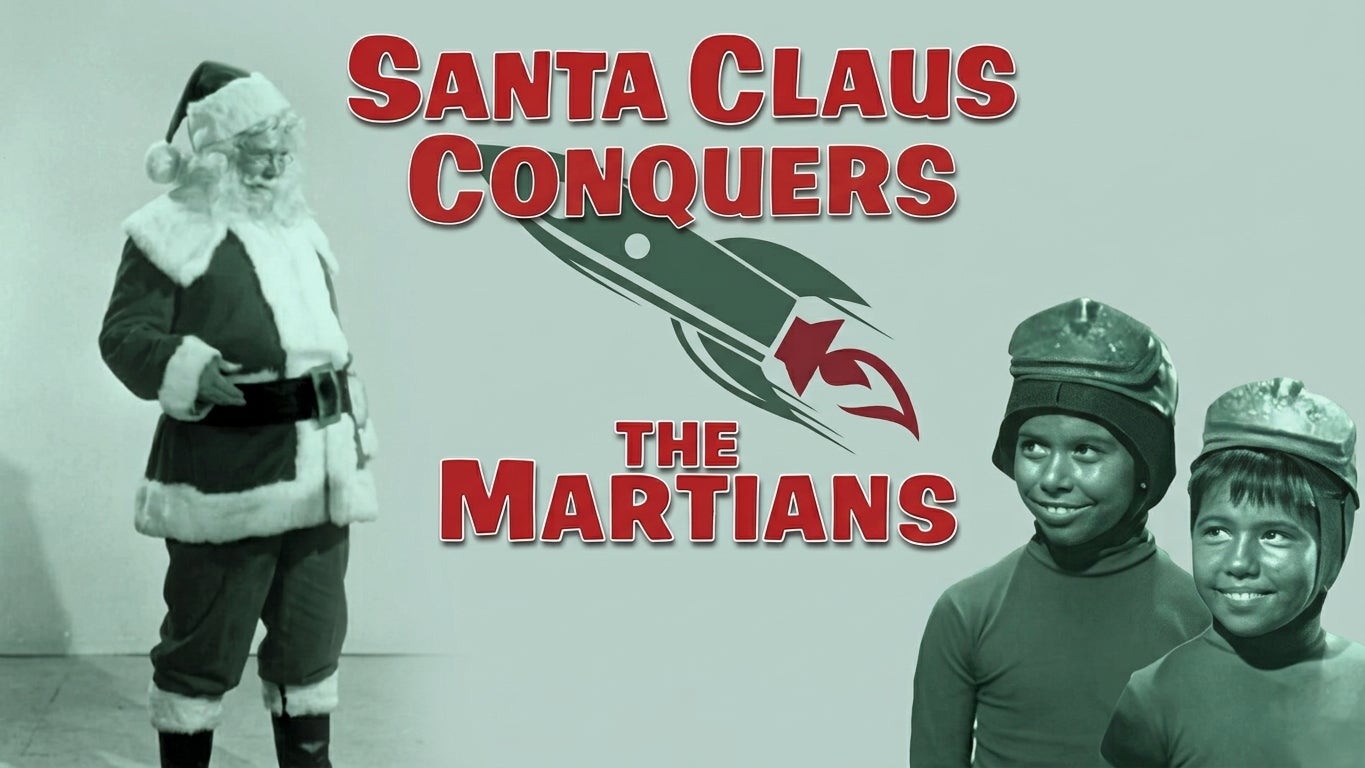
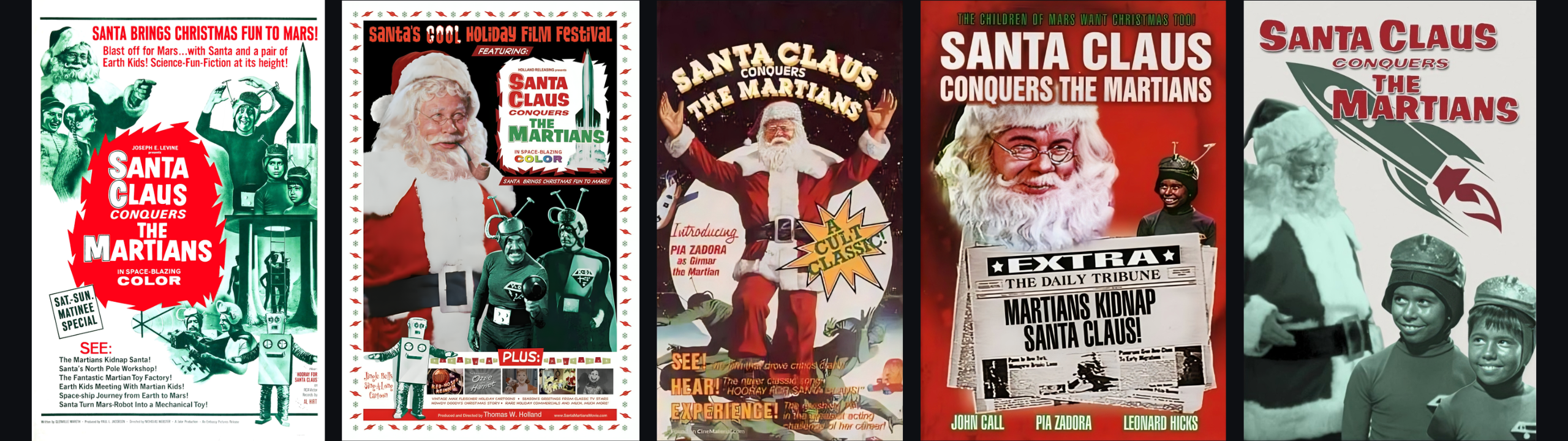
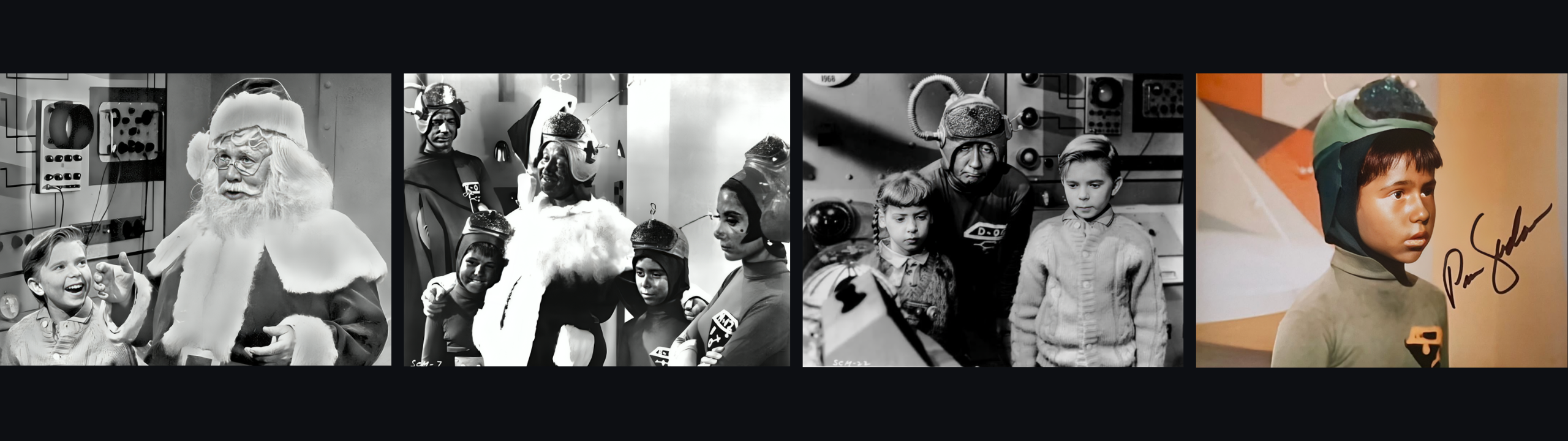
Santa Claus Conquers the Martians is a 1964 American science fiction comedy and Christmas fantasy directed by Nicholas Webster and written by Glenville Mareth, from a story by Paul L. Jacobson. The film stars John Call as Santa Claus, Leonard Hicks as the Martian leader Kimar, Vincent Beck as Voldar, Bill McCutcheon as Dropo, and Pia Zadora as the Martian child Girmar. Produced by Jalor Productions, the film is notable for combining children's fantasy, extraterrestrial adventure, and Christmas entertainment in an unusual low-budget feature that later became a cult favorite.
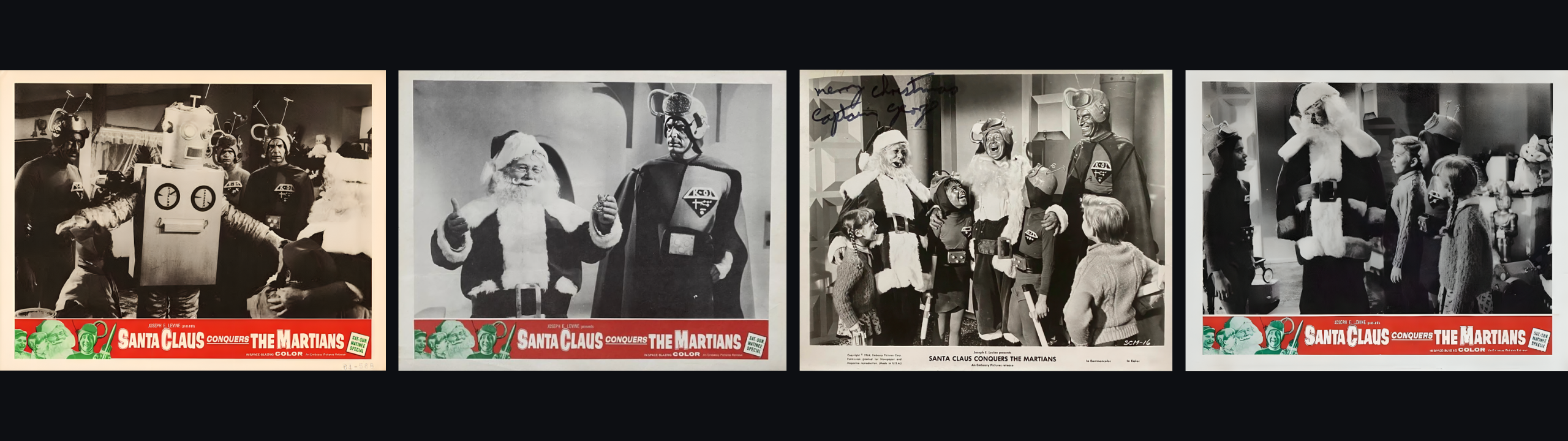
The story takes place on Mars, where children have become unhappy and withdrawn as their highly automated society leaves them little opportunity for play or imagination. Martian leader Kimar becomes concerned about his own children, Bomar and Girmar, and seeks a solution. After observing the happiness associated with Santa Claus on Earth, Kimar decides to bring Santa to Mars. The Martians travel to the North Pole, where they abduct Santa along with two Earth children, Billy and Betty, who have become involved in their search.
Featuring colorful costumes, simple special effects, futuristic sets, and the memorable song "Hurray for Santa Claus," the film approaches science fiction with the sensibility of a children's Christmas adventure. Although contemporary critics largely disliked it, the movie developed a substantial cult following through television, home video, and its later appearance on Mystery Science Theater 3000. Its unusual premise, inexpensive production, and enduring holiday reputation have made it one of the more recognizable cult Christmas films of the 1960s.
PLOT (Spoiler Alert)
On Mars, the children have become unhappy and withdrawn, spending much of their time watching television. Martian leader Kimar becomes concerned when his children, Bomar and Girmar, show the same behavior. After consulting the elderly sage Chochem, Kimar concludes that the children need the happiness and imagination associated with Christmas. He travels to Earth with several Martians, including the skeptical Voldar, to bring Santa Claus to Mars. During their search, they encounter Billy and Betty, two Earth children who help them locate Santa at the North Pole. The Martians abduct Santa and the children and return with them to Mars.
Santa is placed in a Martian workshop and asked to make toys for the children, but he realizes that the problem cannot be solved simply by producing more objects. Meanwhile, Voldar rebels against Kimar's plan and attempts to destroy Santa's work. He joins with Shim and Stobo, kidnaps Dropo, and eventually captures Kimar. Santa, Billy, Betty, and the Martian children are placed in danger as Voldar tries to take control. The children fight back using toys from Santa's workshop, demonstrating the imagination and courage that Kimar originally hoped Santa would inspire.
Voldar's rebellion is defeated, and Kimar recognizes that Santa has succeeded in restoring happiness to the Martian children. Santa returns to Earth with Billy and Betty, leaving behind the knowledge and spirit of Christmas. The Martian children are once again enthusiastic and playful, while Kimar recognizes that happiness cannot be created through technology alone. The film concludes with Christmas successfully introduced to Mars and the children embracing the simple pleasures of imagination and play.
PRODUCTION
anta Claus Conquers the Martians was produced by Paul L. Jacobson through Jalor Productions, with Arnold Leeds as associate producer. The screenplay was written by Glenville Mareth from a story by Jacobson, with Nicholas Webster directing. Principal photography took place in July 1964 at Michael Myerberg Studios on Long Island, New York. Embassy Pictures acquired worldwide distribution rights before the film's release.
The film was photographed in Eastman Color by cinematographer David Quaid. Maurice Gordon handled production design, Ramse Mostoller designed the costumes, and William Henry edited the picture. Milton DeLugg composed the music and co-wrote the title song, "Hurray for Santa Claus," with lyricist Roy Alfred. The production was made as an inexpensive independent children's feature, with an estimated budget of approximately $200,000.
RELEASE
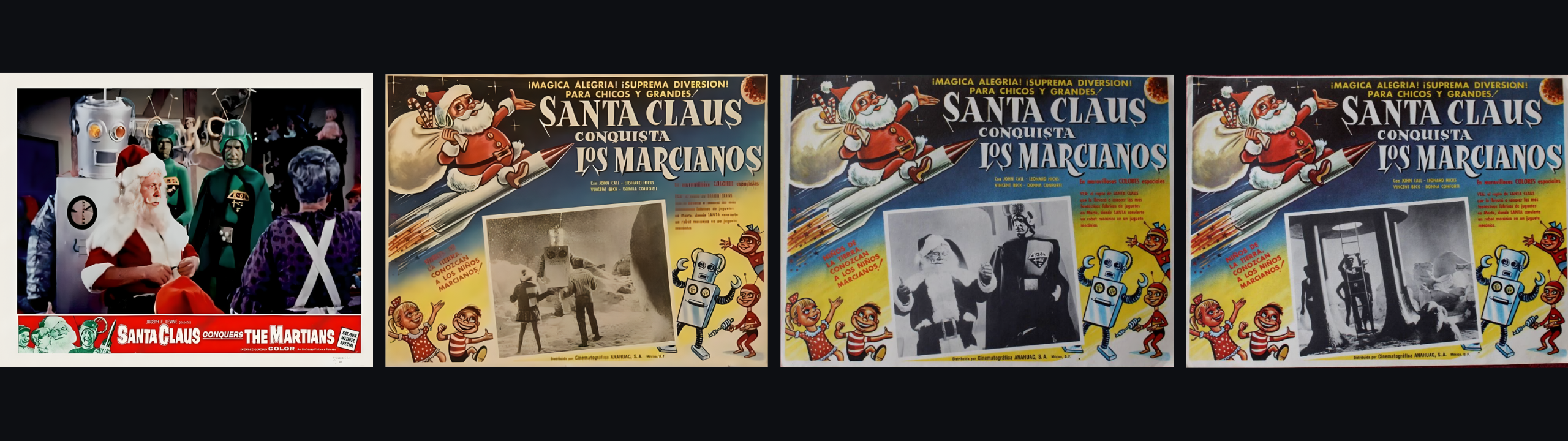
Santa Claus Conquers the Martians was released in the United States on November 14, 1964, opening in Chicago, followed by a New York opening on December 16, 1964. Embassy Pictures handled distribution. The film was marketed primarily as a children's Christmas attraction and received generally unfavorable contemporary reviews, with critics objecting to its acting, effects, humor, and low-budget production.
The film nevertheless acquired a second life through television and later home-video releases. Its appearance on Mystery Science Theater 3000 in 1991 introduced it to a new generation and helped establish its cult reputation. The film's public-domain status in the United States has also contributed to its widespread availability. It is now regarded primarily as a cult Christmas curiosity and remains a recurring feature of alternative holiday movie programming.
CAST
John Call as Santa Claus
Pia Zadora as Girmar
Bill McCutcheon as Dropo
Vincent Beck as Voldar
Victor Stiles as Billy
Leonard Hicks as Kimar
Donna Conforti as Betty
Christopher Month as Bomar
Leila Martin as Momar
James Cahill as Rigna
Charles G. Renn as Hargo
Carl Don as Von Green / Chochem
Al Nesor as Stobo
Josip Elic as Shim / Torg
Jim Bishop as Lomas
Doris Rich as Mrs. Claus
Ned Wertimer as Andy Henderson
Lin Thurmond as Children's Announcer
Don Blair as News Announcer
Ivor Bodin as Winky
CREW
Director: Nicholas Webster
Producer: Paul L. Jacobson
Associate Producer: Arnold Leeds
Writer: Glenville Mareth (screenplay), Paul L. Jacobson (story)
Cinematographer: David Quaid
Editor: William Henry
Music: Milton DeLugg
Production Designer: Maurice Gordon
Costume Designer: Ramse Mostoller
Production Company: Jalor Productions
Distributor: Embassy Pictures Corporation
Release Date: November 14, 1964
Country of Origin: United States
Running Time: 81 minutes
Budget: Approximately $200,000
Box Office Return: N/A
IMDb Rating
IMDb Rating = 2.8 / 10
TRIVIA
Pia Zadora made one of her earliest screen appearances as the Martian child Girmar.
The film was the first theatrical feature produced by television veteran Paul L. Jacobson.
Principal photography took place during July 1964 at Michael Myerberg Studios on Long Island.
The film was photographed in Eastman Color, giving its inexpensive production a colorful, deliberately fantastical appearance.
The Martian children become interested in Santa Claus after seeing him on television, making modern mass media an important part of the story.
Milton DeLugg and Roy Alfred wrote the film's title song, "Hurray for Santa Claus."
The Martian costumes and helmets were created specifically for the production and became among its most recognizable visual elements.
Bill McCutcheon, who played Dropo, had an extensive Broadway and television career and later appeared regularly on American television.
The film was included in Harry Medved and Randy Dreyfuss's 1984 book The Fifty Worst Films of All Time.
Its 1991 appearance on Mystery Science Theater 3000 became one of the program's best-known Christmas episodes.
The film's public-domain status in the United States has resulted in numerous inexpensive home-video and television editions.
Despite its poor initial reputation, the film has become a perennial cult Christmas movie, particularly among audiences interested in unusual science fiction and holiday cinema.
The tubing on the side of the adult Martian helmets is a natural gas line, similar to the type used to hook up a water heater or furnace.
The Martian ray guns are actually painted Whammo Air Blasters.
This film includes the first film appearance of Mrs. Claus.
The entire film was shot in 4 days at Michael Myerberg Studios, a converted aircraft hangar at Roosevelt Field in Long Island, New York. It's now a shopping mall.
Pia Zadora's debut cinematic appearance.
OUR MOVIE REVIEWERS SAY...

"Santa Claus Conquers the Martians is wonderfully goofy holiday science fiction that wears its absurdity proudly. Its colorful sets, energetic performances, and bizarre premise give it a charm that makes it difficult not to enjoy as a campy Christmas curiosity."

"Santa Claus Conquers the Martians is less a conventional science-fiction film than a children's holiday fantasy filtered through low-budget camp. The story is simplistic and the production crude, but its innocent enthusiasm gives the film a peculiar charm that has helped it survive as a cult favorite."

"Santa Claus Conquers the Martians is a Christmas movie that proves even Santa needs a good script. The dialogue is painfully simplistic, the Martians are hardly threatening, and the production values are primitive. What might have been a whimsical holiday adventure becomes an exercise in unintended comedy."